

Kossel Medtech Acquires XinZhi Medical to Strengthen Coronary Intervention Portfolio and Advance Global Vascular Platform Strategy

Kossel
Vascular Interventional Device Manufacturer and R&D Developer

Pioneer in Medical Device Media Coverage
Sharing Professional Medical Device Knowledge
Kossel Medtech (Suzhou) Co., Ltd. (“Kossel”) has acquired Shanghai XinZhi Medical Technology Co., Ltd. (“XinZhi Medical”), marking a pivotal strategic move in its transition from a leading peripheral intervention player to a pan-vascular intervention platform enterprise, thereby precisely seizing the industry transformation window of “intervention without implantation” in coronary interventions.。Through this acquisition, Kossel has rapidly strengthened its core technologies in drug-coated balloons, incorporating sirolimus- and paclitaxel-eluting balloon products into its portfolio, thereby securing strategically competitive technologies with global competitiveness. Meanwhile, it has further perfected its coronary product matrix of “scoring balloon + drug-coated balloon + drug-eluting stent,” forming a comprehensive clinical solution.
From a development perspective, the volume of PCI procedures in China still has room to double, while the global penetration rate of drug-coated balloons remains low. Coupled with Kossel’s full-chain R&D and manufacturing capabilities and its mature commercialization network both domestically and internationally, the clinical penetration of its coronary products will continue to accelerate. This acquisition is not merely a reinforcement of product technology, but a key step for Kossel to align with industry trends and achieve a strategic brand upgrade. It opens up new growth spaces in coronary intervention and global development, highlighting strong long-term competitiveness and promising future prospects.
The medical device industry is undergoing a profound reshuffling driven by centralized procurement. According to IQVIA data, the market size of China’s medical device industry reached RMB 487 billion (ex-factory price) in 2025, representing a year-on-year growth of 1%, as the sector entered a period of deep adjustment. However, tempered by centralized procurement, the vascular intervention segment has emerged as a highly resilient growth pole within the industry, with its year-on-year growth rate reaching 8% in 2025, far exceeding the industry average.
Behind the differentiation lies the structural reshaping brought about by national centralized procurement. The sixth batch of national centralized volume-based procurement for high-value medical consumables, which has been implemented, focuses on drug-coated balloons and urological interventional consumables. For the first time, it introduces rules such as "anchor pricing," clearly opposing "involution" and leaving room for innovative products with clinical value. Centralized procurement is no longer a simple "price slash," but rather the core engine driving the industry's shift from price competition to value competition, accelerating domestic substitution and market consolidation.
In this industry environment, product innovation and mergers and acquisitions have gradually become important paths for medical device companies to seek survival and development. Within the year, there has been a noticeable increase in the implementation of strategies by industry players focusing on innovative R&D and capital-driven M&A activities.According to Arterial Network,Kossel, a company in the peripheral intervention field, recently completed its acquisition of XinZhi Medical, a manufacturer of coronary drug-coated balloons.Following the previous strategic acquisition of Baiquantong Medical to bolster its peripheral vascular intervention diagnosis and treatment segment, this acquisition represents another significant move by the company in the field of coronary intervention. As industry consolidation accelerates, Kossel’s series of capital operations not only demonstrate its strategic capital allocation capabilities but also reflect current development trends in the vascular intervention sector.
Kossel Acquires XinZhi Medical, Strengthening Its Core Drug-Coated Balloon Technology Platform and Incorporating Sirolimus- and Paclitaxel-Coated Balloons into Its Coronary Intervention Product Portfolio
Kossel’s current M&A is based on two core judgments:First, the market potential for functional balloons is clearly expanding; second, innovative rapamycin drug-coated balloon technology has reached the tipping point for large-scale clinical application.
From the perspective of market potential, the utilization of drug-coated balloons has grown rapidly following centralized procurement. The concept of "intervention without implantation" is reshaping global standards for coronary diagnosis and treatment, with drug-coated balloons serving as the core vehicle for this transformation. Data indicates that the market size for general-purpose coronary balloons has declined after the implementation of centralized procurement,In contrast, the market size of functional balloons, including scoring balloons, cutting balloons, nibbling balloons, and drug-coated balloons, has achieved continuous growth.
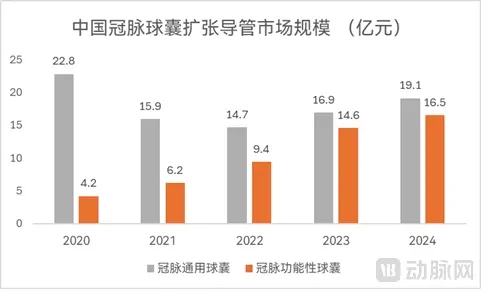
Source: Frost & Sullivan
Kossel has keenly captured this clinical trend. Founder and CEO of KosselHu QingKossel stated: “Having deeply cultivated the vascular intervention field for over a decade, Kossel considers coronary arteries a significant market worthy of strategic investment. In 2024, the volume of percutaneous coronary intervention (PCI) procedures in China reached 2.21 million. However, there remains a substantial gap in PCI penetration rates between China and developed countries. With population aging and rising penetration rates, we project the ceiling for domestic PCI procedure volume to be between 4 million and 5 million, indicating that the market still has room to double. Furthermore, under the trend of ‘intervention without implantation,’ the application of drug-coated balloons (DCBs) in PCI procedures is continuously increasing, marking a critical window for industry transformation. Driven by centralized volume-based procurement in China, the proportion of DCBs in PCI procedures has exceeded 18%, whereas DCB penetration in overseas markets remains very low, suggesting that the global penetration of DCBs is just beginning.”
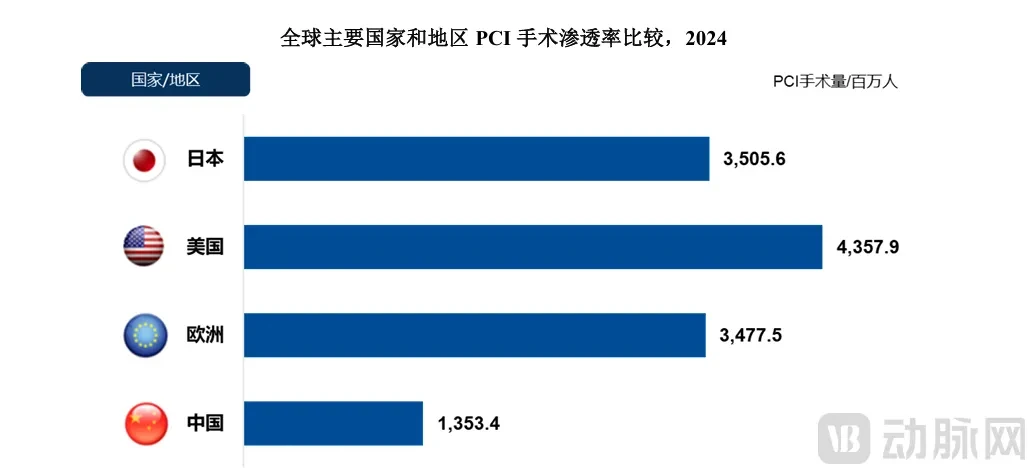
Source: Sullivan Analysis
From the perspective of technological maturity, sirolimus-coated balloons are approaching the threshold for large-scale application. Sirolimus-coated balloons are poised to become the next-generation mainstream solution.
Drug-coated balloons utilize either paclitaxel or sirolimus as the coating agent, with paclitaxel currently dominating the market. In fact, compared to paclitaxel, sirolimus offers advantages in anti-restenosis efficacy, safety profile, and therapeutic scope, resulting in higher acceptance among physicians. However, a long-standing technical bottleneck previously hindered the adoption of sirolimus-coated balloons: the low lipophilicity of sirolimus impeded its effective transfer to the vessel wall within a short timeframe, thereby allowing paclitaxel to maintain its mainstream status. In recent years, this technological barrier has been overcome; innovative excipient technologies have resolved the challenge of poor adhesion of sirolimus to the balloon surface.
Xinzhi Medical is one of the few high-quality enterprises in China that has mastered the core excipient technology for sirolimus drug-coated balloons.,Its independently developed sirolimus-coated drug-eluting balloon was approved for market launch by the National Medical Products Administration (NMPA) in 2025, placing its technological maturity and product development among the global first tier. The core value of Kossel’s current acquisition lies not only in completing its coronary drug-eluting balloon product portfolio, but also in strategically positioning itself ahead of the curve in the iteration of coronary intervention technologies, thereby securing a strategic product with globally differentiated competitive advantages.
Globally, sirolimus-coated drug-coated balloons (DCBs) are emerging as the new benchmark. At the 2025 Transcatheter Cardiovascular Therapeutics (TCT) conference, a key real-world study demonstrated that sirolimus-coated DCBs achieved non-inferiority compared to stents in a real-world population comprising over 60% complex lesions and de novo large-vessel lesions. This indicates an industry trend toward sirolimus-based DCBs replacing certain traditional stents, highlighting significant market potential.
Kossel Executive PresidentPan Xingzhen“It was pointed out that ‘the introduction of sirolimus-coated drug-eluting balloons represents a major breakthrough in the field of cardiovascular interventional therapy, providing clinicians with more treatment options. The advantages of sirolimus in terms of anti-restenosis efficacy and safety profile have made it an innovative focus of attention for cardiologists worldwide, indicating substantial future global market potential.’”
Hu QingHe stated, “The field of coronary drug-coated balloons features high technical barriers and stringent regulatory thresholds, with very few companies possessing true end-to-end competitiveness. Kossel has completed its global layout, and its U.S. R&D and manufacturing base serves as the strategic foundation for our participation in global competition. Based on this assessment, increasing investment in coronary interventions is Kossel’s strategic choice to evolve from a regional leader into a world-class vascular intervention platform.”
Following the acquisition of Xinzhi Medical, Kossel successfully established a core coronary product portfolio comprising “spinous process balloons + dual-technology drug-coated balloons + drug-eluting stents,” comprehensively covering all clinical scenarios in coronary intervention, including pre-procedural vessel preparation, intra-procedural implant-free therapy, and necessary stent implantation, thereby constructing a systematic and integrated solution for coronary interventional diagnosis and treatment.
In the vessel preparation phase, the company's core product Seledora®Coronary Artery Spur Balloon: Precisely meets the pre-dilation needs for complex coronary lesions, such as moderate-to-severe calcified lesions, effectively addressing clinical challenges in vascular preparation. The product has entered into a strategic promotional partnership with Medtronic and has been included in multiple regional centralized procurement catalogs. With thorough clinical implementation and commercial validation, it has achieved solid market recognition.
In the balloon therapy segment, Kossel has acquired a dual drug-coated balloon (DCB) platform. The paclitaxel-coated balloon features a unique MultiLayer PTX coating technology, characterized by uniform and robust coating with a drug loss rate of less than 15%. This product has been selected in the national centralized procurement program and is expected to benefit a large number of patients in China in the near future. The sirolimus-coated balloon incorporates core proprietary technologies, positioning its development among the global first tier. Following the acquisition, Kossel will accelerate its clinical application, with plans to achieve commercialization in multiple global markets in the future.
In the stent field, Kossel features ultra-thin-walled drug-eluting stents:MiStent®Absorbable Polymer-Coated Sirolimus-Eluting Coronary Stent SystemMiStent®The coronary drug-eluting stent features proprietary supercritical fluid coating technology, which distributes sirolimus in a "crystalline" form within the biodegradable PLGA polymer. This stent achieves rapid endothelialization through low initial drug release, while subsequent slow elution occurs as the polymer degrades, thereby balancing fast healing with sustained therapeutic efficacy. The combination of a thin-strut stent and controlled degradation meets the requirements of precision PCI for long-term patency. MiStent®Coronary Drug-Eluting Stent Approved, Offering a New Clinical Option for PCI Procedures.
In addition to the aforementioned flagship products, Kossel also offers accessory products such as guidewires, hemostatic devices, and inflation pumps, meeting diverse clinical needs. This diversified product portfolio creates synergies in academic promotion and commercialization, accelerating Kossel’s penetration in the field of coronary intervention.
Through this, Kossel has formally established a platform-based layout featuring the synergistic development of four major product lines—peripheral intervention, coronary intervention, electrophysiology, and core medical raw materials—with these four business segments driving growth.
Kossel’s ability to continuously advance its precision-oriented product portfolio is fundamentally underpinned by its strategic focus and clinical insights derived from long-term dedication to the vascular intervention field. The acquisition of XinZhi Medical represents a precise extension of Kossel’s product line, driven by unmet clinical needs and aligned with technological advancements in the industry. Over the next three to five years, the company will continue to intensify its investment in innovative R&D and clinical implementation within the coronary artery domain. Leveraging a comprehensive product matrix, Kossel aims to achieve high-density clinical coverage, further enrich its pan-vascular intervention pipeline, and accelerate the commercialization of innovative medical devices with high clinical value, thereby solidifying its position as a leading platform-based enterprise in the industry.
* Data Source:
[1] The National Center for Medical Quality Control of Cardiovascular Diseases reported that the volume of PCI procedures reached 2.21 million in 2024.
[2] From 2019 to 2023, the proportion of drug-coated balloon usage was 6.4%, 10.9%, 15%, 17.6%, and 18.5%, respectively. — CCIF & CCPCC 2024.
*Cover image source: 123rf