

Amgen Slashes U.S. Price of PCSK9 Inhibitor Repatha by 60% to Improve Patient Access

Amgen
Developer of Treatment Drugs for Serious Diseases
Amgen announced on October 24 that it would reduce the annual price of Repatha (evolocumab) in the United States to $5,850, representing an approximately 60% decrease from its initial annual price of $14,523. This move by Amgen is primarily aimed at expanding access to Repatha among low-income populations, particularly those covered by Medicare (U.S. residents or citizens aged 65 and older or with disabilities).
Amgen CEO Robert A. Bradway stated, “Cardiovascular disease represents a major health challenge in the United States. The cardiovascular benefits of Repatha can help alleviate this burden; however, high out-of-pocket costs for patients have long hindered broader access to this medication. We aim to ensure that everyone who needs Repatha can access it by reducing its price.” Bradway pointed out that approximately 75% of Medicare beneficiaries prescribed a PCSK9 inhibitor did not adhere to the treatment regimen, primarily due to the prohibitive out-of-pocket expenses.
Repatha is the world’s first PCSK9 inhibitor to be marketed. In 2017, global sales of Amgen’s Repatha reached $319 million, representing a 126% increase compared to 2016. In the first half of 2018, global sales of Repatha had already reached $271 million, a year-on-year increase of 105.3%.
Global Sales of Marketed PCSK9 Inhibitors (Million USD)
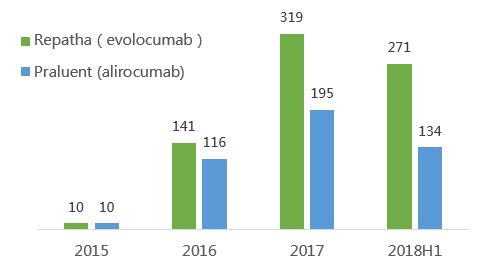
Note: Praluent sales data are based on Regeneron’s financial reporting standards.
To ensure a stable supply of Repatha following its price reduction, Amgen will continue to supply Repatha at the original price for a period of time, with plans to officially sell Repatha at the new pricing by the end of 2020 or earlier.
PCSK9, or proprotein convertase subtilisin/kexin type 9, is the most reliable lipid-lowering drug target following statins. PCSK9 binds to low-density lipoprotein receptors (LDLR), reducing the liver's ability to clear low-density lipoprotein cholesterol (LDL-C, also known as "bad" cholesterol) from the blood. PCSK9 inhibitors, represented by Repatha, inhibit the binding of PCSK9 to LDLR, thereby enhancing the liver's capacity to clear LDL-C and lowering LDL-C levels in the bloodstream.
PharmaCube Global New Drug DatabaseIt shows that there are currently 31 drugs targeting PCSK9 worldwide, among which 2 have been marketed, 2 are in Phase III clinical trials, 3 are in Phase II clinical trials, 17 are in Phase I clinical trials, and 7 are in preclinical stages.
Global R&D Status of PCSK9 Targets
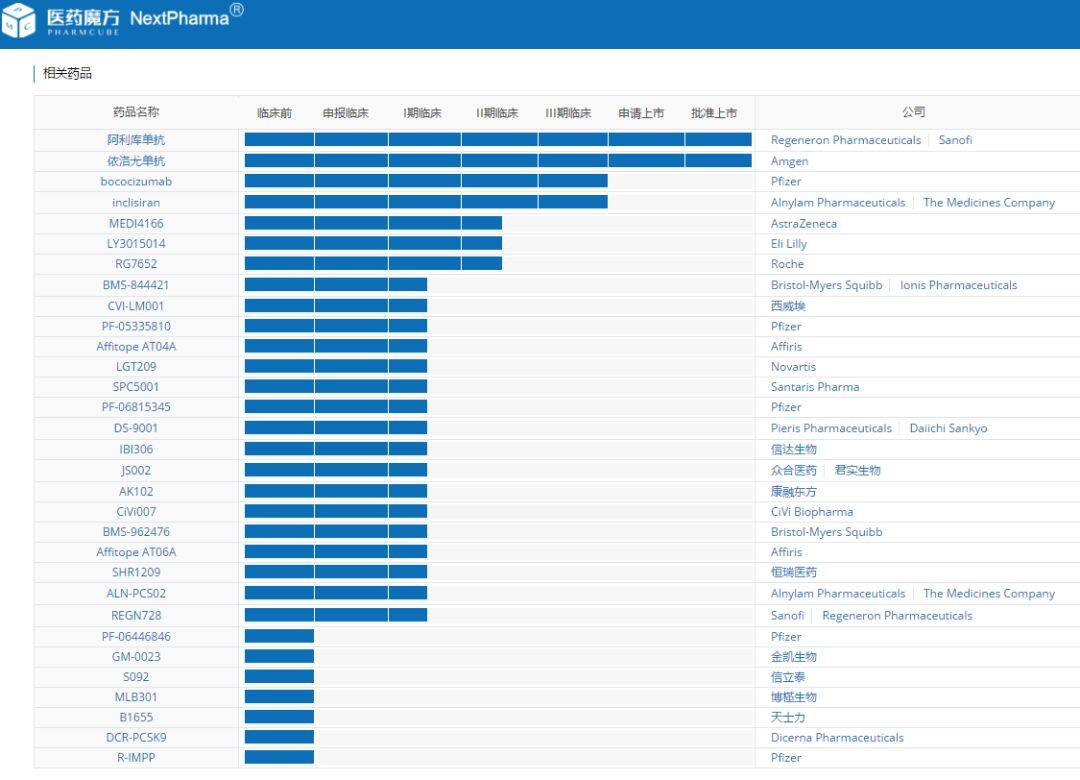
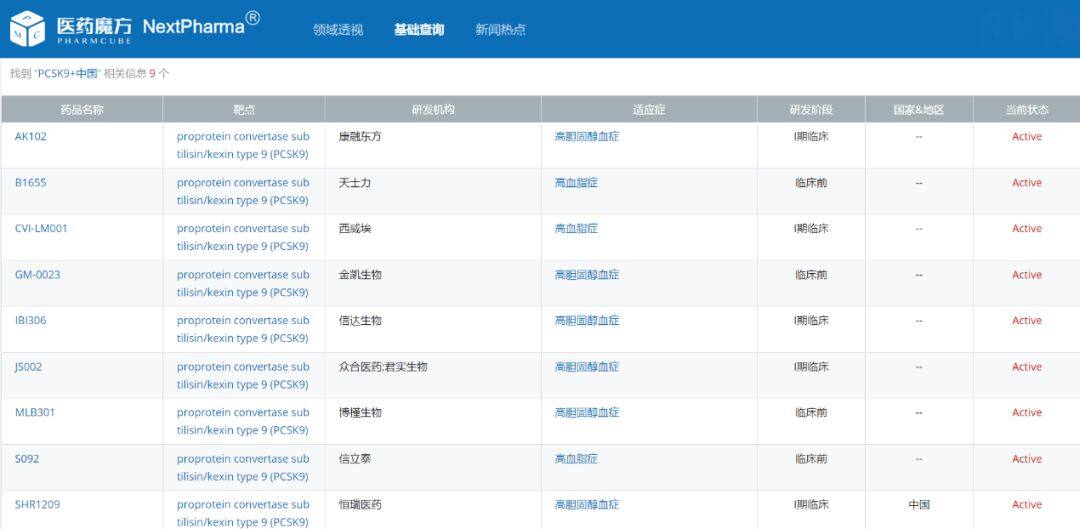
Currently, a total of nine domestic companies in China are developing PCSK9-targeted therapies. Monoclonal antibodies predominate, with only two small-molecule inhibitors: CVI-LM001 from Xiwei Ai and S092 from Salubris. In terms of development progress, five candidates are in Phase I clinical trials, and four are in the preclinical stage; none have advanced to late-stage clinical development.
R&D Status of PCSK9 by Chinese Enterprises
(Click to view larger image)
For more information on additional indications, clinical trials, patents, publications, and news related to the PCSK9 target, please visit “PharmaCube Global New Drug DatabaseQuery.