

FDA Approves BMS's Empliciti-Based Triple Therapy for Relapsed or Refractory Multiple Myeloma
Nov 07, 2018 15:02
CST Updated
15:02

Bristol-Myers Squibb
Biopharmaceutical and Nutritional Product R&D and Sales

AbbVie
Innovative Drug Developer

FDA
U.S. Food and Drug Administration

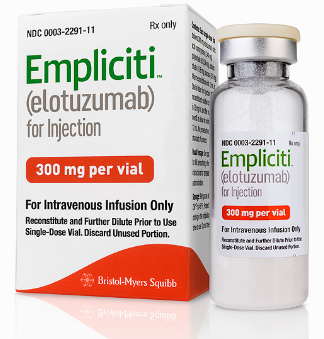
November 07, 2018 News /BioonBIOON/ -- Bristol-Myers Squibb (BMS) and its partner AbbVie recently announced jointly that the U.S. Food and Drug Administration (FDA) has approved the immunostimulatory therapy Empliciti (elotuzumab) in combination with Pomalyst (pomalidomide) and low-dose dexamethasone (EPd regimen) for adult patients with multiple myeloma (MM) who have previously received at least two prior therapies, including lenalidomide and a proteasome inhibitor (PI). Previously,FDAThe three-drug regimen EPd has been granted priority review status.
This approval is based on the positive data from the Phase II clinical study ELOQUENT-3. This study was a randomized, active-controlled clinical trial conducted in 117 patients with relapsed/refractory multiple myeloma (MM) who had failed at least two prior therapies, including lenalidomide and a proteasome inhibitor (PI). It evaluated the efficacy and safety of the three-drug regimen EPd compared to the standard-of-care two-drug regimen (pomalidomide plus dexamethasone, Pd). In the study, patients were randomly assigned to receive either the EPd regimen (n=60) or the Pd regimen (n=57) until disease progression or unacceptable toxicity.
It is worth mentioning that the ELOQUENT-3 study is the first to evaluate the standard of care regimen (pomalidomide and low-dose dexamethasone) with or without aMonoclonal Antibody Drugsrandomized study. The EPd regimen is also the first three-drug regimen approved based on data from a randomized clinical trial using Pd as the control regimen.
Data showed that, compared with the Pd treatment group, the EPd treatment group had a significantly prolonged progression-free survival (PFS) (median PFS: 10.25 months [95% CI: 5.59 months–not estimable] vs. 4.67 months [95% CI: 2.83 months–7.16 months]) and a significantly reduced risk of progression or death by 46% (HR=0.54, 95% CI: 0.34–0.86, p=0.0078). The PFS benefit in patients randomized to the Pd treatment group was consistent among those who had previously received 2–3 prior therapies (HR=0.55, 95% CI: 0.31–0.98) and those who had received ≥4 prior therapies (HR=0.51, 95% CI: 0.24–1.08).
In terms of overall response rate (ORR), the EPd regimen group showed a twofold higher ORR compared to the Pd regimen group (53.3% [n=32/60, 95% CI: 40.0–66.3] vs. 26.3% [n=15/57, 95% CI: 15.5–39.7]; p=0.0029), with a higher proportion of patients achieving very good partial response or better (20% [n=12] vs. 8.8% [n=5]). Regarding safety, the incidence of serious adverse events was 22% in the EPd regimen group and 15% in the Pd treatment group. Due toAdverse ReactionsThe discontinuation rates due to adverse events were 5.0% in the EPd treatment group and 1.8% in the Pd treatment group.
Joseph E. Eid, Senior Vice President and Chief Medical Officer at Bristol-Myers Squibb, stated that despite significant innovations in new therapies for multiple myeloma (MM) in recent years, many patients still face poor prognoses, particularly those with relapsed and refractory disease. The EPd regimen has been proven to prolong progression-free survival in these patients, providing healthcare professionals with an effective new tool to treat this relentless cancer. This approval represents an important milestone for the MM patient community, not only strengthening immunotherapyTumorunderscore the importance of learning in the treatment of hematologic malignancies and expand the role of Empliciti in this field, addressing unmet medical needs among patients with relapsed or refractory multiple myeloma (MM).
It is estimated that approximately 31,000 new cases of multiple myeloma will be diagnosed in the United States in 2018. A common characteristic among many patients is experiencing multiple relapses, meaning that the cancer progresses after a period of remission.
Empliciti was co-developed by Bristol-Myers Squibb and AbbVie, with commercialization activities solely managed by Bristol-Myers Squibb. Empliciti is an immunomodulatory antibody that targets signaling lymphocytic activation molecule family member 7 (SLAMF7, also known as CS1), a glycoprotein expressed on the surface of myeloma cells. It is also expressed on natural killer (NK) cells and plasma cells, and at lower levels in specific immune cell subsets within the hematopoietic lineage.
Empliciti has a dual mechanism of action: (1) Direct activation pathway: It directly activates the immune system via natural killer (NK) cells through the SLAMF7 pathway; (2) Antibody-dependent cellular cytotoxicity (ADCC): Empliciti can target and bind to SLAMF7 molecules on the surface of multiple myeloma cells, marking these malignant cells. Through antibody-dependent cellular cytotoxicity, it enhances the ability of natural killer cells to kill malignant cells. (Bioon.com)