

Gilead's Breakthrough Hepatitis B Drug TAF (Vemlidy) Approved in China

Gilead Sciences
Antiviral Drug Developer
On November 14, Gilead Sciences’ new hepatitis B drug, tenofovir alafenamide (TAF) tablets, received registration approval from the National Medical Products Administration (NMPA) for its new drug application (JXHL1700186), and was approved for the treatment of chronic hepatitis B in adults and adolescents (aged 12 years and older, weighing more than 35 kg).
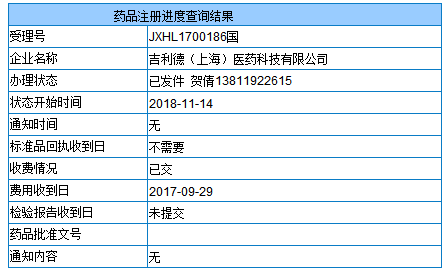
Gilead first submitted an application for an international multicenter clinical trial of "tenofovir alafenamide fumarate tablets" in China in February 2014, utilizing the special approval pathway. It obtained the approval for the international multicenter clinical trial in April 2015 and subsequently registered and conducted three studies domestically in 2015 (CTR20150267; CTR20150268; CTR20150269).

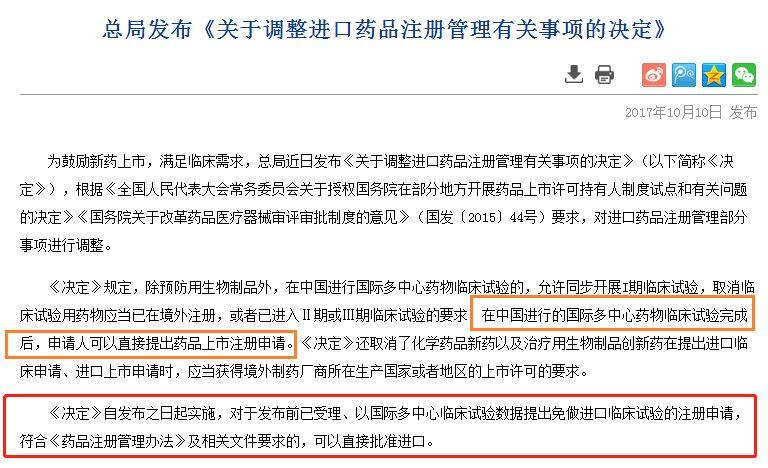
On October 9, 2017, the Center for Drug Evaluation (CDE) accepted Gilead’s clinical trial application for Tenofovir Alafenamide Tablets. However, as the China Food and Drug Administration (CFDA) had previously solicited public comments on the “Provisions on Adjusting Certain Matters Concerning the Registration and Administration of Imported Drugs,” Gilead’s submission was exempt from confirmatory clinical trials. Furthermore, the CDE included the drug in its priority review program as an antiviral agent for hepatitis. In accordance with the “Provisions on Adjusting Certain Matters Concerning the Registration and Administration of Imported Drugs,” which officially came into effect on October 10, 2017, the CFDA directly approved Tenofovir Alafenamide Tablets for market launch, thereby bypassing the traditional production approval step.
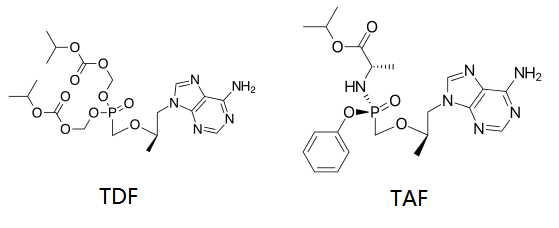
Tenofovir alafenamide (TAF), a prodrug of tenofovir disoproxil fumarate (TDF)—the clinical standard for hepatitis B treatment—exhibits high plasma stability, enabling efficient delivery to hepatocytes. Consequently, TAF achieves efficacy comparable to TDF at less than one-tenth the dose (25 mg vs. 300 mg), while avoiding elevated plasma tenofovir concentrations and thereby enhancing safety.
On November 10, 2016, TAF was approved by the FDA under the brand name Vemlidy, becoming the first hepatitis B drug approved by the FDA in nearly a decade. It was subsequently launched in Japan on December 19, 2016, and received approval from the European Medicines Agency (EMA) on January 9, 2017.
On April 20, 2017, the European Association for the Study of the Liver (EASL) released the 2017 updated guidelines for the management of hepatitis B. For nucleos(t)ide analogue-naïve patients with chronic hepatitis B, the first-line preferred nucleos(t)ide analogue regimens now include tenofovir alafenamide in addition to the previously recommended tenofovir disoproxil fumarate and entecavir. For patients with renal or bone disease and/or those at risk of developing such conditions, particularly individuals with prior exposure to nucleos(t)ide analogues, the guidelines recommend tenofovir alafenamide tablets as the preferred treatment.
In the first three quarters of 2018, Vemlidy’s global sales revenue amounted to US$221 million, including US$172 million from the U.S. market.
In the more lucrative Chinese market, the battle between domestic generic drug manufacturers and the originator, Gilead Sciences, has already ignited. As of November 4, two Chinese companies, Chia Tai Tianqing and Qingfeng Pharmaceutical, had submitted applications for marketing approval of their generic versions.
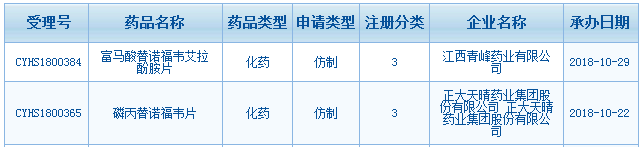
Based on clinical trial registrations, the hepatitis B market is attracting increased attention from more domestic pharmaceutical giants. Kelun Pharmaceutical has completed patient recruitment for its bioequivalence (BE) trial and is approaching submission of its marketing application. Guangshengtang and Qilu Pharmaceutical have recently registered their BE trials.
Registration Status of Bioequivalence Trials for Domestic TAF
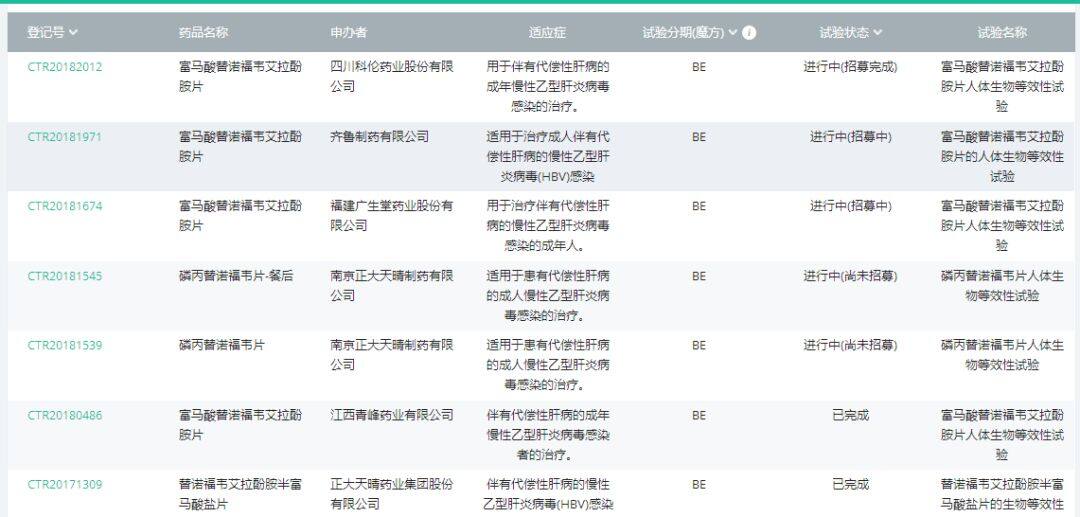
Source: PharmCube Clinical Trial Database
Globally, there are approximately 400 million patients with hepatitis B. In China, there are nearly 30 million individuals infected with hepatitis B and 7.6 million infected with hepatitis C. Each year, approximately 330,000 people die from liver cirrhosis and primary liver cancer caused by hepatitis B or hepatitis C virus infection. Hepatitis B is a life-threatening disease that currently cannot be completely cured, posing a serious threat to human health.
Prior to the availability of tenofovir alafenamide (TAF), the mainstay treatments for chronic hepatitis B included injectable interferon-alpha and pegylated interferon-alpha, as well as oral nucleos(t)ide analogs such as lamivudine, telbivudine, adefovir dipivoxil, tenofovir disoproxil fumarate, and entecavir. However, interferon-based therapies are associated with drawbacks such as high cost and frequent adverse reactions, while oral nucleos(t)ide analogs are limited by the risk of drug resistance and high rates of relapse upon discontinuation. Due to its superior efficacy and favorable safety profile, TAF has been hailed as the most effective medication for hepatitis B to date.