

Yosemite Clinic and Shanghai Tenth People's Hospital Forge China's First Medical Consortium Between a Private Premium Clinic and a Public Tier-3A Hospital

Yosemite Clinic
Provider of Personalized High-End Medical and Health Services
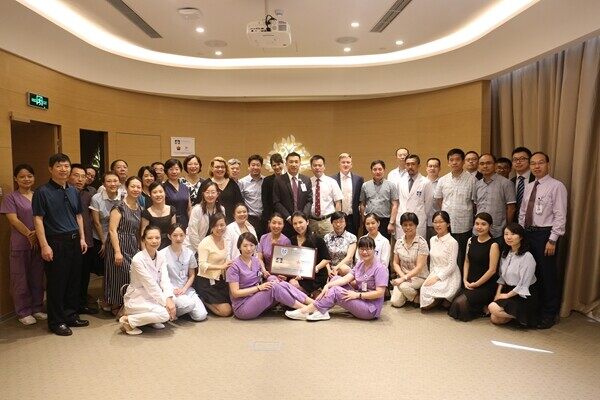
VCBeat (WeChat ID: vcbeat) has learned exclusively that on July 27, Yosemite Clinic (hereinafter referred to as “YC”) signed a strategic cooperation agreement for a medical consortium with Shanghai Tenth People’s Hospital Affiliated to Tongji University (Shanghai Tenth People’s Hospital, hereinafter referred to as “Tenth Hospital”) in Pudong, Shanghai. This makes YC the first private healthcare institution in China to establish a formal medical consortium partnership with a large public Grade A tertiary hospital. The two parties will engage in in-depth cooperation and exchange across multiple fields, including discipline development, talent cultivation, multi-site practice, clinical practice, and scientific research innovation, forming a strategic alliance to achieve resource sharing.
Professor Qin Huanlong, President of Shanghai Tenth People’s Hospital, stated: “The medical consortium partnership with Yosemite Clinic aligns with current national healthcare reform policies, which encourage public hospitals and private medical institutions to establish contractual collaborations in areas such as talent, management, services, technology, and branding, thereby supporting social forces in delivering multi-tiered and diversified medical services. Meanwhile, this partnership responds to the requirements of tiered diagnosis and treatment under the ongoing healthcare reforms. Both parties will jointly explore an innovative model of co-construction and mutual development between public and private hospitals, actively collaborating in clinical care and education to further enhance the quality and efficiency of diagnosis and treatment, ultimately benefiting a broader patient population. We also hope that this collaboration will help establish more effective management mechanisms for physicians’ multi-site practice.”
Dr. Song Keying, founder of Yosemite Clinic, stated, “We are honored to receive the recognition of Shanghai Tenth People’s Hospital and become the first private boutique medical institution to form a medical consortium with it. Yosemite Clinic specializes in multidisciplinary day-case minimally invasive surgeries and convenient medical services. We look forward to jointly exploring a medical consortium model that leverages the complementary strengths of public and private healthcare institutions.”
Mobilizing the Enthusiasm of Medical Personnel to Meet the Diversified Needs of Patients
Under the current national healthcare reform framework promoting tiered diagnosis and treatment—characterized by initial consultations at primary care levels, two-way referrals, differentiated management of acute and chronic conditions, and coordinated care across hierarchical institutions—Medical Consortia integrate regional medical resources. Composed of tertiary hospitals, secondary hospitals, and community health centers, these consortia aim to alleviate the public’s difficulties in accessing medical care. Historically, Medical Consortia primarily existed among public medical institutions, often forming government-led collaborative partnerships with varying degrees of implementation success. In contrast, the collaboration between large public Grade-A tertiary hospitals and premium private medical institutions offers an opportunity to fully leverage the positive role of market mechanisms. This model provides physicians with more flexible practice options, thereby meeting the diversified, multi-dimensional, and multi-level needs of patients.
As a directly affiliated hospital under the Shanghai Shenkang Hospital Development Center, Shanghai Tenth People’s Hospital has maintained a rapid growth trajectory in recent years, with managerial innovation remaining a key priority. Professor Qin Huanlong stated, “Establishing a modern hospital management system is one of the goals of public hospital reform, and hospital performance management constitutes a critical component thereof. Under the 13th Five-Year Plan, transitioning from volume-based expansion to scientifically driven, budget-constrained development will be a primary objective for our hospital. In the context of tiered diagnosis and treatment, outpatient volumes at large public hospitals may continue to decline. How can we motivate medical staff? The key lies in proactively adjusting the case-mix structure and shifting the performance evaluation focus from ‘quantity’ to ‘quality.’” Taking a typical performance-based incentive system as an example, the hospital’s bonus allocation has shifted from being primarily based on surgical volume to being determined by surgical complexity coefficients and individual contributions. This approach encourages departments to undertake more Level 3 and Level 4 surgeries, thereby addressing more complex conditions and fully leveraging the technological advantages of a top-tier tertiary hospital, while resources for Level 1 and Level 2 surgeries are correspondingly decentralized to lower-tier institutions.
Dr. Song Keying stated, “Yosemite Clinic is positioned as a provider of boutique medical services, with pricing primarily benchmarked against the special-needs services offered by public hospitals. We aim to reflect the professional value of medical staff through flexible pricing mechanisms, while ensuring that patients experience warm and high-quality care. We believe that by leveraging flexible market mechanisms, differentiated commercial health insurance, high-standard clinical protocols, and premium medical services, we can serve as an effective complement to large public tertiary hospitals.”
As China’s first independent ambulatory surgery center, Yosemite Clinic focuses its core minimally invasive day-surgery services on common and frequently occurring conditions. Patients are typically discharged after a brief 1–2 day period of observation and recovery. This model enables large public tertiary hospitals to concentrate on more complex surgical cases, while patients requiring Level 1 and Level 2 minor procedures gain access to more diverse healthcare options, thereby fostering a collaborative medical consortium characterized by vertical integration, seamless coordination, and complementary services.
Meanwhile, FastMed Urgent Care, which has entered into a strategic partnership with Yosemite Clinic, is positioned as a neighborhood healthcare provider. Its services cover nearly all non-life-threatening minor ailments and common conditions encountered in daily life, including surgical treatments and frequently occurring illnesses. This model effectively alleviates some of the patient volume pressure on the overcrowded emergency departments of tertiary hospitals. In the United States, FastMed is capable of treating 80% of conditions typically presented in emergency settings. Should patients require further diagnosis and treatment, they can be promptly referred through Yosemite Clinic. Nine specialized clinical centers, including the Reproductive Medicine Center of Shanghai Tenth People’s Hospital, are equipped to meet the mid-to-high-end healthcare needs of these patients.
Building a Collaborative Diagnosis and Treatment System of “Specialized Departments, Specialized Diseases, and Specialized Treatments”
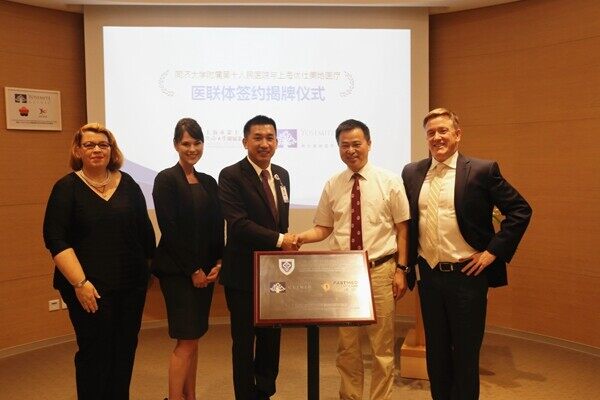
At the signing ceremony of the medical consortium, both parties dispatched key representatives from their administrative and clinical departments. The clinical leadership and delegates from Shanghai Tenth People’s Hospital (Tenth Hospital) included specialists from breast and thyroid surgery, hernia surgery, anesthesiology, sports medicine, urology, pediatrics, gynecology, ophthalmology, stomatology, dermatology, radiology, pathology, and nursing. This participation underscores a significant strategic initiative by Tenth Hospital, a rapidly developing large-scale public Grade 3A hospital: in the course of its deepening transformation, it is shifting from enhancing overall disciplinary strength to emphasizing specialized disciplines and diseases that embody “scale and integration, prominence and distinction.” Its relevant disciplines and specialty alliances are fully open to Yosemite Clinic, providing robust support for bilateral disciplinary partnerships. These collaborations may take various forms, including but not limited to the establishment of specialty centers, appointment of executive discipline directors, assignment of disciplinary consultants, remote inter-departmental cooperation, and flexible talent mobility between departments. Through such specialized cooperation, both parties can leverage the respective strengths of public and private healthcare institutions, forming a powerful alliance with complementary advantages. This will ensure superior medical quality across various specialties and deliver more professional diagnostic and therapeutic services to patients.
Guided by its vision of “Gathering Elite Talent, Creating a Healthcare Haven,” Yosemite Clinic’s integration into the medical consortium of Shanghai Tenth People’s Hospital marks a significant step in building a high-quality platform for physicians’ multi-site practice. This partnership creates more and better facilitative conditions for medical practice, enabling both parties to jointly launch distinctive specialized services for patients in the future. These include targeted and in-depth medical service programs in specialties such as thyroid diseases, breast diseases, minimally invasive surgery for appendicitis and gallbladder conditions, sports medicine, and urology. From specialized outpatient clinics to day-case minimally invasive surgeries, Yosemite Clinic is poised to fully leverage the expertise of diverse specialist teams at Shanghai Tenth People’s Hospital, even establishing a coordinated Multi-Disciplinary Team (MDT) diagnosis and treatment system when necessary, thereby providing patients with optimized clinical solutions more effectively.
Creating a Continuing Education System for Healthcare Professionals
As a surgeon-entrepreneur, Dr. Song Keying stated, “Looking at leading medical institutions worldwide, Mayo Clinic’s successful experience is worth emulating. Its three-shield logo represents Mayo’s core values and the foundation of its development: providing optimal medical care to every patient through the integrated advancement of clinical practice, education, and research. Public healthcare in China, particularly large public tertiary hospitals, has effectively implemented this principle. So, what path should private medical institutions take? Prioritize clinical care and education, with research following closely.” Yosemite Clinic and Shanghai Tenth People’s Hospital have established collaborations across multiple levels for the advanced training, professional development, study, and visits of medical staff. In the future, they may also jointly cultivate high-level overseas medical and nursing talent.
Joe Canterbury, Founding Partner of Meisu Yi China Convenient Healthcare, a partner of Yosemite Clinic, stated, “My previous management experience at Starbucks globally demonstrates that training is a critical cornerstone of the professional services industry, particularly in healthcare. The family physician system has been a key focus of China’s recent supply-side structural reforms. However, the scarcity of general practitioners and the inadequacy of training systems are objective realities. By leveraging the mature training framework of Meisu Yi’s North American headquarters, we provide a platform for systematic advanced education for general practitioner teams. Through this collaboration with Shanghai Tenth People’s Hospital via its medical consortium, we aim to forge a powerful alliance on a broader scale, creating an environment conducive to the continuous professional development of healthcare personnel.”
Amid the vigorous promotion of tiered diagnosis and treatment, the medical consortium partnership between Yosemite Clinic and Shanghai Tenth People’s Hospital may pave an innovative path, offering a suitable collaboration model for large public tertiary hospitals and ushering in a new chapter for the ecosystem development of private boutique healthcare institutions.
About the Tenth People's Hospital Affiliated to Tongji University
Shanghai Tenth People’s Hospital, Tongji University, was founded in 1910 under the name “Shanghai Huning Railway Hospital.” In 1959, it became an affiliated hospital of Shanghai Railway Medical College. On December 30, 2003, it was transferred in its entirety to the Shanghai Municipal Government, becoming a tertiary Grade A general hospital directly administered by the Municipal Health Bureau (later subordinated to the Shanghai Shenkang Hospital Development Center). On May 29, 2004, it was officially unveiled and renamed Shanghai Tenth People’s Hospital and Shanghai Tenth People’s Hospital Affiliated to Tongji University. In 2012, it was entrusted by higher authorities to manage Shanghai Dermatology Hospital.
Currently, the hospital occupies an area of 97,000 square meters, with 1,960 actual open beds and 2,481 employees on staff. It has three national clinical key specialties, one Shanghai municipal priority clinical key discipline, two Shanghai clinical medicine centers, as well as the Shanghai Trauma Emergency Center, the Shanghai Nursing Quality Control Center, the Shanghai Bone Tumor Research Institute, the Shanghai Stroke Prevention and Treatment Center (North District), and Academician Ge Junbo's Studio. In collaboration, it co-established the Ministry of Education’s "Key Laboratory of Molecular Genetics of Arrhythmias."
In 2016, the hospital recorded 2.85 million outpatient and emergency visits, 81,409 discharges, and 43,832 inpatient surgical procedures. The hospital ranked 96th among the Top 100 Hospitals in the 2016 China Hospital Competitiveness Ranking for Top-Tier Hospitals, and 13th among public hospitals in Shanghai. It achieved an “A” rating in the municipal hospital directors’ performance assessments for five consecutive years, and ranked among the top citywide in social satisfaction surveys for eight consecutive years.
About Yosemite Clinic
Yosemite Clinic is a boutique medical institution offering comprehensive healthcare services, located in the heart of Pudong, Shanghai. The clinic provides general practice and multi-specialty medical services, with expertise in minimally invasive surgery. It is equipped with advanced diagnostic facilities and features Class 100 laminar flow operating rooms that meet high cleanliness standards. Yosemite Clinic has partnered with major commercial insurance providers to build a professional, convenient, harmonious, and reassuring healthcare service platform. Its physicians come from around the world and offer multilingual services in English, Japanese, Korean, and Chinese. Guided by its vision, “Uniting Global Elite Physicians, Creating a Healthcare Haven,” Yosemite Clinic is committed to becoming a premier practice platform for outstanding doctors, working together to create a warm and comfortable healthcare haven for patients.
Yosemite Clinic’s partner, FastMed Urgent Care China, entered into a strategic partnership with YC in October 2016. As a renowned urgent care brand originating from the United States, FastMed chose to establish its first clinic in China at Yosemite Clinic upon entering the Chinese market. With over 110 chain urgent care clinics across the United States, FastMed continues to expand rapidly each year. The company is dedicated to providing convenient medical services seven days a week, including holidays and nighttime hours. In addition to offering timely care and treatment for injuries and illnesses, FastMed provides services such as school-entry health management and sports injury management. In the U.S., FastMed is capable of treating 80% of the conditions typically seen in emergency rooms. Recognized by Inc. magazine as one of the fastest-growing private companies in the United States, FastMed has earned widespread word-of-mouth endorsement from American patients for its high-quality, convenient, and cost-effective healthcare services.