

Ruihan Medical Secures Nearly RMB 20 Million in Pre-A Funding to Advance Stroke Rehabilitation Robotics

RxHEAL
Developer of Rehabilitation Robots
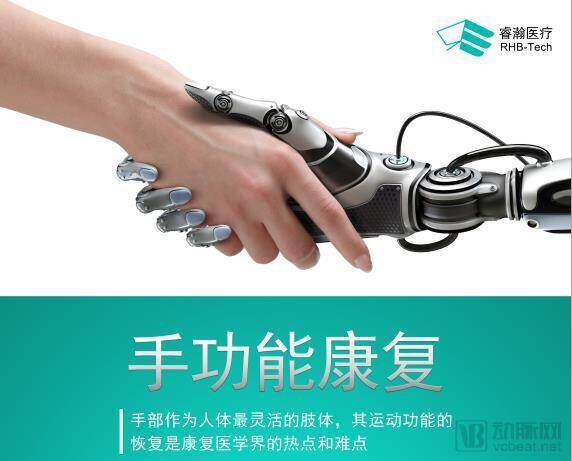
Image source: Provided by the company
Recently, SHENZHEN RXHEAL MEDICAL TECHNOLOGY CO., LTD. (hereinafter referred to as “RxHEAL”) completed a pre-A round of financing amounting to nearly RMB 20 million. Gu Xiangdong, co-founder of the company, promptly informed VCBeat of this development.
Gu Xiangdong stated that finalizing this round of financing for RxHEAL took only one year since the previous funding round, indicating a relief from the earlier difficulties in securing investment, with merely a delay in the public announcement. In May 2017, RxHEAL secured RMB 8 million in angel financing, led by Shanghai Zhonghe Capital, with Shanghai Qingrui Venture Capital participating as a co-investor. The funds from this round were designated for optimizing the organizational structure, improving the product portfolio, and establishing an initial market presence through pilot samples.
The pre-A financing round raised nearly RMB 20 million, led by Xi’an High-Tech Industry Venture Capital Co., Ltd. (hereinafter referred to as “Xi Gao Tou”), with participation from well-known domestic venture capital firms such as Shanghai Qingrui Venture Capital and Shenzhen Ruiding Capital. The proceeds from this round will be used for the research and development of new products, product marketing and promotion expenses, and the recruitment of new employees.
Based on the utilization of funds from RxHEAL’s first two financing rounds, its products have gradually matured and are poised for market launch. What changes has the RxHEAL project undergone over the past year? How do investors view rehabilitation robots? To address these questions, VCBeat conducted exclusive interviews with Gu Xiangdong, Co-founder of RxHEAL; Gao Bo, General Manager/Investment Director of the Equity Investment Department at Xi’an High-Tech Investment Group; Li Xin, Chairman of Shenzhen Ruiding Capital; and Wu Bin, Founding Partner of Shanghai Qingrui Venture Capital.
Founded in May 2016, RxHEAL has been deeply engaged in the field of stroke rehabilitation robotics. As a high-end intelligent manufacturing company dedicated to the research and development, production, and sales of high-tech intelligent rehabilitation robots, it boasts a professional R&D team comprising numerous masters and doctoral experts with extensive industry experience.
Recognizing the scarcity of products for hand rehabilitation among stroke patients in China, the team independently developed a range of hand rehabilitation robotic devices. To date, they have filed nearly ten patents, including national invention, utility model, and design patents, with some products successfully undergoing trials at dozens of authoritative clinical medical institutions across China.
“It didn’t take us long to secure our pre-A round of financing. During this period, our product underwent multiple iterations and is currently in the CFDA certification phase. The number of clinical partner hospitals has increased to six, including Beijing Tsinghua Changgung Hospital, Shanghai Huashan Hospital, and the Third Affiliated Hospital of Sun Yat-sen University in Guangzhou. We aim to expand this network by another nine hospitals within the year,” Gu Xiangdong told reporters.
In his view, the product registration phase is quite challenging, as it not only takes over a year but also involves stringent requirements.
Gu Xiangdong introduced that, in addition to providing financial support to RxHEAL, the investment institutions also facilitated connections with industrial resources. For instance, by the end of 2017, Xi'an High-Tech Investment Group had cumulatively invested in over 200 projects and successfully exited from 28 of them. Its healthcare-related investments included Libang Pharmaceutical and Yikang Pharmacy. As the largest chain retail pharmacy in Shaanxi Province, Yikang Pharmacy offers a strategic channel for RxHEAL to reach end-users by distributing its products through community pharmacies, creating a win-win situation for both parties.
China’s rehabilitation industry is currently in an upswing, representing a promising investment track and a value depression. While most other healthcare subsectors have already been saturated by institutional investors, the rehabilitation sector has seen later entry. With strengthened national policies and inclusion in medical insurance coverage, public acceptance is rising, creating a virtuous cycle that will continuously enrich the industrial chain for rehabilitation robots. This is why investors are bullish on RxHEAL, making them willing to invest during the company’s early stages, such as the Pre-A or Series A rounds.
Gu Xiangdong believes that investment institutions are currently very cautious; even when encountering promising projects, securing financing is not as easy as it was before the capital winter, requiring extensive due diligence and research from multiple parties.
Enterprise growth hinges on talent. One of Dr. Wang Jing’s core responsibilities as founder is to continuously attract top-tier professionals to join RxHEAL. “Unlike the traditional rehabilitation industry, which tends to focus primarily on rehabilitation equipment, we place greater emphasis on patient recovery outcomes. Our goal is to help one million patients achieve independence in daily living within the next 5–10 years,” said Gu Xiangdong.
Gao Bo, General Manager of the Equity Investment Department at Xi'an Hi-Tech Investment Group (Xigao Tou), the lead investor, commented on RxHEAL: "Although their team is relatively young and has certain shortcomings, we hope to provide as much support as possible to facilitate the company's development."
Established in 1999, Xi’an High-Tech Investment Group (XHTIG) has completed filing with the National Development and Reform Commission (NDRC) and registration with the Asset Management Association of China (AMAC), making it one of the few venture capital firms in China to be registered with both authorities. After more than two decades of sustained and steady growth, it has evolved into a specialized, market-oriented venture capital platform centered on equity investment, with diversified businesses developing in synergy. XHTIG serves as an executive director unit of the National Venture Capital Professional Committee and the Xi’an High-Tech Enterprise Association, and is a key financial institution supported by the Ministry of Science and Technology and the China Development Bank. Currently, its assets under management exceed RMB 11 billion.
According to Gao Bo, “Our investment scope is extensive, covering the entire industry chain, with the healthcare sector being a key component. With the advent of consumption upgrades and an aging population, we have been closely examining projects in the rehabilitation field, which has become a significant focus.” Currently, most domestic patients rely on rudimentary tools such as wooden sticks, rods, or canes for rehabilitation, representing an outdated approach that necessitates new rehabilitative and diagnostic interventions. RxHEAL precisely fills this gap. Furthermore, the rehabilitation market is substantial. There is a significant increase in the number of patients suffering from stroke and hemiplegia. Early intervention during treatment is critical, as restoring function in hemiplegic patients is challenging and requires advanced rehabilitation equipment. At present, the market largely depends on imported rehabilitation devices.
Rehabilitation robots themselves constitute a significant competitive moat. After obtaining certification from the China Food and Drug Administration (CFDA), the greater challenge for the RxHEAL team lies in its market capabilities. Currently, no rehabilitation robot products in China have received CFDA certification. With the rise of private healthcare, specialized rehabilitation hospitals have become increasingly favored by entrepreneurs and investors. Data shows that approximately 3,000 general hospitals in China have established departments of rehabilitation medicine, accounting for only 24.6% of the total number of general hospitals nationwide, and only half of these have dedicated rehabilitation wards. There are 338 various types of rehabilitation hospitals, and the number of approved rehabilitation beds accounts for merely 1.18% of the total beds in healthcare institutions across the country. Taking Shanghai as an example, only one out of every 60 patients requiring rehabilitation can be hospitalized to receive rehabilitative treatment.
In terms of market size, the gap with developed countries is more apparent, better reflecting the vast unmet market demand: The U.S. rehabilitation medical market (including long-term care) has exceeded $200 billion, or approximately $800 per capita; whereas China’s rehabilitation medical market currently stands at only RMB 20 billion, equivalent to merely RMB 15 per capita.
The rehabilitation business model, which is a form of physical therapy, involves a slow recovery process that is difficult to quantify. Gao Bo stated that he became aware of the RxHEAL medical project early on but delayed his investment because the due diligence and project comparison processes were time-consuming. RxHEAL’s products feature an assessment system that provides data feedback after each use. For stroke patients who are unable to move their bodies, the gradual return of mobility after using the product offers a highly intuitive demonstration of its effectiveness.
During use, there is no need for heavy reliance on physicians. After initial guidance from a doctor, patients can operate the device independently thereafter. This approach significantly expands the application scenarios for RxHEAL. The future market potential is substantial, ranging from large rehabilitation hospitals and community health service centers to traditional small-scale home use. A key advantage is the affordable cost per treatment session, which is significantly lower than cancer therapy expenses.
From Gao Bo’s perspective, as long as RxHEAL maintains its user base well, it can fully expand into other rehabilitation-related derivative products as its user base grows. This could include rehabilitation pharmaceuticals, large-scale equipment, and small-scale devices.
However, Gao Bo is well aware of RxHEAL’s weaknesses, such as the lack of marketing talent within the team and overly narrow sales channels. He aims to create synergies between RxHEAL’s products and previous portfolio companies of Xi’an Hi-Tech Investment Group (XHTIG), leveraging complementary strengths to achieve a win-win outcome. XHTIG holds annual CEO conferences to facilitate interaction, exchange management and operational expertise, and promote business growth. For RxHEAL, Gao Bo hopes its products can access these established channels, using them as pilot markets. For instance, as RxHEAL expands into the consumer market, it could collaborate with Yikang Pharmaceutical, a portfolio company of XHTIG. Yikang operates over 1,000 retail stores, generates annual revenues of RMB 5–6 billion, and is currently pursuing acquisitions of other pharmaceutical businesses.
“Further support will be provided, such as offering strategies for expanding public rehabilitation hospitals and providing advice on recruitment. In the future, we will also introduce high-quality investors for financing purposes. Whether they are industry-specific investors or others, we have access to extensive resources. We can facilitate connections whenever needed.”
“Reliable, reliable, truly reliable. The team at RxHEAL is particularly down-to-earth, low-key, and diligent. Over my ten years in the industry, I have reviewed 11,000 projects and invested in 19 publicly listed companies. By comparison, this project closely resembles one of those 19 listed companies we have previously invested in, which is precisely why we made a firm commitment to invest. However, the investment cycle is relatively long; but for healthcare projects, there is no alternative—such is the nature of the medical sector,” Li Xin, Chairman of Shenzhen Ruiding Capital, told reporters.
Ruiding Capital is a professional fund management company specializing in private equity investment, established by senior veterans in China’s venture capital sector, outstanding listed companies, and private entrepreneurs. The firm is primarily engaged in professional investment and fund management, with a focus on industries such as consumption upgrading, artificial intelligence, and content IP.
For this project, Ruiding Capital provided not only post-investment management services but also pre-investment support. Li Xin served as a judge in many innovation and entrepreneurship competitions in which RxHEAL participated. At that time, he had not yet decided to invest in the company. To his surprise, with each interaction, he observed significant progress in the RxHEAL project: rapid iteration and upgrades of product technology, expansion of sales channels, and substantial recruitment of new personnel. Once RxHEAL obtains CFDA certification, it will be able to roll out large-scale promotion and application of its products.
When it comes to investment projects in the healthcare industry, Li Xin considers not only the return on investment but also places greater emphasis on personal sentiment. “My father is a physician, and many of our family friends are doctors as well. I grew up immersed in the broader health sector. For such medical projects, even though they may involve longer cycles, greater uncertainties, and larger capital investments, I am still willing to pursue them. My hope is to help more people alleviate suffering and achieve better health.”
He believes that RxHEAL’s period of rapid growth is likely to occur after 2019, and he is willing to support and assist its development in the interim. Since 2016, RxHEAL’s existing shareholders have consistently believed that it would take a considerable amount of time to yield results, sharing the same original intention.
Although from an outside perspective, RxHEAL’s biggest weakness appears to be insufficient marketization, this is not a problem. Currently, Li Xin has already selected two to three sales directors from listed companies for their consideration.
In contrast, Li Xin believes that the founder of RxHEAL is low-profile and serves as a disciplinary leader—qualities he considers essential for founders in the technology sector. He asserts that plagiarism is unlikely to occur in the short term due to their strong competitive moat. Conversely, he would not invest if the company’s founder were someone well-versed in marketing but lacking technical expertise. This characteristic can be seen as both their greatest weakness and their strength.
Subsequently, RxHEAL bolstered its marketing team with additional talent, ensuring that each member assumed their designated role—a structure that proved highly effective. This setup closely mirrored the organizational models of many healthcare companies he had previously invested in, such as Buchang Pharmaceuticals and Zhongzhu Medical.
In fact, the rehabilitation industry boasts a vast market. China has eight times as many rehabilitation patients as the United States, yet its per capita rehabilitation expenditure is less than one-tenth of that in the U.S., indicating enormous future market potential. RxHEAL targets the most challenging rehabilitation cases, achieving impressive clinical outcomes. As it expands into other areas of rehabilitation, describing the market opportunity as worth hundreds of billions of yuan is a conservative estimate.
For instance, in addition to selling products, they also offer rehabilitation services. Their products can be applied not only in communities, hospitals, and homes but also serve as the basis for exporting comprehensive solutions in the future. With their robust underlying technologies—each capable of evolving into a distinct industry—they are well-positioned to become the largest conglomerate with a full industrial chain in the rehabilitation sector. This outcome is entirely feasible.
Li Xin has already mapped out RxHEAL’s development plan for the next 8–10 years. This strategic roadmap was formulated in collaboration with the company, covering channel customization and brand customization, with every step carefully planned. The next phase involves diligent execution. While challenges may arise along the way, frequent brainstorming sessions between the two parties—given their close proximity—help address them. Li Xin hopes RxHEAL will rapidly grow into a unicorn company.
“I know many top medical experts in China, including the chairs of the medical associations in Hong Kong and Macau. When their company goes public in the future, we will also provide strong support. One of our company’s shareholders owns three listed companies in Hong Kong.”
Shanghai Qingrui Venture Capital served as a co-investor in RxHEAL’s current funding round and was also an investor in the previous round. The firm currently manages RMB 600 million in assets, with investments spanning across all industries; healthcare represents just one segment of its portfolio, which focuses primarily on early-stage startups.
“I am optimistic about the medical rehabilitation sector. The aging population in China and the year-on-year rise in cardiovascular and cerebrovascular diseases are driving the overall growth of rehabilitative care, while state investment in this field is also increasing. RxHEAL primarily focuses on stroke rehabilitation, which aligns well with our investment thesis,” said Wu Bin, Founding Partner of Shanghai Qingrui Venture Capital.
According to his understanding, rehabilitation medical equipment in China is significantly outdated, with large-scale rehabilitation devices relying on imports and failing to meet clinical demands. The rehabilitation medical robots independently developed by RxHEAL facilitate neurological recovery in patients, achieving a cure rate of 80%.
RxHEAL’s team possesses strong technical expertise and demonstrates great diligence, which he views favorably. Although the founder comes from a technical background, they are bold and enterprising. Since early-stage investment decisions primarily hinge on the industry landscape and the quality of the team, Wu Bin did not hesitate excessively and made swift decisions, ultimately committing to co-invest within a week.
The key factor was that RxHEAL’s technology and products greatly impressed Wu Bin. Having prior knowledge of the rehabilitation industry, where most offerings were from overseas, he was pleasantly surprised to find a domestic company performing so well. Going forward, he will provide RxHEAL with consulting and management advice to offer as much support as possible.
RxHEAL is an upstream player in the rehabilitation industry chain, with the future goal of establishing itself as a well-known rehabilitation robotics company in China. “We are also targeting mid- and downstream teams. For instance, we aim to identify suitable partners to operate rehabilitation medical institutions. We continue to seek other investment targets in the rehabilitation sector to develop a chain of rehabilitation healthcare facilities, with individual investment amounts kept below RMB 20 million.”