

Engine Biosciences Leverages AI to Decipher Biological Networks for Next-Generation Drug Discovery
Engine Biosciences
Artificial Intelligence Algorithm Researcher
Millions of complex, nonlinear gene interaction networks exist within human cells. Recent clinical studies have revealed that multiple life-threatening diseases, ranging from cancer to neurasthenia, result from dysfunctions in various genes and pathways.
To address this challenge, Engine Biosciences (hereinafter referred to as “Engine”) has developed an AI-powered biomedical platform that enables researchers and drug developers to uncover the genetic interaction mechanisms and biological networks underlying diseases more rapidly and effectively than traditional methods, test therapies specifically targeting these interactions, and conduct analysis and prediction for precision medicine applications. The company is committed to improving drug discovery by pioneering biological network experimentation, thereby benefiting a broader patient population.
According to VCBeat (WeChat ID: vcbeat), Engine, an emerging biotech startup founded in 2015, has a core team hailing from the United States and Singapore.
In January 2018, the company announced that it had successfully completed a $10 million seed financing round, making it one of the largest seed rounds in Southeast Asia’s history. The round was co-led by Allsino Capital and Danhua Capital. Participants included WuXi AppTec, a global leader in the biopharmaceutical industry; EDBi; Lanting Investment; Baidu Ventures; United Group (U.S.); and Nest.Bio Ventures.
This financing will support multiple core initiatives at Engine Biosciences, including building a drug discovery platform, expanding its research and execution teams, conducting internal R&D, and launching clinical trials in collaboration with partners. The company’s current partners include several leading clinical research organizations and a Fortune 500 company in the United States.
Traditional drug discovery is not only slow but also expensive when it comes to testing and evaluating the vast number of gene interactions associated with complex diseases. Engine’s platform has brought an order-of-magnitude improvement in the efficiency and scale of such research. By understanding and testing gene-gene interactions, and leveraging machine learning and deep learning algorithms to analyze the resulting data, Engine’s platform is capable of deciphering complex biological networks that have long plagued drug developers and researchers, thereby bringing a logical structure to the drug development process.
“The biopharmaceutical industry needs better R&D approaches that can develop treatments for patients in need more rapidly. In many traditional drug development scenarios, we have limited understanding of the pathogenic mechanisms of diseases and their corresponding treatments and prevention,” said Jeffery Lu, Co-founder and CEO of Engine Biosciences. “Engine’s platform enables researchers not only to discover interactions among disease-related genes, but also to test therapies targeting these interactions in a faster, more cost-effective, and precise manner than ever before.”
The Integration of Business and Academia Drives Corporate Development
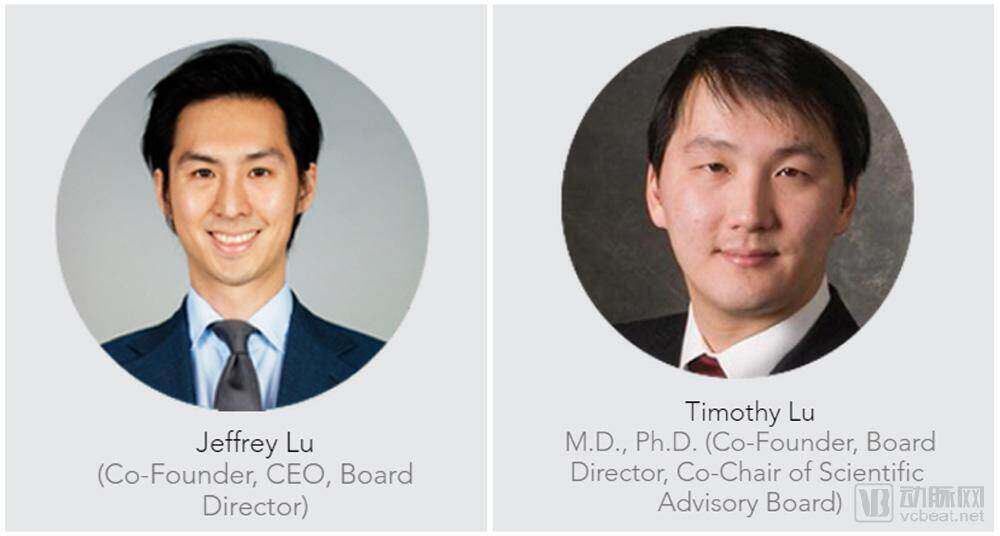
EngineCo-founder and CEO Jeffrey Lu has accumulated extensive business and entrepreneurial experience over the past decade. He has held executive management positions at both technology-driven startups and multi-billion-dollar companies, leading teams in data analytics and strategic planning with the ultimate goal of driving high-performance business outcomes.
Lu earned his bachelor’s degree with honors from the University of Pennsylvania. After graduation, Lu began his career at Bain & Company. According to VCBeat, as one of the world’s leading business consulting firms, Bain & Company is dedicated to collaborating with senior executives to make strategic decisions regarding corporate culture and translate ideas into action. During his tenure, Lu gradually developed proprietary deep data insights and strategies, firmly believing that the development, learning, and application of data are key to transforming enterprises.
During his tenure at AirAsia and the global online travel company AAE Travel, Lu’s primary responsibility was to establish and manage data analytics teams. Concurrently, he introduced and analyzed various case studies on data-driven decision-making across organizations, focusing on leveraging big data research to achieve millions of dollars in revenue and profit growth for enterprises.
Lu’s years of experience in the airline and tourism industries led him to establish Think Digital Sdn Bhd, where he serves as Chairman. Headquartered in Petaling Jaya, Malaysia, Think Digital Sdn Bhd is a private company primarily engaged in operating low-cost airlines. Additionally, Lu previously served as Co-Founder and General Manager at Goodman Capital, an investment firm that has invested in more than ten biotechnology companies across Asia and the United States.
As Co-founder, Chairman, and Co-Chair of the Scientific Advisory Board at Engine Biosciences, Timothy Lu completed his doctoral and graduate studies at Harvard Medical School and the Massachusetts Institute of Technology.
T. Lu developed key elements of the Engine technology platform and possesses extensive expertise in synthetic systems biology, gene interaction mapping, and computer science/engineering. He is also an Associate Professor at MIT, the leader of the Synthetic Biology Group at MIT’s Research Laboratory of Electronics (RLE), and a core member of both MIT and Harvard University.
T. Lu, a pioneer in applying synthetic biology to deliver medical and industrial solutions, has received numerous awards, including the NIH New Innovator Award, the Presidential Early Career Award for Scientists and Engineers (PECASE), the NSF CAREER Award, and the Ellison Medical Foundation New Scholar in Aging Award.
In addition to his contributions to academia and research, T. Lu has also achieved notable success in the business sector. Building on his personal research, he founded several companies, including Sample6 Inc. and Synlogic Inc. These two U.S. venture-backed companies have leveraged synthetic biology to develop next-generation diagnostic therapies for food safety and the human microbiome, respectively. T. Lu has raised over $160 million for these companies through multiple rounds of financing.
What are the key methods of Engine?
Currently, Engine has not developed any products. The company’s primary objectives are to accelerate drug discovery, address healthcare challenges, develop a networked biomedical platform, and build a world-class professional team.
To address a series of challenges faced by traditional pharmaceutical manufacturing, Engine has centered its hypotheses and solution development around the following three key issues, with the core objective of achieving the company’s goals:
1. The development cycle of traditional drugs is constrained by complex biological influences and the limitations of “one-at-a-time” experimentation, resulting in prolonged R&D timelines and high failure rates. How can we shift from the “one-at-a-time” experimental approach to an “all-at-once” paradigm to enable large-scale parallel experimentation?
2. If Engine can master datasets concerning gene interactions within specific biological contexts (such as disease), could precision drug development be realized?
3. If Engine can utilize these datasets to construct cell graphs, could this approach serve as a predictive engine for drug discovery?
In response to these three questions, Engine Biosciences’ networked biomedical platform has provided follow-up insights and answers from various perspectives:
1. Speed: The company’s proprietary scientific technologies and patented techniques deliver speed, scalability, and cost advantages to the R&D process.
2. Technology: During the deciphering of biological networks, the application of high-throughput biological experimental technologies transforms exponential scaling problems into linear scaling problems.
3. Tools: The company’s proprietary data generation model, combined with AI methodologies, enables more effective prediction and implementation in drug discovery and medical development.
4. Technology: The company’s cutting-edge technology can be applied to various cell types and disease-related indicators, meaning that Engine has the potential to expand its impact and save the lives of millions of patients worldwide.
Engine has attracted investment from multiple capital firms, including Baidu Ventures and WuXi AppTec, with its technology applied across four sectors:
I. Drug Repurposing, i.e., Investigating New Indications for Known Drugs;
II. Development of New Targets: Identifying Biological Factors Causing Diseases;
3. Precision medicine that provides unique treatment plans based on the patient's specific genetic makeup;
IV. Biological Pathway Analysis
Comparison of Engine with Competitors
1. Comparison between Engine and Sangamo BioSciences
As one of Engine Biosciences’ biggest competitors, Sangamo BioSciences is headquartered in Richmond, California, USA, and was founded in 1995. Sangamo BioSciences has extensive experience in gene therapy, clinical science, and product development.
The in vivo gene editing method developed by Sangamo BioSciences is demonstrated through its product candidate, SB-FIX. SB-FIX is a one-time therapy for hemophilia B that enables patients to stably and continuously express coagulation factor IX via gene recombination. Sangamo’s zinc-finger nuclease (ZFN)-mediated gene editing technology leverages the albumin gene locus—a liver-specific “safe harbor” site—to modify the target gene. Following ZFN-mediated editing, the target gene is converted into a functional protein, thereby achieving effective therapeutic outcomes. With this approach, patients’ livers can sustainably express coagulation factor IX, fulfilling the therapeutic objective.
Compared with Sangamo BioSciences, Engine Biosciences is a younger company with a smaller team, and its product portfolio is less mature in terms of clinical trials. Engine aims to decipher the complexity of biological networks and provide unique treatment plans based on each patient’s specific genetic makeup, committing to data interpretation to achieve precision medicine. In contrast, Sangamo primarily focuses on researching, understanding, and editing genes to suppress disease-causing factors and help patients regain health. The substantial financing secured by Engine will support deeper gene research and data exploration, with the goal of achieving efficient technology-driven pharmaceutical development.
2. Comparison between Engine and Recombinetics
Recombinetics, headquartered in Minnesota, USA, is a leading gene-editing company that applies gene-editing technologies to agriculture, clinical research, and the field of artificial organs. By leveraging its proprietary TALENs technology, Recombinetics has achieved gene editing across multiple species.
For example, on a farm in Iowa, farmers typically dehorn cattle to prevent injuries. Recombinetics genetically edited two calves on the farm to prevent horn growth, thereby sparing the animals from the painful process of dehorning.
“It’s like a find-and-replace function in the genome,” said Scott Fahrenkrug, CEO of Recombinetics. “This allows us to identify natural variants present within a species and rapidly translate them into applications.”
Engine differs from Recombinetics in its objectives and target audience. Engine is primarily dedicated to the research and development of high-quality novel therapeutics, contributing to the treatment of major diseases and advancements in life sciences, including cancer, neurodegenerative disorders, autoimmune diseases, and dermatological conditions.