

Verge Genomics Secures $32 Million Series A Funding to Advance AI-Driven Drug Discovery
Verge Genomics
Developer of Neurodegenerative Disease Therapies
Verge Genomics, a drug development company leveraging machine learning to develop new therapies, recently announced the completion of a $32 million Series A financing round led by Draper Fisher Jurvetson (DFJ), with participation from innovative biotech investors including WuXi AppTec Venture Fund, ALS Investment Fund, Agent Capital, and OS Fund. According to VCBeat (WeChat ID: vcbeat), Verge Genomics has raised over $36 million in total funding to date.
Verge Genomics, founded in 2015 and headquartered in San Francisco, is a company that integrates machine learning, neuroscience, and experimental biology to advance drug discovery. The Verge team currently consists of 15 members, the majority of whom hold PhDs from UCLA, Stanford, Oxford, and UCSF. Their areas of expertise span machine learning, neuroscience, drug development, applied mathematics, biophysics, and data science. Additionally, Verge has established both a Scientific Advisory Board and a Strategic Advisory Board, comprising world-leading scientists and researchers. This exceptional team helps Verge accelerate the translation of drug research from theoretical concepts into clinical practice.
Alice Zhang, CEO and Co-Founder of Verge Genomics, earned her undergraduate degree from Princeton University before pursuing her Ph.D. in the laboratory of Daniel Geschwind, a Professor of Neurogenetics at the University of California, Los Angeles (UCLA). During this period, she was deeply impressed by the rapid advancements in machine learning technologies and the explosive growth of genomics data. “We are at a unique moment,” said Alice. “In the past, we considered certain diseases too complex to solve. But now, we finally have the tools to address these challenges.”
Alice therefore decided to forgo her degree and build a scalable drug discovery engine that leverages machine learning to develop innovative, personalized therapies for complex diseases. She co-founded Verge Genomics with Jason Chen, who specializes in biomedical engineering, and secured support from Y Combinator, the renowned U.S. startup accelerator.
“I believe it was a unique moment in time. We were undergoing a revolution, and being an early mover was key,” said Alice. “I am delighted that Verge Genomics has become one of the first companies to combine neuroscience and genomics to develop new drugs.” In recognition of her outstanding achievements and significant potential in the biopharmaceutical industry, Alice was named to Forbes’ “30 Under 30” list and MIT Technology Review’s “35 Innovators Under 35” list.

(Alice Zhang, CEO and Co-founder of Verge Genomics)
Regarding the theoretical foundation of the company’s research, Alice explained, “Diseases are influenced by multiple genes. Most drug development efforts have failed because researchers focused on only one gene at a time.” By leveraging artificial intelligence tools to identify potential therapeutic molecules within large datasets, it is possible to facilitate the development of new treatments, particularly for neurodegenerative diseases such as Alzheimer’s disease, Parkinson’s disease, and amyotrophic lateral sclerosis (ALS).
Current or traditional drug research models are akin to a guessing game. Alice argues that although these approaches have offered some benefits for certain diseases in the past, major conditions such as Alzheimer’s disease are too complex to be solved merely by serendipitous discoveries.
Verge’s research approach involves analyzing vast amounts of DNA, RNA, and protein data to identify hundreds of interacting genes that contribute to a specific disease, with the goal of developing drugs that can address all these genetic factors simultaneously. This appears to be an ambitious plan. However, Verge has made certain progress in this field by combining genomic data, artificial intelligence, and the technologies underpinning Google’s search engine.
For Alice, these tools help her better understand the diversity of human brain structures and more advanced datasets. These computationally derived predictions, along with vast amounts of data, in turn improve Verge Genomics’ models and algorithms, which encapsulates the overarching concept of machine learning.
Alice stated, “We run our computational predictions through a human drug monitoring platform for use in our internal preclinical models.” This means that Verge will utilize human data throughout the entire process, rather than relying on animal data prior to clinical trials.
Currently, Verge’s lead program for ALS has completed the stages of data collection, targeted R&D, and small-molecule therapy development. In models of amyotrophic lateral sclerosis (ALS), seven of Verge’s molecules have demonstrated the ability to slow neuronal cell death in vitro.
Biopharmaceutical companies seeking to drive transformative change in therapeutic areas have identified neurodegenerative diseases as a promising entry point, which aligns precisely with Alice’s area of expertise. After nearly three years of rapid development, Verge has entered into agreements with two major pharmaceutical companies to conduct research on bipolar disorder and cerebral amyloid angiopathy. Verge is also committed to collaborating with top academic institutions and government organizations to build proprietary databases, aiming to establish the most comprehensive genetic database for patients with Parkinson’s disease and amyotrophic lateral sclerosis (ALS).
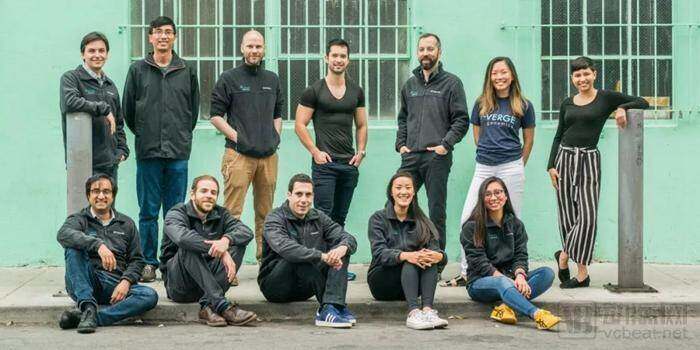
(Verge team, image courtesy of Verge Genomics)
September 2017Verge Genomics announced collaborations with the Center for Motor Neuron Biology and Disease at Columbia University, the Massachusetts General Institute for Neurodegenerative Disease, the Keck School of Medicine of USC, and the Department of Neurology at the University of Michigan Medical School. These partnerships aim to integrate Verge’s patient genomic database, induced pluripotent stem cell (iPSC) models, and advanced imaging technologies to bridge the gap between patient disease research and preclinical models.
November 2017Verge announced collaborations with the National Human Genome Research Institute (NHGRI) of the U.S. National Institutes of Health (NIH), the Scripps Research Institute, and Technische Universität Dresden. These academic institutions provided extensive Parkinson’s disease patient samples and preclinical models. Verge leveraged genomic analysis and data generation to identify optimal preclinical models for advancement into clinical stages, while simultaneously developing innovative therapies. Furthermore, Verge has planned more than ten novel therapeutic approaches targeting six different diseases.
January 2018Verge Genomics announced a partnership with technology company Datavant. This marks Verge’s first foray into the pharmaceutical data sector. Datavant’s core business involves integrating global healthcare data and leveraging artificial intelligence to aid in the design and interpretation of clinical trials, thereby increasing their success rates and facilitating the advancement of more drugs into clinical stages. Travis May, President and Co-founder of Datavant, stated, “Verge’s data and expertise in computational research biology provide a solid foundation for clinical trial design. We are delighted to partner with Verge to accelerate drug discovery.”
March 2018Verge Genomics announced that it would conduct single-cell genomic sequencing targeting Parkinson’s disease to establish the first dataset in this field. The project is led by Verge Genomics, with collaborators including the University of California, San Diego (UC San Diego) and the Belgian life sciences research institute VIB. Alice stated, “This collaboration will help Verge further build a high-quality database through computational analysis. The three parties will provide expertise in neurobiology, single-cell sequencing, and machine learning to create an accurate database, ushering in new breakthroughs in healthcare.”
Alice stated, “At Verge, we believe that bridging the gap between industry, academia, computing, and biology is essential to fully unlocking the potential of AI in drug research.”
“By integrating machine learning with drug discovery, we can accelerate the development of innovative therapies for major diseases such as Parkinson’s disease and ALS. We want investors to understand this interdisciplinary approach. We are also pleased to see support from investors in both the biotechnology and technology sectors. We will leverage this funding to advance our most promising drug candidates into clinical stages, while continuing to expand our proprietary database and explore additional therapeutic options.”
Emily Melton from DFJ stated, “The exponential growth in data related to machine learning has revealed potential opportunities to revolutionize drug research and development. Verge Genomics’ outstanding interdisciplinary team and their innovative approach of integrating technology with neurobiology to develop novel therapies for complex diseases have deeply influenced us.”
Edward Hu, Chief Financial Officer and Chief Investment Officer of WuXi AppTec, stated, “Verge has established one of the most comprehensive databases in the world, integrating disease research with machine learning and artificial intelligence. Our investment in Verge aims to engage in the field of drug development powered by AI and machine learning.”

(Image from Verge Genomics)
As a typical representative of digital innovation in the pharmaceutical industry, Verge Genomics’ securing of investment from renowned venture capital funds once again highlights the trend of the innovative drug sector embracing cross-disciplinary technologies such as artificial intelligence (AI). Innovative pharmaceutical companies are entering a new era of competition driven by AI capabilities, a development that warrants the attention of investors in the medical and life sciences fields.
AI-driven drug discovery, as an emerging field, currently sees over a dozen representative companies worldwide exploring various technological approaches. IBM Watson Health is perhaps the most well-known among them. Other notable players include Verge Genomics, Atomwise, Berg Health, Insilico Medicine, NuMedii, Numerate, Recursion Pharmaceuticals, and TwoXAR from the United States; BenevolentAI and Exscientia from the United Kingdom; and AccutarBio and XtalPi from China.
Early this year, XtalPi, a Chinese AI-driven drug discovery company, completed a Series B financing round of approximately $15 million, led by Sequoia Capital China, with participation from Google and additional investment from existing investor Tencent. In March, Atomwise, a company dedicated to leveraging AI to enhance the efficiency of new drug development, announced the completion of a $45 million Series A financing round. The round was led by Monsanto Growth Ventures, DCVC (Data Collective), and B Capital Group, with participation from investors including Baidu Venture Capital, Tencent, and early-stage investor Y Combinator.
In April, biotech “unicorn” BenevolentAI announced that it had raised $115 million from new and existing investors, bringing the company’s valuation to $2.1 billion. For innovative pharmaceutical companies, sustained R&D investment is virtually the only way to maintain long-term competitiveness. In 2017, the top ten pharmaceutical companies globally by R&D spending allocated more than 20% of their sales revenue to R&D, with the highest proportion reaching 45.5%.
Overall, AI tools are being increasingly widely applied in the pharmaceutical industry, serving as a critical component of its digital transformation and poised to reshape the landscape of the sector.
Reference:
1.https://www.vergegenomics.com/
2.https://www.fiercebiotech.com/cro/conversation-alice-zhang-ceo-verge-genomics?utm_source=internal&utm_medium=rss