

Song Jie of Hisense Heterogeneous Discusses AI in Medicine: Replicating Capability or Transcending Cognition?

Xishi Yigou Medical
Medical Artificial Intelligence Technology R&D, Equipment Manufacturer
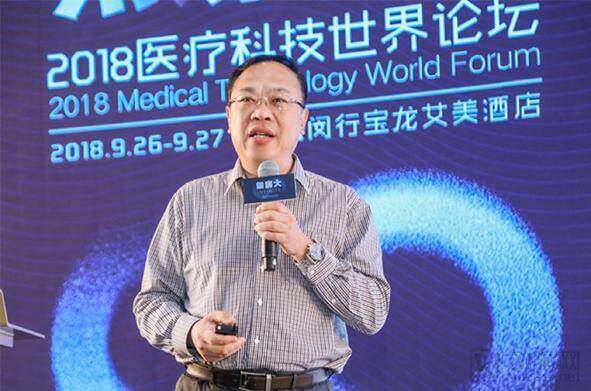
Song Jie, CEO of Xishi Yigou Medical, Delivers Keynote Speech at MTWF 2018
Conference: 2018 World Forum on Medical Technology
Speaker: Song Jie, CEO of Xishi Yigou Medical
September 26–27, 2018 Medical Technology World Forum (MTWF2018) was held at Le Méridien Minhang Baolong Hotel in Shanghai. The forum was jointly organized by the Industry-University-Research Cooperation Coordination Department of China High-Tech Industrialization Research Association, VCBeat, and VCBeat Institute, under the theme “INFINITY.”
Song Jie, CEO of Xishi Yigou Medical, was invited to attend the summit and delivered a keynote speech titled “Clinical Application Technologies and Products of Multi-Disciplinary Medical Imaging AI” at the sub-forum on Intelligent Imaging Development.
Regarding the future applications and development of artificial intelligence, Song Jie’s speech can be summarized into three core viewpoints:
1. Clinical application is the sole criterion for evaluating AI technologies in laboratory medicine.
2. The continuous research and development of medical AI requires four fundamental conditions.
3. Is AI Merely Replicating Capabilities or Transcending Cognition?
The following is the speech content compiled by VCBeat (WeChat Official Account: vcbeat).
Given the multitude of scenarios in hospital settings, it is impractical for enterprises to develop AI products for each one. Therefore, companies must make strategic trade-offs and adhere to certain principles when selecting their development direction—namely, they must develop AI products based on clinical applications.
“It is unlikely that we would develop products targeting a single disease within a specific organ or system, as this does not reflect real-world clinical scenarios. It is difficult to imagine an AI application that only ‘recognizes’ a single disease. Our AI must possess a broad understanding of diseases, which is essential for clinically applicable technologies and products,” said Song Jie in his speech.
Clinical pain points and real-world application scenarios are the goals and driving forces behind the research and development of medical AI.
Taking the field of CT as an example, while many are preoccupied with identifying specific diseases such as "pulmonary nodules," Xishi Yigou Medical recognizes the more fundamental needs within this domain: first, there is significant variation in CT image quality across hospitals of different tiers due to disparities in technical capabilities and experience; second, there is the challenge of accurately identifying lesion regions and achieving superior image reconstruction of these areas. Addressing these two aspects allows us to solve practical clinical problems. If we remain fixated on the identification of a single disease, we may deviate from actual clinical needs. After all, multiple types of lesions can occur in the same anatomical site or organ. Only by addressing issues fundamentally and comprehensively will our solutions gain genuine acceptance in clinical practice.
Xishi Yigou Medical places strong emphasis on genuine clinical needs. “In recent years, there has been too much hype surrounding AI. Now, capable companies need to demonstrate tangible results. Xishi Yigou Medical not only offers AI application technologies that span multiple domains but is also committed to developing innovative AI-powered medical devices based on these technologies. After all, this is what can be rapidly adopted in clinical practice.”
“Delivering real value is key; there is gold beneath the AI bubble.”
As one of the earliest AI R&D enterprises engaged in the field of gastroenterology, Xishi Yigou Medical has currently achieved R&D outcomes in digestive endoscopy AI that cover the entire gastrointestinal tract, involving more than 100 diseases across multiple categories, including tumors, polyps, atrophic lesions, ulcerative lesions, erosive lesions, and vascular lesions.
In the coming months, Xishi Yigou will launch endoscopic AI technology for early cancer detection under various light sources. The targeted areas include the upper and lower gastrointestinal tracts accessible via conventional digestive endoscopy, as well as the small intestine visualized by capsule endoscopy. The related application technologies have been deployed in multiple medical devices (such as AI-based real-time image analysis systems for digestive endoscopy and AI-based image analysis systems for capsule endoscopy) and cloud-based service products, forming a comprehensive AI product portfolio in this field.
Having clarified the development direction of AI, we must also understand the requirements for its continuous R&D, or in other words, identify the core competencies AI needs to sustain ongoing research and development. Song Jie believes that the following four factors are indispensable.
Medical artificial intelligence is a highly technology-intensive field. Neither AI scientists nor clinical experts alone can excel in this domain. Successful enterprises require managers with deep industry insights, such as an understanding of business models and product demands within specific medical subsectors.
Without a thorough understanding of these details, it is difficult for companies to design products that meet physicians’ needs; likewise, without familiarity with the market entry strategies for medical devices and digital systems, it is challenging to expand market reach for their products. Such expertise requires continuous accumulation and synthesis, representing a critical component of a company’s healthcare DNA.
At first glance, the barrier to entry for R&D in AI application technologies may appear low; one can seemingly “get started” with some data, cloud computing power, and open-source algorithms. However, when dealing with massive datasets, developing product-grade technologies with genuine clinical application value requires robust AI technical capabilities. These include supercomputing power, underlying development technologies, and R&D capabilities for AI chips at the application end—these are hard prerequisites.
Song Jie believes that an independent supercomputing center should be a prerequisite for AI companies: on one hand, it can provide powerful computing power to shorten the development cycle; on the other hand, it can fully ensure data security.
Taking Xishi Yigou Medical’s supercomputing center, “Shennong-1 (Phase I),” as an example, this facility—equipped with 64 of NVIDIA’s latest Tesla V100 GPUs and boasting a parallel computing efficiency exceeding 90%—can reduce computation time that would typically take 15 days down to just 52 minutes. This represents a significant enhancement for models requiring dozens of computational iterations.
Of course, similar supercomputing centers are not off-the-shelf products that can be simply purchased; rather, they require enterprises to build them by integrating their own proprietary technologies.
Conventional collaborations between enterprises and hospitals often entail risks related to data security, legal compliance, and the allocation of intellectual property (IP) rights. Particularly in the realm of IP, any oversight or legally risky practices during the early stages may leave companies vulnerable to strategic constraints by third parties in the future.
Therefore, companies should never expect to develop valuable products relying solely on so-called “data” without the deep involvement of high-level medical institutions.
Today, Xishi Yigou Medical has established in-depth collaborations with multiple leading hospitals in China. Taking West China Hospital as an example, both parties have jointly carried out extensive cooperation across six key areas.
The basic requirements for cooperation with Xishi Yigou Medical are straightforward: clarify the legitimacy of data sources and determine the ownership of future AI technologies. This effective safeguard mechanism serves as the fundamental guarantee for commercializing corporate R&D outcomes.
If last year’s AI frenzy was driven by technological breakthroughs, this year’s keyword is “implementation.” As late autumn sets in and the new year approaches, AI “commercialization” is poised to take center stage.
For AI enterprises to stand out, hardware integration capabilities are essential. Under modern commercialization models, it is difficult for AI to follow the traditional path of information-based products; therefore, entering hospitals alongside hardware is a strategy worth considering. This is exemplified by Xishi Yigou Medical’s products, which are predominantly presented in the form of medical devices.
Today, Xishi Yigou Medical has six products entering the approval process for Class III medical devices. The era of AI healthcare products relying on storytelling is becoming a thing of the past, and a new era is about to dawn.
In Medicine, Is AI Merely Replicating Capabilities or Transcending Cognition? This is a Topic That Puzzles Many.
“At first, I believed that AI could surpass physicians’ understanding of diseases. However, through my research in AI, I have come to realize that it is still too early to talk about such superiority. At least in the next few years, AI will need to replicate doctors’ capabilities based on human knowledge of diseases. But one day, AI will be able to discover things unknown to humans,” said Song Jie in his speech.
Currently, the primary function of AI lies in leveraging powerful computational capabilities to extract common features that are unattainable through conventional methods, thereby identifying correlations between diseases and phenotypes. However, current AI remains far from achieving the level of intelligence defined by the Turing Test.
Song Jie believes that the current development of AI needs to be based on capability replication, and only after achieving integration and mastery can cognitive transcendence be realized. However, "transcendence" must occur within a scope that is verifiable by humans. At the time of the AI explosion, researchers will devote significant effort to verification.
Taking digestive endoscopy as an example, the role of AI is to analyze images of patients’ digestive systems, identify common patterns within vast datasets, and distill these into algorithms. These algorithms are then implemented by machines to assist physicians in real-time image analysis during endoscopic procedures. In this process, AI replicates clinicians’ capabilities, enhances examination efficiency, and reduces the risk of missed diagnoses. However, AI cannot resolve conditions that remain indeterminate even to endoscopy specialists. Addressing this limitation represents the future direction of AI development.
Nowadays, AI has begun to show its potential in the medical field. This technology will become a powerful tool to break down the barriers of the traditional healthcare industry; the dismantling of these barriers will bring about a massive revolution to the vast healthcare market.