

WuXi NextCODE's Yuan Jianzhong on Empowering Rare Disease Diagnosis and Treatment Through Genomic Big Data

WuXi Nextcode
Gene Database Provider
In the Field of Rare Diseases, Drug Development and Diagnosis Are Challenging: How Does WuXi Nextcode Fare?Focusing on genomic big data, andDid You Get Three Major Things Right?
Rare diseases represent one of the greatest challenges facing human medicine. They are termed “rare” due to their extremely low prevalence and incidence, small patient populations, and dispersed distribution. There are approximately 7,000 internationally recognized rare diseases, accounting for roughly 10% of all human diseases. Currently, only 1% of rare diseases have approved therapeutic agents, known as “orphan drugs.” The combination of substantial resource investment and the scarcity of cases has created immense difficulties.
Within the rare disease industry chain, the research and development of life-saving orphan drugs receives policy and market support at every stage, with pharmaceutical companies playing a pivotal role. Furthermore, data from the "China Rare Disease Research Report (2018)" indicates that 80% of known rare diseases are genetic disorders, making precision medicine an effective approach for their prevention. Consequently, accelerating drug development and improving rare disease diagnosis have become the two primary focuses of corporate efforts.
WuXi NextCODE, a corporate entity under the WuXi AppTec Group, was established through the integration of WuXi AppTec’s Genomics Center and Iceland-based NextCODE Health, a leader in big data analytics for precision medicine. It provides comprehensive precision medicine solutions to researchers, clinicians, healthcare institutions, and individual consumers worldwide. The company empowers its global partners to accelerate drug development and diagnostic reagent innovation, reduce birth defects, improve the diagnosis of rare diseases, and advance the clinical application of precision medicine.
At the previous 7th China Rare Disease Summit,VCBeat (WeChat: vcbeat)An Interview with Mr. Yuan Jianzhong, Senior Vice President and General Manager of WuXi Nextcode in China, to Understand the Contributions of WuXi Nextcode in the Field of Rare Diseases.
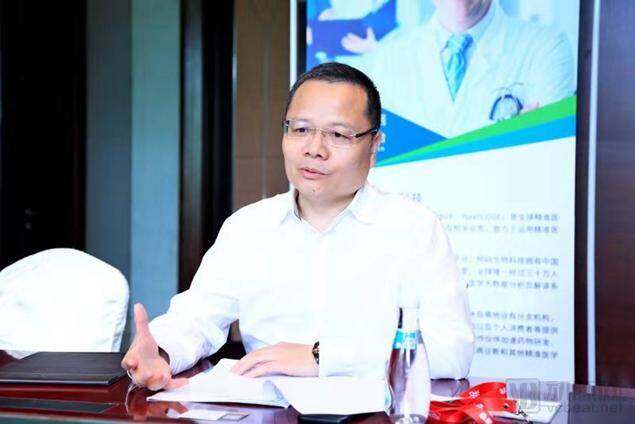
Mr. Yuan Jianzhong, Senior Vice President and General Manager of China Region at WuXi Nextcode
Rare Disease Diagnosis Rate Remains Below 40%
Despite significant progress in research, diagnosis, treatment, and healthcare coverage for rare diseases across various countries and regions, driven by the joint efforts of all stakeholders, patients with rare diseases still face considerable challenges in terms of survival and treatment.
At the 7th China Rare Disease Summit held in September 2018, Mr. Huang Rufang, founder and director of the Shanghai Clover Center for Rare Disease Family Care (CORD), who has long been dedicated to advancing the cause of rare diseases, noted that there are over 16 million patients with rare diseases in China. However, only 5% of these conditions have available treatments, which are not necessarily specific or curative therapies. Currently, there are 621 orphan drugs approved by the U.S. Food and Drug Administration (FDA), whereas only 282 have been approved by the China Food and Drug Administration (CFDA) for entry into the Chinese market, and they remain prohibitively expensive.
“The definitive diagnosis rate for patients with rare diseases in China is less than 40%, meaning that over 60% of rare disease patients have not yet received a scientific and accurate diagnosis. These patients may be undergoing incorrect treatments or enduring their condition while waiting in hardship.”
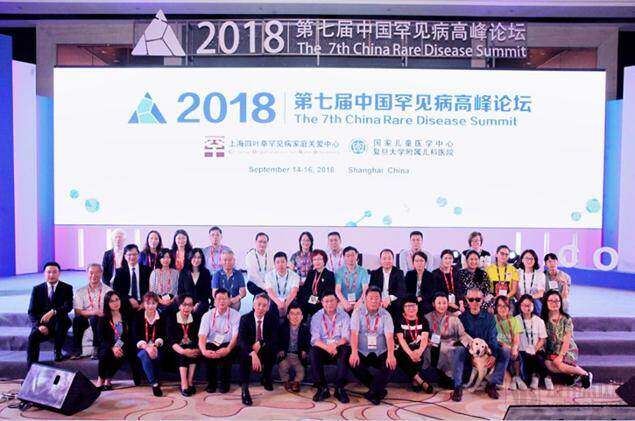
Photo provided by the organizer at the 7th China Rare Disease Summit in 2018
Currently, the pathogenesis, diagnostic methods, and treatment options for the vast majority of rare diseases remain unresolved and require further research. With the advancement of precision medicine, the analysis and detection of disease-associated gene mutations (variants) are gradually transitioning from research settings to clinical practice. This shift provides a scientific basis for disease diagnosis and differential diagnosis, thereby reducing the incidence of rare diseases in newborns and “nipping the disease in the bud.”
In China, there are nearly a thousand companies dedicated to genetic testing, and investors place significant value on this sector, with continuous financing activities. However, due to the vast diversity of rare diseases and the substantial differences in specificity among various conditions, it remains highly challenging to focus on this field and identify effective solutions.
Tackling Rare Diseases from a Genetic Perspective
The diagnostic challenges of rare diseases lie in the fact that the pathogenesis of many such conditions remains unclear. Establishing the correlation between genetic mutation sites and specific diseases cannot rely solely on genetic testing; it often requires integration with clinicians’ phenotypic assessments of clinical symptoms. Furthermore, numerous disease-causing genetic mutation sites remain undiscovered.
“Screening for known mutation sites is referred to as diagnosis. For unknown sites, collaboration with numerous researchers engaged in scientific research is required to identify gene mutation loci,” said Yuan Jianzhong. Since more than half of rare disease patients experience onset during childhood, diagnosis currently takes precedence over treatment in the clinical management of rare diseases. In other words, the diagnosis of rare diseases involves elucidating the pathogenic mechanisms of genetic disorders within vast genomic datasets, screening and identifying biomarkers and drug targets for disease diagnosis, thereby providing a theoretical foundation and research data for more precise, personalized treatment plans.
WuXi Nextcode’s focus on genomic big data refers to a highly integrated and systematic platform that encompasses large-scale population genetics databases and efficient data analysis and interpretation tools. This platform enables the efficient mining and analysis of large-scale high-throughput sequencing data. In the field of rare diseases, WuXi Nextcode has undertaken three key initiatives:
First, it provides indispensable data support and relevant analytical tools to accurately identify potential genetic causes in patients with rare diseases, thereby improving the efficiency and accuracy of rare disease diagnosis and affording more time and support for subsequent clinical diagnosis and treatment;
Taking the collaboration between WuXi Nextcode and Fudan University as an example, in 2015, WuXi Nextcode partnered with the Children’s Hospital of Fudan University to jointly establish a Joint Laboratory for Pediatric Genetic Diseases, with the hospital providing the platform for genetic testing and analysis. Currently, WuXi Nextcode collaborates with the Children’s Hospital of Fudan University to complete genetic testing and interpretation for over 10,000 pediatric rare disease cases annually.
Children's Hospital of Fudan University sees an average of 7,000–8,000 outpatient visits per day. Through collaboration in sequencing platforms and genetic data analysis and interpretation, the hospital is expected to diagnose more complex and rare conditions, thereby providing more targeted treatments for pediatric patients.
Second, when parents of children with genetic disorders consider having another child, the clinical auxiliary diagnostic reports and carrier screening tests provided by the aforementioned big data platform will serve as a basis and guidance for pre-conception genetic counseling. This will help these parents significantly reduce the risk of having another child affected by a genetic disorder.
Yuan Jianzhong stated, “Preventing the birth of children with genetic disorders through genetic testing is a commercially viable opportunity that is relatively easy to implement at present. WuXi Nextcode has already launched carrier screening products for rare diseases among individuals planning pregnancy, such as ‘FuMa.’ We believe these genetic testing products will significantly reduce the risk of Chinese couples giving birth to children with rare diseases.”
Third, leveraging highly integrated genomic big data, pharmaceutical companies committed to advancing the research and development of treatments for rare diseases can utilize this platform to identify potential new drug design targets, thereby guiding research directions for the development of novel drugs or new therapeutic approaches.
Yuan Jianzhong stated, “Diagnosis without treatment is certainly insufficient for rare diseases and fails to form a complete closed-loop solution.” Therefore, for orphan drug developers that play a crucial role in the treatment of rare diseases, policy measures such as relaxed regulations for new drug approvals and tax incentives present excellent opportunities.
Through big data analysis of genomics, pathogenic gene mutations associated with rare diseases and their corresponding therapeutic targets can be identified, thereby enhancing the efficiency of targeted drug development and reducing R&D costs.
Backed by WuXi AppTec, WuXi Nextcode enjoys inherent advantages in its collaborations with pharmaceutical companies. As a contract research organization (CRO) for new drug development, WuXi AppTec assists in the R&D and market launch of over 60% of new drugs approved annually by the U.S. FDA worldwide.
“If we leverage the drug R&D capabilities of our sister companies, together with pharmaceutical partners, to identify new targets and directions for drug development, that is the true path to addressing rare diseases.”
"China does not lack data, but rather lacks systematic data."
The larger the volume of real-world data, the more beneficial it is for algorithm training. However, the primary prerequisite is a thorough understanding of the disease. In both the medical and AI fields, there are generic models available; if the understanding of the disease itself is insufficient, even massive datasets and prolonged analysis will be meaningless. The second critical factor is data: without vast amounts of data for training, the algorithm itself becomes useless. In other words, unless algorithmic differences are disruptive in nature, the key differentiators lie in the data sources and the scale of the data.
Compared to the big data used to train artificial intelligence, the number of cases for certain rare diseases is so small that it cannot even be considered "small data." However, in terms of genomics data with a specific sample size, this represents a significantly large order of magnitude. For healthcare institutions or pharmaceutical companies, processing such large-scale genomic data is no easy task.
For instance, Fudan University Children's Hospital sees nearly 2 million outpatient visits annually. In contrast to this substantial outpatient volume, only about 10,000 newborn samples undergo genetic screening. If the hospital were to establish its own platform or laboratory for analyzing tens of thousands of genomic datasets, the costs would be prohibitively high. To cover these expenses, the corresponding testing fees would become exorbitant, placing them beyond the financial reach of the hospital's patients.
WuXi Nextcode’s clearly structured genetic big data empowerment platform precisely combines public welfare with commercialization, adopting a model where commercially operated companies collaborate with hospitals to address challenges that neither party could solve independently. Similarly, it is extremely difficult for pharmaceutical companies engaged in new drug development to establish large-scale genomics data analysis and mining platforms. Therefore, WuXi Nextcode has created an open, integrated platform serving individuals, hospitals, and pharmaceutical enterprises, thereby reducing users’ production costs.
Data silos represent a major challenge in the healthcare industry, where fragmentation among medical institutions, between patients and pharmaceutical companies, and across datasets has become a primary obstacle to industrial development. In response, Yuan Jianzhong stated, “China does not lack data; rather, it lacks systematic data. Stakeholders are generally unwilling to share or exchange data.”
In July 2018, WuXi Nextcode launched “LifeCODE.ai,” a big health data bank based on blockchain technology. LifeCODE.ai innovatively applies blockchain technology to address the legality and validity of big health data collection, protect user privacy, and create value in data exchange.
For rare diseases, data is an extremely valuable asset, and this is precisely where WuXi Nextcode holds its advantage in the field. Currently, WuXi Nextcode’s partners include pharmaceutical companies such as AbbVie, as well as medical institutions with strong disciplinary foundations and clinical capabilities in genetics and rare diseases, such as Fudan University Children’s Hospital and Peking Union Medical College Hospital.
Yuan Jianzhong stated, “The purpose of Mingma is straightforward: to collaborate with hospitals and other institutions to accumulate more data. Leveraging Mingma’s unique advantages in data storage and analysis platforms, we can better mine the insights hidden within this data through large-scale server clusters.”
Rare diseases are not rare; there is a need for voices to raise awareness and advocates to step forward. As a driver of the rare disease industry, Yuan Jianzhong stated in conclusion that Mingma is willing to become a leader in this field, better empowering institutions such as hospitals and pharmaceutical companies, and improving the closed-loop system from diagnosis to treatment for rare diseases.