

Zhenghong Technology Aims to Capture China's $2.4B OCT-A Market with High-Performance, Cost-Effective Solutions
Optical Coherence Tomography (OCT) is a mature medical imaging technology capable of real-time, high-resolution imaging of microstructures within various human tissues. Optical Coherence Tomography Angiography (OCT-A), an advancement based on OCT, achieves real-time vascular imaging through methodological improvements and holds significant diagnostic value in fields such as ophthalmology, dermatology, and cardiovascular disease.
OCT-A has emerged as a major trend in the development of OCT in recent years. OCT-A not only retains the advantages of OCT, such as high resolution, non-invasiveness, safety, and rapid acquisition, but also enables visualization of vascular morphology and blood flow, which is particularly critical for diagnosis in the aforementioned fields.
Another major advantage of OCT-A is its ability to generate three-dimensional data images through layered (en face) scanning. The characteristics of its data acquisition allow for the display of a series of two-dimensional cross-sectional images in any orientation. For instance, en face images can reveal information from various retinal layers, including the retinal nerve fiber layer, inner plexiform layer, outer plexiform layer, inner retina, outer retina, retinal pigment epithelium, and choroid. These en face images are highly beneficial for the detection and evaluation of retinal conditions.
Traditional diagnosis of most ophthalmic diseases requires the combined use of fluorescein fundus angiography (FFA) and optical coherence tomography (OCT). Sodium fluorescein, used as a contrast agent, is rapidly injected into the antecubital vein. As the sodium fluorescein flows with the blood into the retinal vessels, OCT continuously captures the fluorescent patterns emitted by the fundus vasculature, thereby enabling physicians to observe the dynamic circulation of the retina. This process ultimately provides evidence-based medical data for understanding the pathogenesis, diagnosis, and prognosis of various fundus diseases.
Although fluorescein fundus angiography (FFA) is highly effective in the differential diagnosis, treatment, and prognosis prediction of fundus diseases, it is prone to causing adverse reactions during the examination, such as nausea, dizziness, and allergic reactions. In rare cases, FFA can even be life-threatening.
It is precisely for this reason that the industry has been seeking a safe, reliable, and side-effect-free alternative to fundus fluorescein angiography (FFA) for diagnostic purposes. The emergence of optical coherence tomography angiography (OCT-A) technology has finally met this clinical need.
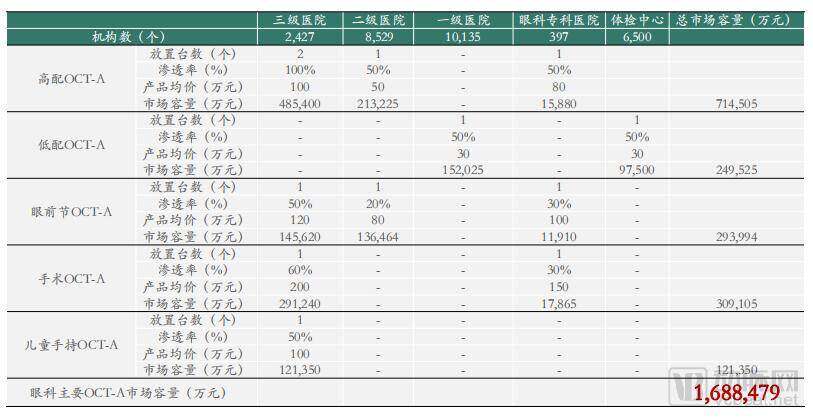
According to data compiled by Probe Capital, combining the number of domestic medical institutions and market penetration rates, it is estimated that by 2022, the market size for major OCT-A devices in China's ophthalmology sector will approach RMB 17 billion. This indicates that Chinese manufacturers of OCT-A equipment are poised to enter a golden period of development.
OCT-A: The Best Alternative to FFA
OCT-A is a real-time vascular imaging technology developed by improving upon OCT, playing a crucial role in the diagnosis of ophthalmic and dermatological diseases.
OCT-A not only offers the advantages of high resolution, non-invasiveness, and rapid acquisition inherent to OCT, but also enables visualization of vascular morphology and blood flow. Due to its capability for high-resolution vascular imaging, OCT-A demonstrates excellent diagnostic efficacy for ophthalmic diseases, particularly those involving the retina and choroid.
Compared with FFA, the most attractive feature of OCT-A is its ability to non-invasively and non-contactly measure retinal vasculature, allowing for repeated testing without side effects. Therefore, in many scenarios, OCT-A can effectively replace FFA. For instance, OCT-A can be used to diagnose diabetic retinopathy. Furthermore, by quantifying vascular density in the parafoveal and foveal regions, the total area of the avascular zone, and the foveal avascular zone (FAZ), and comparing these metrics with normative data, OCT-A facilitates early screening for diabetic retinopathy.
Currently, OCT-A is most frequently used in the diagnosis of diabetic retinopathy. According to the 8th edition of the IDF Global Diabetes Atlas, China had 114.4 million people with diabetes in 2017, ranking first worldwide, with the majority being type 2 diabetes patients. Data from the China Health and Family Planning Statistical Yearbook indicate that the number of individuals with diabetes in China has been increasing year by year, with a higher prevalence observed in urban populations.
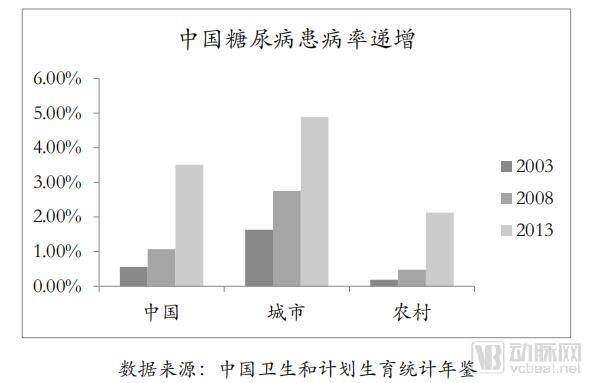
Patients with type 2 diabetes often suffer from diabetic retinopathy. Clinically, patients are typically diagnosed only after symptoms such as vision loss, fundus hemorrhage, and retinal microaneurysms appear, thereby missing the optimal window for treatment.
OCT-A can detect fundus lesions earlier than ophthalmoscopy, structural OCT, and FFA, including those that are not significant in these diagnostic methods, such as enlargement of the foveal avascular zone, microaneurysms, and areas of capillary non-perfusion. Therefore, using OCT-A for early screening of diabetic retinopathy has extremely high clinical value.
Certainly, the clinical ophthalmic applications of OCT-A extend far beyond early screening for diabetic retinopathy (DR). As illustrated in the figure below, OCT-A has broad application potential across various major categories of ocular diseases, including glaucoma, fundus diseases, and optic nerve disorders.
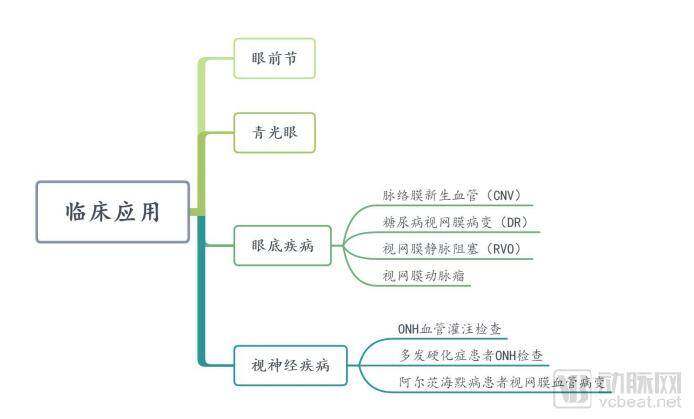
Taking retinal vein occlusion (RVO) as an example, fluorescein leakage in fundus fluorescein angiography (FFA) can obscure the blood vessels themselves, thereby hindering observation. Furthermore, FFA produces two-dimensional images with overlapping multi-layer vasculature, precluding layer-specific assessment of retinal vessels. In contrast, optical coherence tomography angiography (OCT-A) enables separate visualization of each retinal layer in the occluded area. Due to the absence of fluorescein leakage, OCT-A provides clearer images of pathological changes.
Furthermore, although the domestic ophthalmic drug market is substantial, the limited number of innovative drugs launched over the past decade has resulted in a relatively small proportion of drug revenue in the income structure of ophthalmic hospitals, typically accounting for only 10%–20%. With the accelerating aging process in China and the growing number of patients with various eye diseases, the demand for ophthalmic devices in hospitals is increasingly strong, presenting significant market potential.
The advent of OCT-A technology will drive rapid growth across the entire ophthalmic diagnosis and treatment industry chain.
Zhenghong Technology: A Pioneer of Domestic OCT-A Systems
Zhenghong Technology is an innovative medical device company in China, with OCT-A technology as its core technology.
Lin An, Co-founder of Zhenghong Technology, graduated from the Department of Bioengineering at the University of Washington in the United States and was selected for the Youth Project of the 14th batch of China’s National “Thousand Talents Program.” As a leading authority on OCT-A technology, Dr. An, serving as a core R&D scientist at Zeiss, developed the world’s first OCT-A image. He has published 39 papers in high-impact international optics journals, including Optics Letters.
According to An Lin, Zhenghong Technology’s OCT-A functional imaging platform offers advantages such as the fastest scanning speed, highest resolution, 3D imaging, and quantitative vascular parameters, along with independent intellectual property rights and core manufacturing processes. Its ophthalmic OCT-A product is about to be submitted for type testing.
The ophthalmic OCT-A system is the core product of Zhenghong Technology. Anlin expects that Zhenghong Technology’s OCT-A system is likely to obtain NMPA certification by the end of 2019. Prior to receiving the NMPA registration certificate, Zhenghong Technology’s ophthalmic OCT-A system can be marketed and sold as a research-use-only product. The system can be equipped with additional functional imaging capabilities—such as polarization-sensitive, phase-sensitive, and elastography imaging—based on user requirements, thereby offering substantial value for scientific research.
Compared with the ophthalmic OCT-A products from Germany’s Zeiss and Heidelberg, which often cost millions of yuan, Zhenghong Technology’s OCT-A is priced at only one-third of theirs, while its performance is in no way inferior to that of these international manufacturers.
It is reported that ophthalmic OCT-A is just one of Zhenghong Technology’s products in the field of ophthalmology. Building on this foundation, Zhenghong Technology is currently developing additional products, including anterior segment OCT-A, surgical OCT-A, and handheld pediatric OCT-A. As these products in its R&D pipeline sequentially receive regulatory approval and enter the market, Zhenghong Technology will become the only innovative enterprise in China leveraging OCT-A technology to provide comprehensive coverage for ophthalmology departments across hospitals at all levels.
Facing such a vast market opportunity, An Lin stated, “Zhenghong Technology is a platform-based company. We aim to build a product portfolio centered around our OCT-A technology platform that meets the needs of hospitals at different tiers and specialized institutions. Therefore, our market strategy is to position high-end equipment in tertiary hospitals while deploying entry-level equipment in primary care facilities.”
Regarding tertiary hospitals, Zhenghong Technology has currently established research collaborations with the Chinese PLA General Hospital, the Second Affiliated Hospital of Harbin Medical University, Fuwai Hospital, Anzhen Hospital, Beijing Tongren Hospital, Peking University Third Hospital, Wenzhou Eye Hospital and Optometry Center, and Sir Run Run Shaw Hospital affiliated with Zhejiang University. For the more numerous secondary and primary hospitals, Zhenghong Technology will also roll out collaborations in succession.
Microcatheters Covering the Entire Value Chain of Ophthalmic Diagnosis and Treatment, Breaking the Import Monopoly
According to statistics from the National Health Commission, there were approximately 6 million cataract patients in China in 2015, with a Cataract Surgical Rate (CSR) of over 1,500 per million population. Assuming the glaucoma surgical rate is consistent with the cataract surgical rate (34.37%) and the penetration rate of ab interno canaloplasty is 2%, the annual number of ab interno canaloplasty procedures would be 68,731. Currently, the cost of a single-use microcatheter is RMB 18,000 per unit. Based on this calculation, the market size for glaucoma microcatheters could reach RMB 1.237 billion.
The domestic market for glaucoma microcatheters in China is almost entirely monopolized by the iTrack product from Australia’s Ellex. Priced at approximately RMB 18,000 per unit, its high cost has led to a generally low volume of glaucoma surgeries in the country.
In response, Beijing Zhenghong Technology Co., Ltd. has independently developed a microcatheter and associated equipment for glaucoma treatment. In addition to fully matching the functionalities of imported counterparts, this device offers several advantages, including a catheter tip with broader indications, an injection handle that prevents drug contact, and a laser system with extended battery life and rechargeability.
Under the current procurement policy environment for medical consumables, Zhenghong Technology’s microcatheter for glaucoma will become the premier choice for import substitution in this field upon its market launch, possessing significant first-mover and market advantages. Meanwhile, compared with equipment products, surgical consumables can generate more stable cash flow for the company, providing strong support for its sustained development.
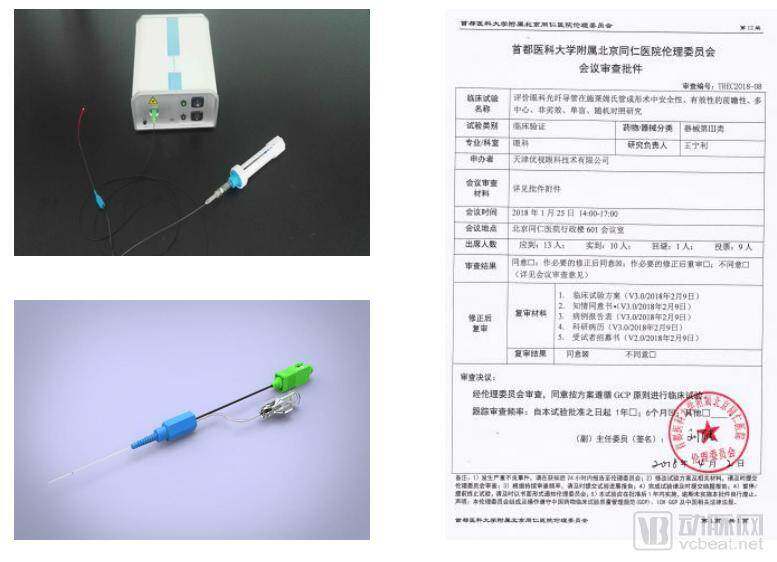
According to VCBeat, the product has currently completed type testing and animal experiments. As the lead research institution, Beijing Tongren Hospital has obtained ethical approval, with formal patient enrollment expected to begin in June next year.
In response, An Lin stated, “Over 90% of high-end ophthalmic devices in China are imported products, leaving domestically produced ones at a significant disadvantage in this sector. The market chosen by Beijing Zhenghong Technology Co., Ltd. represents an entirely new track, with few competitors and the potential for the company to become a market educator.”
It is reported that Beijing Zhenghong Technology Co., Ltd. has launched a new round of financing, aiming to raise RMB 30 million, with Probe Capital serving as the exclusive financial advisor for this round.