

RaySight AI Secures Tens of Millions in Series A Funding to Advance Intelligent and Simulation-Powered Precision Cardiovascular Diagnostics

RaysightMed
Medical Imaging Product Developer
Recently, RaysightMed (hereinafter referred to as “Raysight”), an AI-driven medical technology company based in Nanshan District, Shenzhen, completed a Series A financing round amounting to tens of millions of RMB. This round was exclusively invested by Matrix Partners China. The funds raised will be used to further deepen and expand the development and market promotion of Raysight’s artificial intelligence and biosimulation technologies in the field of cardiovascular and cerebrovascular diseases. Its previous angel round was invested by CAS Star, with only six months between the two financing rounds.
Unlike other AI-based medical imaging companies, RaysightMed maintains a focused approach in the commercial sphere while fostering integration and innovation in the technological domain. Recognizing the unique characteristics of healthcare, RaysightMed believes that meticulous product refinement is essential to better meet clinical needs; hence, the company has chosen to specialize in the cardiovascular and cerebrovascular fields. On the technical front, with artificial intelligence as its core technology, RaysightMed integrates cutting-edge technologies such as computational fluid dynamics (CFD) simulation and cloud computing to deeply mine relevant medical data. This enables the extraction of cardiovascular and cerebrovascular functional parameters of significant diagnostic value, ensuring that every blood vessel receives the earliest possible diagnosis and the most precise treatment.
Currently, AI technologies in medical imaging are entirely focused on the recognition and assessment of pathological morphology, yet they remain unable to infer functional indicators of diseased organs. In the field of cardiovascular and cerebrovascular diseases, the information provided by current AI technology is limited to what clinical experts can extract from images, such as the degree of vascular stenosis and plaque characteristics from coronary CT angiography. However, these morphological data are insufficient for evaluating the blood supply function of diseased vessels, a critical metric highly valued by clinical experts. Currently, such functional indicators can only be obtained through complex and costly invasive procedures. With the rapid advancement of AI-based medical image processing, is it possible to integrate other cutting-edge technologies to accurately and non-invasively determine vascular functional indicators? The precise assessment of hemodynamic functional parameters using computational simulation technology constitutes the unique technical advantage of RaysightMed.
Zheng Lingxiao, CEO of RaysightMed, told VCBeat: “Computational simulation has already seen extensive application in industrial sectors, such as aircraft design and automobile manufacturing. Consequently, we began to explore the application of fluid dynamics to human biological simulation. By leveraging strict physical laws, we can calculate blood flow within vessels, thereby deriving functional indicators such as blood pressure, flow rate, and shear stress. These functional indicators hold critical value for precise disease detection, guidance of treatment plans, and postoperative assessment. The composition of RaysightMed’s founding team—one AI medical imaging expert and two computational simulation experts—reflects the company’s strategic vision: combining AI deep learning with cutting-edge technologies like simulation modeling to provide clinicians with deeper, more valuable insights, rather than merely assisting physicians with tasks they could otherwise perform on their own.”
However, the human vascular system is highly complex and closely interconnected with various organs. It is no easy task to leverage computational fluid dynamics (CFD) simulation technology to accurately model real-world conditions—including vascular morphology, the roles of various organs within the model, and the function of the peripheral circulatory system—so as to deliver the most precise results for each patient. This requires extensive exploration and accumulation of expertise over a prolonged period. Zheng Lingxiao pointed out: “Two founders of RaysightMed’s founding team each have over 10 years of experience in human body simulation. After establishing the foundational algorithmic models, we applied them to comprehensive patient vascular data and continuously refined the algorithms based on the outcomes to achieve optimal alignment with real-world conditions, thereby providing physicians with the best possible guidance.”
Based on over a decade of research by its founding team in the fields of medical imaging and biological simulation, RaysightMed has developed a comprehensive suite of artificial intelligence and fluid dynamics simulation algorithms and software, achieving high levels of accuracy. Building on this foundation, RaysightMed’s first product is a diagnostic software designed to assess cardiovascular perfusion function. Using only a patient’s cardiac CT images, the software can accurately calculate the perfusion function at every location along each blood vessel and generate a diagnostic report. Physicians can use this report to determine medical management strategies, such as medication regimens, the necessity of stent placement, and the optimal location for stent deployment. Surrounding this core product, RaysightMed has conducted a series of studies and validations on cardiovascular diseases, such as the relationship between vascular stenosis and atherosclerosis, and how hemodynamic forces exerted by blood flow on vessel walls influence the progression of vascular lesions. These parameters are difficult to measure directly with medical instruments and require accurate quantification through simulation.
RaysightMed’s three founders—Zheng Lingxiao, Lan Hongzhi, and Ma Jun—are all experts who earned their doctoral degrees from prestigious U.S. universities and have dedicated many years to their respective fields. For this entrepreneurial venture, all three relocated with their families from the United States back to Shenzhen, committing fully to building China’s own intelligent diagnostic platform for cardiovascular and cerebrovascular diseases. Reflecting on this “great migration,” Zheng Lingxiao stated, “All three of our families lived in the United States for over ten years. Returning to China as entire households was a momentous decision, and we are deeply grateful for the unwavering support of our spouses. We recognize that entrepreneurship is an arduous endeavor; without the resolve to burn one’s bridges and commit wholeheartedly, success is unattainable. Therefore, rather than adopting the ‘commuting between two countries’ strategy chosen by many, we chose to return to China completely and devote ourselves entirely to our venture. While the United States has maintained a significant technological lead for a long period, we firmly believe that the future of technological innovation lies in China, and we are honored to be part of this journey.”
The team’s CEO, Zheng Lingxiao, holds a bachelor’s degree from Beihang University and a Ph.D. from Johns Hopkins University, and has been engaged in biosimulation research for over 10 years. His extensive R&D experience inspired him to develop a plan to leverage simulation technology for non-invasive screening of cardiovascular diseases.
Regarding the original intention behind establishing RaysightMed, Zheng Lingxiao stated, “Based on China’s national conditions, the incidence and mortality rates of cardiovascular and cerebrovascular diseases rank highest among all diseases. Moreover, with the increasingly severe aging of the population, meat consumption in the public diet has significantly increased, while the prevalence of smoking, hypertension, and diabetes remains high. In the next decade or so, the pressure that cardiovascular and cerebrovascular diseases will impose on Chinese society will be enormous. The scarcity of medical resources has led to an increasingly heavy workload for clinicians, while the vast patient population and its explosive growth have sharply increased the financial burden on the state. For ordinary citizens, the substantial costs associated with cardiovascular diseases, such as coronary heart disease and stroke, are often unaffordable. Therefore, we aim to develop a series of innovative technologies to assist in the screening and treatment of cardiovascular and cerebrovascular diseases with lower costs and higher accuracy, thereby improving diagnostic efficiency and reducing the financial burden on patients.”
RaysightMed’s Chief Scientist, Dr. Lan Hongzhi, earned his bachelor’s and master’s degrees from Tsinghua University and obtained his Ph.D. in Biomedical Engineering from Tulane University. He subsequently served as a researcher at the Stanford Cardiovascular Simulation Laboratory, one of the world’s premier research facilities. With over a decade of experience in biomechanical simulation across macro- and micro-scales, his expertise ranges from individual blood cells to the entire human cardiovascular system.
Cardiovascular disease represents a highly complex challenge in both academic research and clinical practice. Given that each patient possesses unique anatomical structures and physiological conditions, precise diagnosis and treatment must be personalized. Lan Hongzhi’s research encompasses various aspects of this field, including medical image analysis, three-dimensional cardiovascular modeling, hemodynamic flow simulation, and the extraction of hemodynamic functional parameters.
“Biosimulation holds significant clinical importance,” stated Lan Hongzhi. “We can investigate the pathogenesis of cardiovascular diseases, plan diagnostic and therapeutic strategies, optimize the design of medical devices, and predict postoperative outcomes from functional perspectives such as fluid dynamics—capabilities that are unattainable with methods based solely on anatomical morphology. I believe biosimulation will bring about a profound transformation in the medical field, gradually shifting clinical practice from experience-based approaches toward personalized, precisely quantified, and controllable, predictable models. I hope China will play a leading role in this transformation.”
Ma Jun, CTO of RaysightMed, also earned his bachelor’s degree from Tsinghua University and obtained his Ph.D. from Johns Hopkins University, which ranks first in the United States for biomedical engineering. With over a decade of experience in machine learning, deep learning, and image processing, he has previously held positions at leading medical device companies such as GE, Siemens, and Intuitive Surgical (da Vinci Surgical System). Reflecting on his departure from Intuitive Surgical to co-found RaysightMed, Ma stated, “Ling Xiao and I developed mutual admiration during our doctoral studies at Johns Hopkins, frequently exchanging views on cutting-edge technologies. We spent an entire night discussing our vision for a cardiovascular and cerebrovascular diagnostic platform—ranging from the technological synergy and integration of our respective fields, to the value our future products could deliver to patients, and even our shared aspiration to contribute meaningfully to society and our country. Our conversation lasted until dawn. Looking back at the history of medical imaging technology, if the first half-century was characterized by hardware-centric equipment upgrades, then the theme of the second half should be the in-depth mining and analysis of imaging data powered by artificial intelligence. We firmly believe that AI can provide tangible assistance to physicians in the field of cardiovascular and cerebrovascular care.”
To achieve precise diagnosis of cardiovascular and cerebrovascular diseases, automatic, accurate, and rapid analysis of medical imaging is an indispensable and critical step. Leveraging Ma Jun’s extensive experience in medical imaging and deep learning, AI technology has been applied to the automatic identification, reconstruction, and hemodynamic simulation of blood vessels. He and his team have developed unique and advanced deep-learning algorithms based on large volumes of imaging data, significantly improving computational accuracy and increasing processing speed by dozens of times.
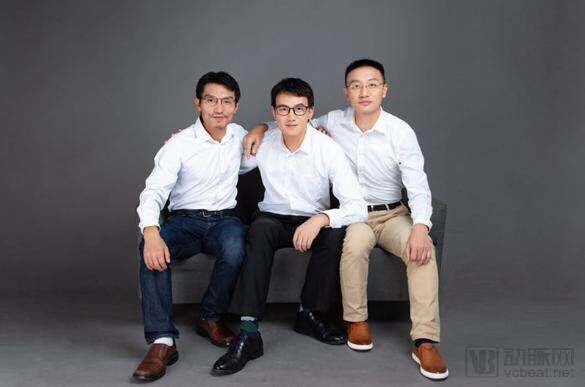
From left to right: Ma Jun, Zheng Lingxiao, and Lan Hongzhi. All three founders earned PhD degrees from top-tier universities in North America.
RaysightMed believes that the long-term positioning of artificial intelligence is not only to improve the efficiency and accuracy of clinicians in existing workflows, but more importantly, to provide doctors with new information that cannot be directly judged by the naked eye and new knowledge that cannot be obtained from past experience by combining technologies such as biological simulation. It aims to evolve from “helping doctors see” to “seeing for doctors,” ultimately realizing the vision of “seeing the unseen.”
However, this journey is long and arduous. To achieve these ultimate goals, it is essential to diligently lay the groundwork in areas such as algorithms and data. Therefore, at the current stage, RaysightMed’s objective is to apply artificial intelligence and mechanical simulation to deeply mine the rich information contained within medical data, thereby providing clinicians with faster and more precise analytical results to support decision-making.
Sun Linghao, Senior Investment Manager at Matrix Partners China, stated, “We continuously monitor the application scenarios of computer technology across various fields, including biopharmaceuticals, medical imaging, and electronic health records. RaysightMed represents Matrix Partners’ latest strategic investment in the ‘Healthcare + AI’ sector. Compared to radiologists, clinicians face more complex diagnostic needs. Addressing screening challenges through intelligent diagnostics holds significant value in clinical economics. Within a relatively short period, RaysightMed has collaborated with top-tier experts in China to establish multiple product lines. We anticipate that RaysightMed will emerge as a platform-based company in the field of intelligent diagnosis for cardiovascular and cerebrovascular diseases.”
Liu Junpeng, Vice President of Guoke Jiahe, an angel-round investor, stated: “RaysightMed’s products hold immense market application potential. From a clinical perspective, they offer high precision and more convenient detection capabilities. They can significantly reduce patients’ hospital stays, with non-invasive diagnostic accuracy comparable to that previously achievable only through invasive procedures. In terms of social benefits, these products enable a large number of patients to avoid unnecessary invasive examinations, thereby saving costs for both medical insurance systems and patients. Regarding product features, RaysightMed’s offerings represent a perfect integration of AI and medical imaging, providing tangible support to existing healthcare practices. Furthermore, RaysightMed aims to build a technological platform in the cardiovascular and cerebrovascular fields, developing a series of specialized AI-driven medical products.”