

J&J's Opsumit Receives FDA Complete Response Letter for New Indication in Pulmonary Hypertension
Jan 23, 2019 11:54
CST Updated
16:03

Johnson & Johnson
Healthcare Product Manufacturers, Health Service Providers

Actelion
Pharmaceutical R&D Developer

FDA
U.S. Food and Drug Administration
January 23, 2019 News /BioValleyBIOON/ -- Actelion, a subsidiary of U.S. pharmaceutical giant Johnson & Johnson (JNJ), recently announced that the U.S. Food and Drug Administration has accepted its supplemental New Drug Application (sNDA) for Opsumit (macitentan).FDAComplete Response Letter (CRL). The sNDA sought approval for Opsumit to improve pulmonary vascular resistance (PVR) and exercise capacity in adult patients with chronic thromboembolic pulmonary hypertension (CTEPH, WHO Functional Class IV) who are not candidates for curative surgery. The CRL indicated that additional data are required to evaluate the use of Opsumit in the treatment of CTEPH.
Martin Fitchet, Global Head of R&D at Actelion, stated, “We will collaborate withFDA“Work closely to review the information outlined in its CRL and gain a comprehensive understanding of the next steps. We are committed to transforming the lives of patients with pulmonary arterial hypertension and chronic thromboembolic pulmonary hypertension (CTEPH).”
The application for the new indication of Opsumit in the treatment of CTEPH is based on data from the Phase II clinical study MERIT-1. This study evaluated the efficacy, safety, and tolerability of 10 mg Opsumit in adult patients with inoperable CTEPH (WHO Functional Class IV). The study data have been published in *The Lancet Respiratory Medicine*.
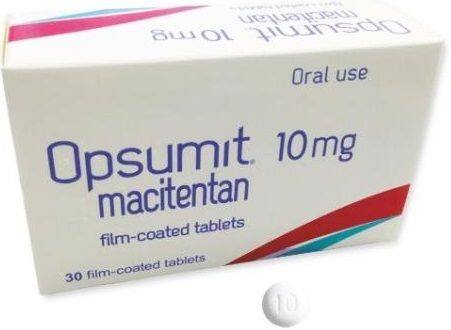
Opsumit is a dual endothelin receptor antagonist (ERA) that relaxes pulmonary arteries and lowers blood pressure. It has been approved in the United States and the European Union for the treatment of pulmonary arterial hypertension (PAH, WHO Functional Class I) to reduce the risk of disease progression and hospitalization. Like other drugs in its class, it carries a boxed warning regarding embryonic/fetal toxicity. Female patients can access Opsumit therapy through a restricted program called the Opsumit Risk Evaluation and Mitigation Strategy (REMS).
In September 2018, the first Phase III clinical study of Opsumit for the treatment of portopulmonary hypertension (PoPH), PORTICO, was successful. The results showed that after 12 weeks of treatment, Opsumit significantly improved pulmonary vascular resistance (PVR) compared to placebo, achieving the primary endpoint of the study. PoPH is a subset of pulmonary arterial hypertension (PAH) associated with portal hypertension (elevated blood pressure in the portal vein), typically caused by liver cirrhosis. Currently, PoPH is increasingly recognized, and there is evidence suggesting it is the fourth most common type of PAH. In many cases, patients with PoPH are diagnosed only during evaluation for liver transplantation. However, severe PAH contraindicates liver transplantation due to poor surgical outcomes.
Headquartered in Switzerland, Actelion is the largest biotechnology company in Europe and a global leader in the treatment of pulmonary arterial hypertension (PAH). Actelion’s focus on rare diseases has made it an highly attractive acquisition target, as such therapies are less susceptible to pricing pressures. In June 2017, Johnson & Johnson acquired Actelion for $30 billion. This acquisition brought to Johnson & Johnson blockbuster PAH drugs such as Tracleer, Opsumit, and Uptravi, as well as Valchlor, a drug used to treat mycosis fungoides-type cutaneous T-cell lymphoma (MF-CTCL). (Bioon.com)