

Cardiovascular Intraluminal Diagnosis 'Dual Swords': What Sparks Can Hengyu Medical's OCT+IVUS Ignite?
Horimed
OCT Imaging Equipment R&D and Manufacturer
According to the "Report on Cardiovascular Diseases in China 2017," the situation regarding cardiovascular diseases in China is severe, with the total number of patients approaching 290 million. Among patients aged 50 and older, one in every five dies from cardiovascular disease, making it the leading cause of death among both urban and rural residents. Over the next decade, the number of individuals affected by cardiovascular diseases is expected to continue rising rapidly.
In the face of a growing number of cardiovascular patients, achieving precise diagnosis not only tests physicians’ expertise but also challenges the accuracy of intravascular imaging devices.
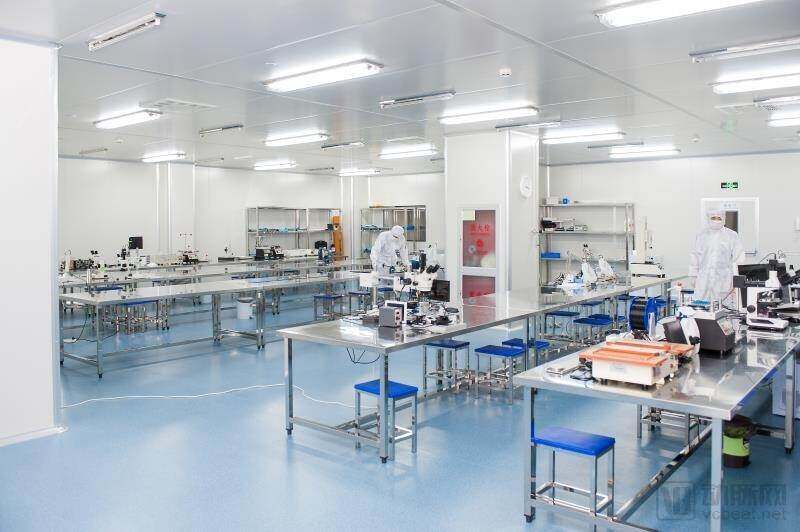
Tianjin Horimed Technology Co., Ltd. (hereinafter referred to as “Horimed”) is an innovative company focused on intravascular imaging. The company specializes in the research and development, manufacturing, and sales of cardiovascular optical coherence tomography (OCT), intravascular ultrasound (IVUS), and intravascular multimodal imaging technologies. It is reported that Horimed operates a laboratory and production facility spanning over 2,700 square meters, including more than 600 square meters of Class 10,000 cleanroom space compliant with Good Manufacturing Practice (GMP) standards.
Salute to Every Member of the Team
Zhao Shiyong, General Manager and Co-founder of Horimed, stated that the company spent a year conducting five rounds of animal experiments, during which they repeatedly came close to giving up but felt compelled to push forward. It is reported that in the first two experiments, the fiber-optic probe of the catheter fractured as soon as it entered the blood vessel. In the third experiment, the fiber-optic probe no longer broke, but the imaging quality failed to meet the required standards. During that period, the entire Horimed team was under immense pressure.
Throughout this process, Zhao Shiyong provided continuous encouragement and objectively analyzed the underlying causes, guiding the team through a psychological restructuring. The aforementioned issues were finally resolved by the fourth iteration. However, out of reverence for life, the team deemed the sample size in the fourth experiment too small to ensure confidence in clinical application. Consequently, they expanded the sample size and intensified usage conditions to conduct extreme testing, ultimately achieving favorable results.
Zhao Shiyong stated: The achievements Horimed has made to date are inseparable from the efforts of every team member. VCBeat has learned that, as of now, Horimed has filed over 80 patent applications, including 41 invention patents. Horimed’s core products—cardiovascular OCT systems and optical imaging catheters, as well as intravascular ultrasound (IVUS) systems and imaging catheters—all possess independent intellectual property rights and core manufacturing technologies.
It is reported that the company’s two founders, Zhao Shiyong and Qiu Weibao, were classmates at Tianjin University. During his doctoral studies, Zhao Shiyong studied under Academician Gu Ying at the Chinese PLA General Hospital (301 Hospital) and has been engaged in optics and imaging research. He developed China’s first skin optical coherence tomography (OCT) system and obtained a medical device registration certificate. During his doctoral studies at The Hong Kong Polytechnic University, Dr. Qiu Weibao primarily focused on high-resolution ultrasound imaging technology. In early 2012, he developed the first prototype of an intravascular ultrasound (IVUS) imaging system in China (IEEE TUFFC, 59(10), 2012). During the same period, he also worked as a visiting scholar at the NIH Ultrasound Transducer Resource Center at the University of Southern California. Upon returning to China, he established a comprehensive domestic and international collaborative research platform at the Shenzhen Institutes of Advanced Technology, Chinese Academy of Sciences. Currently, Horimed has partnered with the Chinese Academy of Sciences to establish a specialized IVUS research and development team, facilitating the clinical application of China’s first domestically produced IVUS device.
Zhao Shiyong stated that many members of Horimed’s team have overseas study backgrounds, and its scientists and engineers have all been deeply engaged in this field for over a decade. In Zhao Shiyong’s view, to successfully bring products to market, in addition to “internal” efforts, it is also necessary to leverage “external” forces.
Horimed has engaged hospital experts as its support force. These medical experts not only provide technical support and clinical expertise but also facilitate product enrollment and implementation within their respective institutions. For example, the Second Affiliated Hospital of Harbin Medical University performs nearly 2,000 hand OCT procedures annually. With the support of experts from this hospital, Horimed can achieve rapid patient enrollment. It is reported that Horimed currently collaborates with more than ten hospitals, including the Chinese PLA General Hospital.
The "Gold Standard" for Cardiovascular Diagnosis
Intravascular ultrasound (IVUS) and optical coherence tomography (OCT), as emerging intravascular imaging technologies in recent years, have increasingly demonstrated their superiority in the field of cardiovascular diagnosis.
Optical Coherence Tomography (OCT) is an emerging tomographic imaging technique that measures weakly coherent optical reflections in real time. It offers the advantages of high resolution and high-speed imaging while maintaining adequate penetration depth. Currently, it is the intravascular imaging modality with the highest resolution and is referred to as “optical biopsy.”
Horimed’s cardiovascular OCT system can assess the composition and characteristics of coronary plaques, identify thrombi, evaluate immediate post-stenting outcomes, determine stent apposition, detect intimal tears after stent implantation, and identify plaque prolapse within the stent. It also enables observation of endothelial repair and neointimal hyperplasia following stent placement. Notably, this OCT system plays a crucial role in guiding the implantation of fully bioresorbable vascular scaffolds (BVS).
Zhao Shiyong told VCBeat that Horimed has fully mastered the core technologies of intravascular optical coherence tomography (OCT) systems through technological accumulation and collaboration. These technologies include miniature optical probe technology, intravascular catheter technology, high-sensitivity interferometer systems, high-speed optical drivers, and core algorithms tailored for cardiovascular OCT imaging, for which relevant patents have been filed. Compared with other products, Horimed’s system offers advantages such as faster scanning speed, superior catheter trackability, and suitability for radial artery procedures.
It is reported that Horimed’s OCT system has completed type testing and animal studies. As the lead research institution, the Second Affiliated Hospital of Harbin Medical University has obtained ethical approval and will formally begin patient enrollment in the near future.
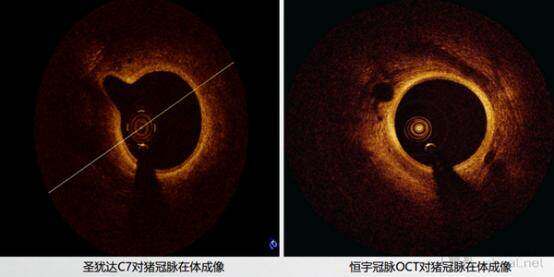
The microcatheter of the IVUS system enables 360° real-time intravascular visualization of the vessel wall. It offers a resolution of approximately 100 μm, a penetration depth of 2–8 mm, and a scanning range of 10–15 mm. By performing 360-degree cross-sectional imaging with a miniature ultrasound transducer, IVUS not only delineates lumen morphology but also directly visualizes vessel wall architecture, thereby characterizing the nature of wall pathology. This modality allows for precise assessment of vessel wall morphology and the degree of stenosis, providing significant clinical guidance in evaluating plaque burden, left main bifurcation lesions, and positive or negative vascular remodeling.
Dr. Qiu Weibao, a researcher at the Institute of Advanced Technology, Chinese Academy of Sciences, stated that Horimed has completed the development of the alpha version of its IVUS system and filed multiple patents. Its key technical indicators have reached the level of the latest generation of foreign products, and it features Chinese characteristics in clinical applications, making it more suitable for the domestic market.
It is reported that Horimed’s IVUS catheters and devices will soon finalize their design and be submitted for type testing.
What Sparks Can OCT and IVUS Generate?
Regarding dual-modality imaging (OCT+IVUS), Zhao Shiyong stated that Horimed is currently at the stage of deploying key technologies. Dual-modality imaging combines the respective advantages of OCT and IVUS, balancing high resolution with imaging depth, while simultaneously reducing the cost of OCT+IVUS imaging.
OCT and IVUS each have their own advantages. OCT is currently the optimal modality for identifying stent apposition, stent intimal tears, intimal coverage of stents, characterizing plaque properties, and detecting thin-cap fibroatheromas. However, OCT has a limited penetration depth of only 1 to 2 mm. In contrast, while IVUS has lower resolution, its penetration depth can reach 4 to 5 mm.
It is worth noting that, in addition to dual-modality imaging, Horimed is also developing its second-generation cardiovascular OCT system. Zhao Shiyong stated that this innovation has received funding from the National Major Scientific Instrument Development Project of the National Natural Science Foundation of China. Its multiple internationally original innovations were highly recognized by the attending experts and approved unanimously.
It is reported that Horimed is currently undergoing its Series A+ financing round.