

AstraZeneca 2018 Annual Report: Emerging from a Challenging Period with 4% Growth Driven by Oncology and Strong Performance in China

AstraZeneca
Biopharmaceutical Manufacturer
On Valentine’s Day 2019, AstraZeneca released its annual report for 2018. Benefiting from strong growth in the fourth quarter, AstraZeneca’s full-year performance in 2018 increased by 4% compared to 2017, with total sales reaching $21.049 billion.
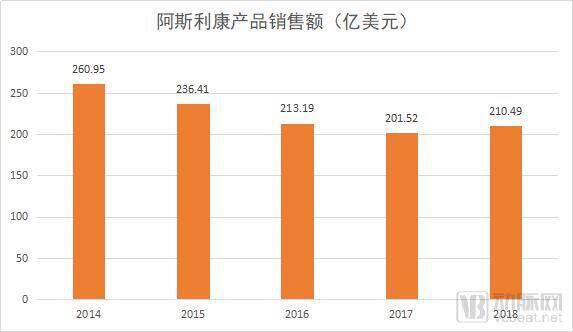
Amid a confluence of headwinds—including the patent cliff, competition from generic drugs, and pressure to lower drug prices—AstraZeneca experienced several years of declining performance before finally reaching a turning point in 2018, with a slight increase in full-year results. Since 2006, AstraZeneca’s performance had surged, with sales revenue reaching $33.591 billion in 2011, ranking it seventh among global pharmaceutical companies. Subsequently, the expiration of patents for several blockbuster drugs, including Crestor (rosuvastatin) and Nexium (esomeprazole), ushered in a period of declining performance for AstraZeneca. However, as AstraZeneca heavily invests in the research and development of new oncology drugs and actively pursues managerial and business innovations, its future prospects remain promising.
As promised by AstraZeneca CEO Pascal Soriot in early 2018, the company achieved positive performance growth within just one year, driven by the vast emerging Chinese market and several new drugs that showed strong growth trends in 2017. AstraZeneca’s performance growth in 2018 was refreshing, with new drug sales surging by 81%. Sales in emerging markets also grew by 13%, while sales in the Chinese market soared by 25%. The increasing demand for innovative drugs has made China an indispensable region in AstraZeneca’s global strategy.
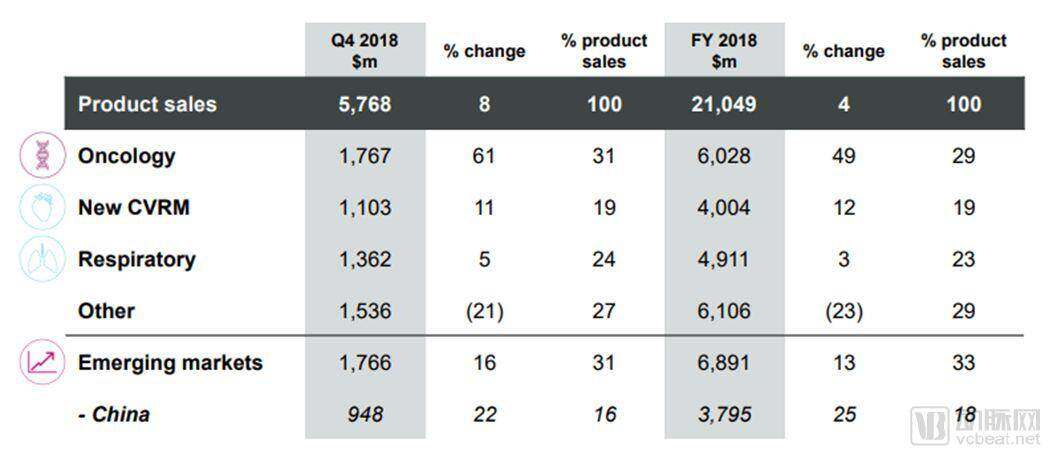
Oncology Drugs and the Chinese Market Shone Brightly in AstraZeneca’s 2018 Sales Performance
AstraZeneca’s deep-rooted presence in the gastrointestinal field, once driven by blockbuster drugs such as Losec (omeprazole) and Nexium, has been unable to sustain performance in the short term as patent protections for these products have successively expired, leading to a significant decline from peak annual sales of $5–6 billion per product. Since 2013, AstraZeneca has substantially increased its R&D investment in oncology, beginning to reap substantial rewards from 2017 onward. In 2018, sales of oncology medicines surged by 50%. Sales of AstraZeneca’s targeted therapies, Tagrisso and Lynparza (olaparib), each doubled, while the newly launched PD-L1 inhibitor Imfinzi delivered encouraging performance. Additionally, Fasenra, a novel anti-inflammatory asthma medication, achieved first-year sales of $297 million.
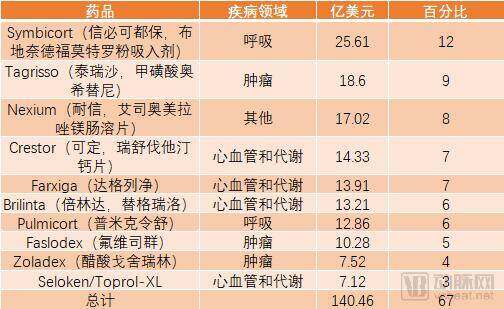
AstraZeneca's Top 10 Best-Selling Drugs in 2018
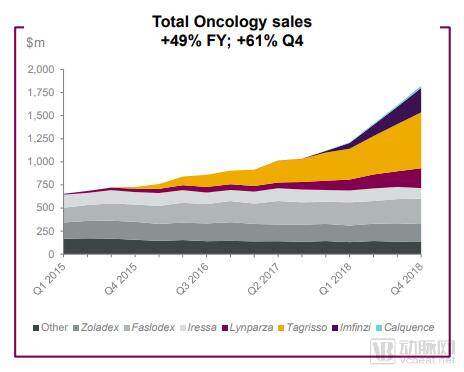
AstraZeneca's oncology drug sales have been growing significantly over the past three years.
Fueled by the strong momentum of osimertinib, AstraZeneca’s oncology drug revenue reached $6.028 billion in 2018, representing a growth rate of 49%.
Tagrisso(Tagrisso, Osimertinib)Global sales reached $1.86 billion, representing a remarkable 93% growth rate. As AstraZeneca’s best-selling oncology drug, osimertinib has become the second-line treatment for patients with EGFR T790M mutation-positive non-small cell lung cancer (NSCLC) and entered the first-line treatment landscape for EGFR-mutated NSCLC in 2018. In 2019, osimertinib is expected to benefit more cancer patients, further driving AstraZeneca’s oncology drug sales.
ImfinziAs a novel PD-L1-targeting monoclonal antibody approved only in 2019, it achieved robust sales in 2018. Global sales totaled $633 million, with widespread adoption among patients with unresectable stage III non-small cell lung cancer (NSCLC). The primary market is the United States, while market expansion in other regions is currently ongoing.
Lynparza(Olaparib)In 2018, sales reached $647 million, representing a year-on-year increase of 116%. The growth was primarily driven by the FDA’s approval in 2017 of Lynparza for use in patients with certain types of epithelial ovarian cancer, fallopian tube cancer, and primary peritoneal cancer.
Excluding anti-tumor drugs, cardiovascular and metabolic drugs reached sales of $4.004 billion in 2018, with a growth rate of 12%. Among them, Farxiga (dapagliflozin), used for the treatment of type 2 diabetes, achieved sales of $1.391 billion, with a growth rate of 30%. Sales in emerging markets reached $336 million, with a remarkable growth rate of 45%; another drug, Brilinta (ticagrelor), used for the treatment of acute coronary syndrome, also performed outstandingly, achieving sales of $1.321 billion, with a growth rate of 22%.
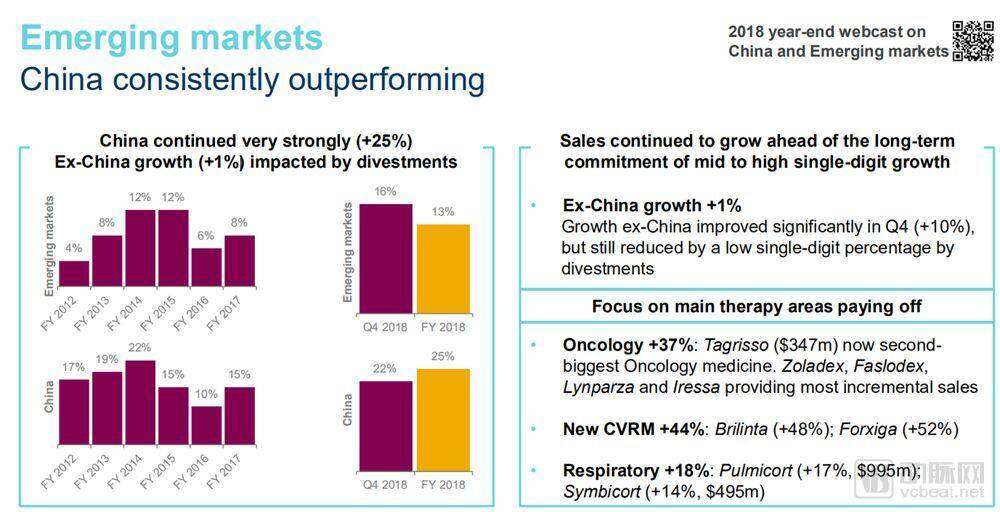
The Chinese market played a pivotal role in AstraZeneca’s growth in 2018. Sales in the Chinese market rose to $3.795 billion, representing a robust 25% growth rate. Among these, oncology-related drugs demonstrated the most significant sales increase. In 2018, AstraZeneca’s oncology business generated $810 million in revenue in the Chinese market, a year-on-year increase of 41%. This growth was closely tied to Tagrisso, which entered the Chinese market in 2017. In 2018, Tagrisso’s sales in China reached $347 million, making it the second-largest anti-tumor drug in the Chinese market. In addition to oncology drugs, Symbicort, a respiratory medication whose sales have declined internationally,(Symbicort Turbuhaler)Strong performance in China, with a growth rate of up to 32% and sales of $240 million.
Regarding the drug pipeline, from the end of Q3 2018 to the release of this financial report, three new drugs entered Phase I clinical trials, four entered Phase II clinical trials, and six entered Phase III clinical trials. During this period, three new drugs received regulatory approval for market launch; two of these three have entered the Chinese market, with roxadustat, a novel drug for renal anemia, being the first to be approved in China.
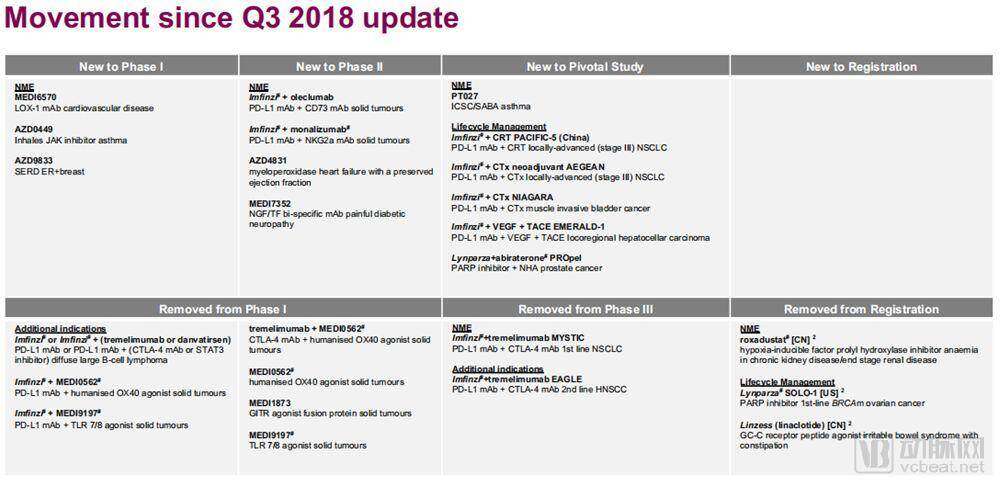
Currently, AstraZeneca’s clinical pipeline includes 57 investigational molecular entity drugs targeting oncology that are in the clinical trial phase.Among them are26 remain in Phase I clinical trials, 20 are in Phase II clinical trials, and 11 are inⅢPhase clinical stage.
In the drug pipeline for lifecycle management of oncology treatments, there are a total of 20 new drugs in clinical stages. Among them, 2 are in Phase II clinical trials, and 18 are in Phase III clinical trials.
In the pipeline of molecular entity drugs for conditions other than cancer, a total of 39 candidates are in clinical development. Among them, 13 are in Phase I clinical trials, 23 are in Phase II clinical trials, and 3 are in Phase III clinical trials. In addition, PT010, a triple therapy for moderate-to-severe chronic obstructive pulmonary disease (COPD), has completed clinical studies and entered the marketing approval stage.
In the lifecycle management drug pipeline for conditions other than cancer, there are a total of 15 candidates in clinical development, with 11 of them in Phase I–III clinical trials. Additionally, four drugs targeting asthma, type 1 diabetes, type 2 diabetes, and pressure ulcers have entered the marketing approval stage.
According to AstraZeneca’s projections for clinical development progress, in 2019, 10 new oncology drugs and 6 new drugs targeting other diseases will begin filing for marketing approval in various regions worldwide.
In addition to its drug pipeline that has already entered clinical trials, AstraZeneca currently has 62 different drugs in the preclinical research stage, of which 50 are new oncology drugs and only 12 target other diseases.
Note: The main data in this article are sourced from the “Full-year and Q4 2018 result” published on the AstraZeneca official website.
Editors: Liu Zongyu, Hao Han