

On February 27, Bayer released its 2018 financial report, showing a total group revenue of €39.586 billion, a 13.1% increase compared to 2017. Among this, the pharmaceuticals division generated total revenue of €16.746 billion (-0.6%), the consumer health division recorded sales of €5.450 billion (-7%), the crop science division achieved revenue of €14.266 billion (+49%), and the animal health division reported sales of €924 million (-2.8%). In 2018, Bayer’s total R&D expenditure amounted to €5.246 billion, representing a 16.5% increase over 2017.
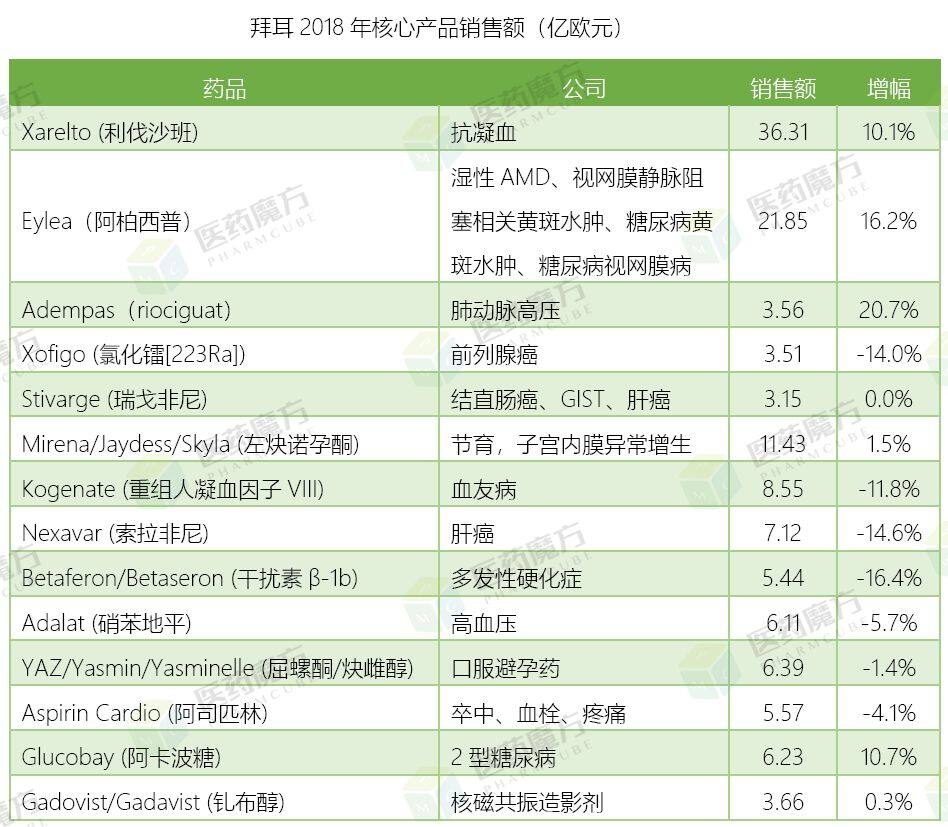
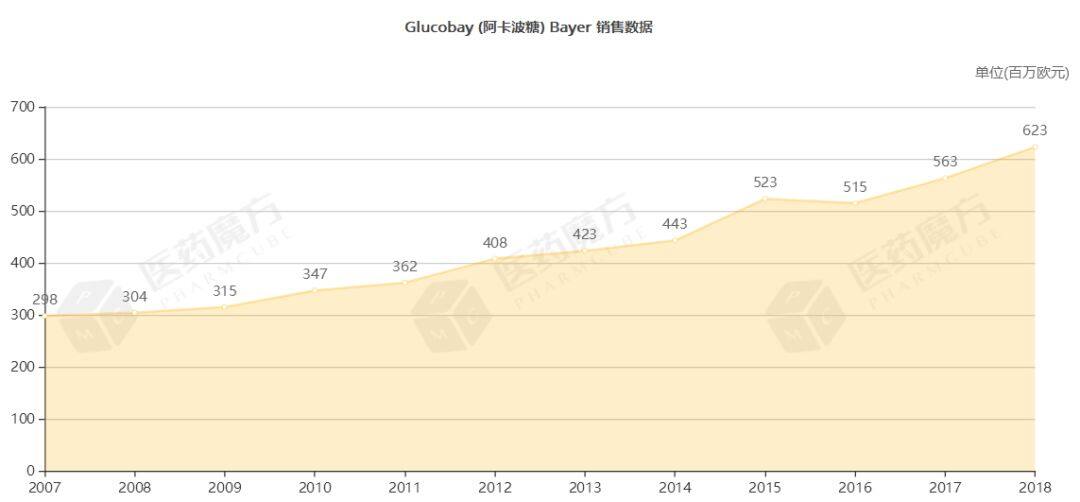
Bayer’s pharmaceutical business has shown sluggish overall growth, with declines in North America and Latin America, and only a 3.8% increase in emerging Asia-Pacific markets. Among new products, Xofigo, the novel drug for prostate cancer, has also begun to wane as demand in European and U.S. markets decreases. Apart from continuing to rely on the “mid-life” products Eylea and Xarelto to drive growth, the older antidiabetic drug Glucobay (acarbose) has demonstrated unexpected resilience, reaching a new high of €623 million. Reportedly, this demand originates primarily from China (see: Huadong Medicine’s blockbuster acarbose tablets, with annual sales exceeding RMB 2 billion, pass consistency evaluation).
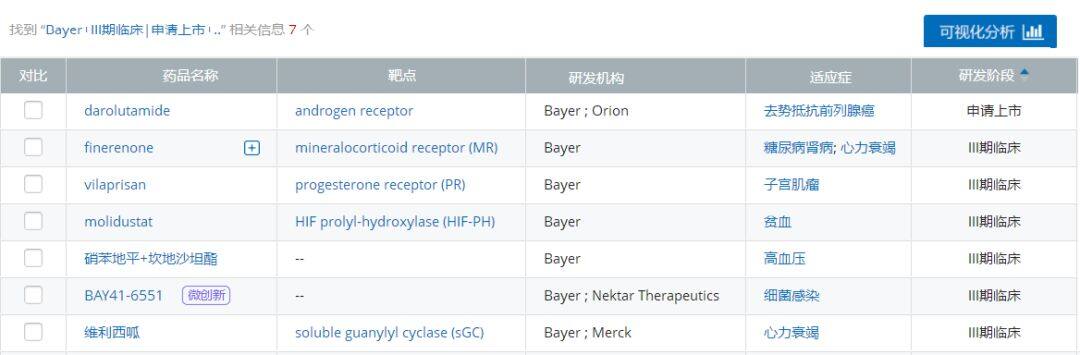
Bayer Faces a Gap in New Drug Development: Darolutamide, an Androgen Receptor Antagonist for Prostate Cancer, Is the Only Product Filed with the FDA for Marketing Approval, While Other Candidates Remain in Phase III or Earlier Stages, with Few Notable Late-Stage Assets. This May Be Attributable to Bayer’s Diversified Development Strategy.
Bayer’s New Drug Projects in Post-Phase III Stages
Source: PharmaCube NextPharma
In 2018, Bayer’s R&D investment in its pharmaceuticals business amounted to €2.93 billion, accounting for 55% of its total R&D spending, with no growth compared to 2017. This figure appears insufficient when compared to other giants primarily focused on pharmaceuticals. An additional €1.95 billion was allocated to the crop science division.
Bayer is also planning a major overhaul of its business operations. After gradually digesting the $62.5 billion acquisition of Monsanto, Bayer officially announced late last year that it would undergo significant restructuring, including large-scale workforce adjustments across all business divisions—such as Animal Health, Consumer Health, and Pharmaceuticals—resulting in the elimination of approximately 12,000 jobs. Additionally, Bayer intends to divest its Animal Health division.
Werner Baumann, Chairman of the Board of Management of Bayer AG, stated: “This strategic adjustment is designed to enable Bayer to focus on its core life sciences business, enhance productivity and innovation, and significantly strengthen its competitiveness. Through these measures, we are positioning Bayer’s future as a life sciences company.”