Home Sanofi/Regeneron’s Dupixent Nears Asthma Indication Approval in EU, Projected to Reach $8B in Global Sales by 2024

Sanofi/Regeneron’s Dupixent Nears Asthma Indication Approval in EU, Projected to Reach $8B in Global Sales by 2024

Mar 04, 2019 19:07 CST Updated 19:07
Sanofi

Pharmaceutical R&D Developer

Regeneron

Biopharmaceutical Manufacturer

European Medicines Agency

The European Medicines Agency (EMA) is a decentralized agency of the European Union (EU), located in London. It began operations in 1995. The agency is responsible for the scientific evaluation, supervision, and safety monitoring of medicines developed by pharmaceutical companies for use in the EU. By ensuring that all medicines available on the EU market are safe, effective, and of high quality, the EMA protects public and animal health in the 28 EU Member States and countries of the European Economic Area.

Committee for Medicinal Products for Human Use

Committee for Medicinal Products for Human Use (CHMP)The Committee for Medicinal Products for Human Use (CHMP) is the committee within the European Medicines Agency (EMA) responsible for human medicines. The CHMP replaced the former Committee for Proprietary Medicinal Products (CPMP) in May 2004.The CHMP plays a vital role in the authorization of medicines in the European Union (EU). In the centralized procedure, the CHMP is responsible for: 1) conducting initial assessments of marketing authorization applications across the EU; assessing modifications or extensions to existing marketing authorizations (“variations”); considering recommendations from the Agency’s Pharmacovigilance Risk Assessment Committee regarding the safety of medicines on the market, and, where necessary, advising the European Commission to amend the marketing authorization of a medicinal product, or to suspend or withdraw it from the market.The CHMP also evaluates medicines authorized at the national level that are referred to the EMA, with the aim of maintaining a harmonized position throughout the EU.Furthermore, the CHMP and its working groups promote the development of medicines and pharmaceutical regulation by: providing scientific advice to companies researching and developing new medicines; developing scientific and regulatory guidelines to assist pharmaceutical companies in preparing marketing authorization applications for human medicines; and collaborating with international partners to harmonize regulatory requirements.

European Commission

The European Commission, abbreviated as the EU Commission, is a supranational body under the European Union. Within the EU political system, the European Commission primarily undertakes executive tasks, thus being roughly equivalent to the government in a national system. However, the European Commission has other functions as well. In particular, except for the few circumstances specified in the treaties, the European Commission is the only institution with legislative power in the EU legislative process.

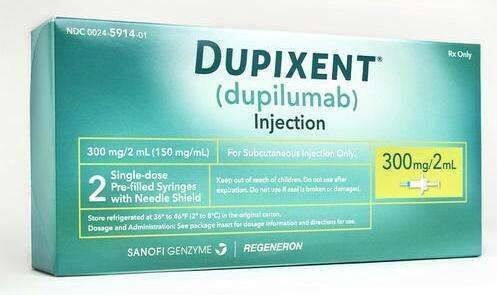
March 4, 2019 News /BioValleyBIOON/ -- French pharmaceutical giant Sanofi and its partner Regeneron recently jointly announced that the Committee for Medicinal Products for Human Use (CHMP) of the European Medicines Agency (EMA) has issued a positive opinion, recommending the approval of Dupixent (dupilumab) as an add-on maintenance treatment for patients with severe type 2 inflammation who remain inadequately controlled despite receiving high-dose inhaled corticosteroids combined with another medication for maintenance therapy.Asthmaadolescents (aged 12 years and older) and adult patients with type 2 inflammation characterized by blood eosinophilia and/or elevated fractional exhaled nitric oxide (FeNO). The CHMP opinion will now be submitted to the European Commission (EC) for review, with a final decision expected within the next 2–3 months.

The CHMP’s positive opinion is based on clinical data from 2,888 adult and adolescent patients who participated in three pivotal clinical trials within the global LIBERTY ASTHMA program, including the Phase III QUEST and VENTURE studies. The QUEST study evaluated the efficacy and safety of Dupixent versus placebo in patients with asthma whose condition was inadequately controlled with medium- or high-dose inhaled corticosteroids plus a second medication. The VENTURE study was conducted in patients dependent on oral corticosteroids.Asthmaconducted in patients to compare the efficacy and safety of Dupixent versus placebo.

Dupixent was launched in late March 2017, becoming the first biologic agent for the treatment of moderate-to-severe atopic dermatitis worldwide. To date, the drug has been approved in multiple countries and regions, including the United States, the European Union, and Japan. In the United States, Dupixent received further approval in October 2018FDAApproved as an add-on maintenance therapy for the treatment of adolescents and adults aged 12 years and older with moderate-to-severe asthma, specifically including two phenotypes: eosinophilic asthma and oral corticosteroid-dependent asthma.Asthma

Dupixent is a monoclonal antibody medication that inhibits the signaling of interleukin-4 (IL-4) and interleukin-13 (IL-13). IL-4 and IL-13 are specific typesAsthmatwo key proteins in the type 2 inflammation inherent to several other allergic diseases. Treatment with Dupixent is associated with reduced levels of type 2 inflammation biomarkers, including fractional exhaled nitric oxide (FeNO), immunoglobulin E (IgE), and eotaxin-3 (CCL26).

Dupixent is another key product co-developed by Sanofi and Regeneron following their collaboration on the PCSK9 inhibitor lipid-lowering drug Praluent, and it has the potential to become a game-changing therapy. In 2018, global sales of Dupixent reached $788 million. With its indications steadily expanding, EvaluatePharma, a renowned pharmaceutical market research firm, predicts that global sales of Dupixent could reach $8 billion by 2024.

Currently, Sanofi and Regeneron are evaluating Dupixent for the treatment of Type 2 inflammation-driven diseases across a broad clinical program, including: chronic rhinosinusitis with nasal polyps (Phase III completed), atopic dermatitis in children (6–11 years old) (Phase III), atopic dermatitis in children (6 months to 5 years old) (Phase II/III), and atopic dermatitis in adolescents (12–17 years old) (Phase III completed), children (6–11 years old)Asthma(Phase III), eosinophilic esophagitis (Phase II/III), and food and environmental allergies (Phase II). In addition, the two parties plan to conduct a clinical study to evaluate Dupixent for the treatment of chronic obstructive pulmonary disease (COPD). Sanofi and Regeneron are also evaluating the combination of Dupixent with the IL-33-targeting monoclonal antibody REGN3500; both drugs were discovered using Regeneron’s proprietary VelocImmune technology and are currently under joint global development by the two companies. (Bioon.com)