Home Sanofi and Lexicon's SGLT-1/2 Dual Inhibitor Zynquista Receives Positive CHMP Opinion for Type 1 Diabetes in the EU

Sanofi and Lexicon's SGLT-1/2 Dual Inhibitor Zynquista Receives Positive CHMP Opinion for Type 1 Diabetes in the EU

Mar 05, 2019 09:19 CST Updated 09:19
Sanofi

Pharmaceutical R&D Developer

Lexicon Pharmaceuticals

Pharmaceutical R&D Developer

European Medicines Agency

The European Medicines Agency (EMA) is a decentralized agency of the European Union (EU), located in London. It began operations in 1995. The agency is responsible for the scientific evaluation, supervision, and safety monitoring of medicines developed by pharmaceutical companies for use in the EU. By ensuring that all medicines available on the EU market are safe, effective, and of high quality, the EMA protects public and animal health in the 28 EU Member States and countries of the European Economic Area.

Committee for Medicinal Products for Human Use

Committee for Medicinal Products for Human Use (CHMP)The Committee for Medicinal Products for Human Use (CHMP) is the committee within the European Medicines Agency (EMA) responsible for human medicines. The CHMP replaced the former Committee for Proprietary Medicinal Products (CPMP) in May 2004.The CHMP plays a vital role in the authorization of medicines in the European Union (EU). In the centralized procedure, the CHMP is responsible for: 1) conducting initial assessments of marketing authorization applications across the EU; assessing modifications or extensions to existing marketing authorizations (“variations”); considering recommendations from the Agency’s Pharmacovigilance Risk Assessment Committee regarding the safety of medicines on the market, and, where necessary, advising the European Commission to amend the marketing authorization of a medicinal product, or to suspend or withdraw it from the market.The CHMP also evaluates medicines authorized at the national level that are referred to the EMA, with the aim of maintaining a harmonized position throughout the EU.Furthermore, the CHMP and its working groups promote the development of medicines and pharmaceutical regulation by: providing scientific advice to companies researching and developing new medicines; developing scientific and regulatory guidelines to assist pharmaceutical companies in preparing marketing authorization applications for human medicines; and collaborating with international partners to harmonize regulatory requirements.

March 5, 2019 /BioonBIOON/ -- French pharmaceutical giant Sanofi and its partner Lexicon Pharmaceuticals recently announced that the Committee for Medicinal Products for Human Use (CHMP) of the European Medicines Agency (EMA) has issued a positive opinion, recommending the approval of Zynquista (sotagliflozin) as an oral adjunct to insulin for type 1Diabetes(T1D) treatment for adult patients. The CHMP opinion will now be submitted to the European Commission (EC) for review, with the results expected in the first half of this year.

Currently, Zynquista is also under review by the U.S. FDA. In January this year,FDAThe Endocrine and Metabolic Drugs Advisory Committee (EMDAC) MeetingMeeting, reviewed and discussed the New Drug Application (NDA) for Zynquista in combination with insulin to improve glycemic control in adult patients with type 1 diabetes (T1D). As a result, the committee issued an “unusual” opinion, with a vote of 8 in favor and 8 against. The focal point of debate at this meeting was: compared with insulin monotherapy, the use of Zynquista in combination with insulinDiabetesIncreased risk of diabetic ketoacidosis (DKA).FDAThe final review decision is expected to be made on March 22, 2019.

The CHMP’s positive opinion is based on data from the inTandem clinical program, which comprises three Phase III clinical studies enrolling approximately 3,000 adult patients with type 1 diabetes (T1D) and inadequate glycemic control, to evaluate the efficacy and safety of Zynquista. The results demonstrated that all three studies met their primary endpoints. Compared with insulin monotherapy, both doses of Zynquista (200 mg and 400 mg), when used as an oral adjunct to insulin, achieved sustained and significant reductions from baseline to week 24 in mean glycated hemoglobin (HbA1c), body weight, and systolic blood pressure, while significantly increasing the time patients spent within the target glycemic range.

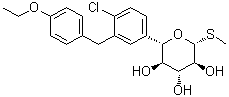
Molecular Structural Formula of Sotagliflozin

The active pharmaceutical ingredient of Zynquista is sotagliflozin, a dual SGLT-1/SGLT-2 inhibitor being developed for type 1Diabetesand Type 2Diabetestreatment. SGLT stands for sodium-glucose cotransporter and has two types: SGLT-1 is primarily responsible for glucose absorption in the gastrointestinal tract, while SGLT-2 is mainly responsible for glucose reabsorption in the kidneys. In addition to type 1 diabetes (T1D), Zynquista is in Phase III clinical trials for the treatment of type 2 diabetes (T2D).

Currently, SGLT2 inhibitors have achieved significant success in the treatment of type 2 diabetes (T2D), with multiple SGLT2 inhibitors available on the market, including canagliflozin, dapagliflozin, and empagliflozin. Some pharmaceutical companies are also developing SGLT2 inhibitors for the treatment of type 1 diabetes (T1D). For example, Astellas’ Suglat (ipragliflozin L-proline) was approved in Japan in December 2018 for the treatment of T1D.AstraZenecaForxiga (dapagliflozin) received a positive opinion from the EU CHMP in February this year, supporting its approval, and is expected to gain EU approval in the first half of this year.

Currently, Sanofi’s blockbuster insulin product Lantus is facing intense competition from generics, leading to a significant decline in sales. Zynquista is one of the key products for the company to rebuild its diabetes franchise. Whether Zynquista can make a comeback in the U.S. market will be determined by the end of this month—stay tuned! If approved, Zynquista will become the first oral hypoglycemic agent for the treatment of type 1 diabetes (T1D) in the U.S. market. (Bioon.com)