Home Astellas Announces EMA Acceptance of XOSPATA® (gilteritinib) for Regulatory Review in Relapsed/Refractory FLT3-Mutated AML

Astellas Announces EMA Acceptance of XOSPATA® (gilteritinib) for Regulatory Review in Relapsed/Refractory FLT3-Mutated AML

Mar 11, 2019 09:18 CST Updated 09:18
Astellas

Pharmaceutical R&D Manufacturer

European Medicines Agency

The European Medicines Agency (EMA) is a decentralized agency of the European Union (EU), located in London. It began operations in 1995. The agency is responsible for the scientific evaluation, supervision, and safety monitoring of medicines developed by pharmaceutical companies for use in the EU. By ensuring that all medicines available on the EU market are safe, effective, and of high quality, the EMA protects public and animal health in the 28 EU Member States and countries of the European Economic Area.

Committee for Medicinal Products for Human Use

Committee for Medicinal Products for Human Use (CHMP)The Committee for Medicinal Products for Human Use (CHMP) is the committee within the European Medicines Agency (EMA) responsible for human medicines. The CHMP replaced the former Committee for Proprietary Medicinal Products (CPMP) in May 2004.The CHMP plays a vital role in the authorization of medicines in the European Union (EU). In the centralized procedure, the CHMP is responsible for: 1) conducting initial assessments of marketing authorization applications across the EU; assessing modifications or extensions to existing marketing authorizations (“variations”); considering recommendations from the Agency’s Pharmacovigilance Risk Assessment Committee regarding the safety of medicines on the market, and, where necessary, advising the European Commission to amend the marketing authorization of a medicinal product, or to suspend or withdraw it from the market.The CHMP also evaluates medicines authorized at the national level that are referred to the EMA, with the aim of maintaining a harmonized position throughout the EU.Furthermore, the CHMP and its working groups promote the development of medicines and pharmaceutical regulation by: providing scientific advice to companies researching and developing new medicines; developing scientific and regulatory guidelines to assist pharmaceutical companies in preparing marketing authorization applications for human medicines; and collaborating with international partners to harmonize regulatory requirements.

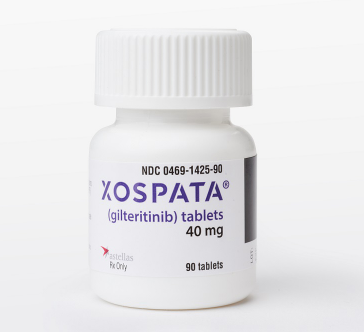
March 11, 2019/BioValleyBIOON/-- Japanese pharmaceutical company Astellas recently announced that the European Medicines Agency (EMA) has accepted the Marketing Authorization Application (MAA) for the targeted anticancer drug Xospata (gilteritinib), a once-daily oral medication indicated for the treatment of relapsed or refractory (drug-refractory) acute myeloid leukemia with FLT3 mutations.Leukemia(AML) treatment for adult patients. The EMA has also granted accelerated assessment to this MAA, which means the review time by the Committee for Medicinal Products for Human Use (CHMP) will be reduced from 210 days to 150 days.

AML is a cancer that affects the blood and bone marrow, with its incidence increasing with age. In the European Union, the annual incidence of AML is 3.7 per 100,000, with an estimated 18,400 individuals beingDiagnosisDiagnosed with AML. AML is associated with various genetic mutations. Xospata is a second-generation FLT3 inhibitor that targets two distinct mutations: the internal tandem duplication (ITD) in the FLT3 transmembrane domain and the FLT3 tyrosine kinase domain (TKD) mutation. FLT3-ITD mutations affect approximately 30% of AML patients and are associated with poorer disease-free survival and overall survival. FLT3-TKD mutations affect approximately 7% of AML patients. Although the impact of these mutations is not fully understood, they are associated with treatment resistance.


Xospata has been granted Orphan Drug Designation and Fast Track Designation in the United States, Orphan Drug Designation in Japan and the European Union, and SAKIGAKE Designation in Japan. In mid-October 2018, Xospata received approval in Japan for the treatment of adult patients with relapsed or refractory acute myeloid leukemia (AML) who are positive for FLT3 mutations. In late November 2018, Xospata was approved by the U.S. FDA for the treatment of adult patients with relapsed or refractory (refractory to medication) AML whose FLT3 mutation has been confirmed by testing. This approval makes the drug theFDAThe first FLT3-targeted agent approved for patients with relapsed or refractory AML, marking Astellas’ entry into the U.S. hematologic cancer treatment field.

Xospata was discovered through a research collaboration with Kotobuki Pharmaceutical Co., Ltd. Astellas holds exclusive global rights to the development, manufacturing, and potential commercialization of Xospata.

The approval of Xospata in Japan and the United States, as well as the submission of the Marketing Authorization Application (MAA) in Europe, were based on the interim analysis of the following endpoints from the ADMIRAL clinical study: complete remission (CR) rate/complete remission with partial hematologic recovery (CRh), duration of response (DOR) for CR/CRh, and the conversion rate from transfusion dependence to transfusion independence. The data showed a CR/CRh rate of 21%, with a median DOR for CR/CRh of 4.6 months. By day 56 post-baseline, the conversion rate from transfusion dependence to transfusion independence was 31.1%. The full results of the ADMIRAL study will be presented at the American Association for Cancer Research (AACR) Annual Meeting, held in Atlanta, USA, from March 29 to April 3, 2019.

It is worth mentioning that in April 2017,NovartisThe targeted anticancer drug Rydapt (midostaurin) receivedFDAApproved for the treatment of adult patients with newly diagnosed FLT3 mutation-positive AML. This approval makes Rydapt the first targeted therapy worldwide for the first-line treatment of FLT3 mutation-positive AML. (Bioon.com)