

Janssen's Esketamine Nasal Spray Spravato Approved by FDA: Prospects and Regulatory Challenges for China Launch

Johnson & Johnson Innovative Medicine
Pharmaceutical R&D Developer

Johnson & Johnson
Healthcare Product Manufacturers, Health Service Providers
On March 7, the FDA approved Janssen Pharmaceuticals’ nasal spray Spravato (esketamine), as reported by VCBeat (biobeat1). The drug can be used in conjunction with oral antidepressants for the treatment of treatment-resistant depression. The approval of Spravato marks the first new approach to addressing treatment-resistant depression (major depressive disorder) in nearly 50 years.
Regarding this event, apart from industry insiders, no group is more concerned than the vast number of depression patients in China. So, is it possible for Spravato to be launched on the Chinese market? How will domestic laws and regulations regulate such products?

Figure: Spravato; It is reported that Johnson & Johnson’s Spravato spray bottles utilize patented technology to prevent patients from extracting the medication.
The good news is that Johnson & Johnson has already initiated clinical trials for Spravato in China!
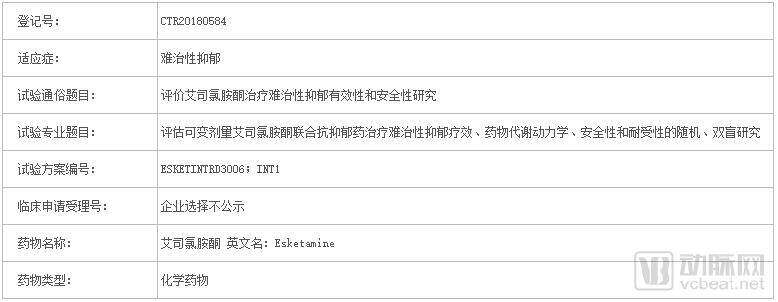

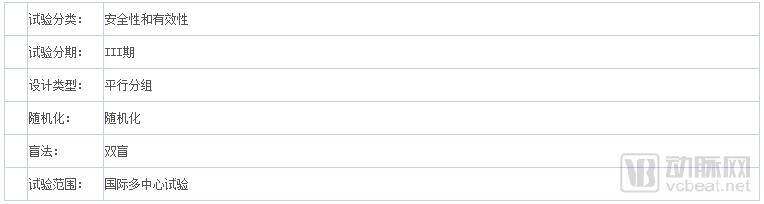
Figure: Spravato clinical trial information on the Drug Clinical Trial Registration and Information Publicity Platform
Johnson & Johnson’s esketamine nasal spray initiated Phase III clinical trials in China on May 29, 2018, with the overall study protocol largely consistent with the trial design published for FDA approval. On Day 1 of the double-blind treatment phase, participants were randomly assigned in a 1:1 ratio, in a double-blind manner, to receive either intranasal esketamine or placebo. All participants concurrently received an oral antidepressant throughout the trial period. The study is expected to be conducted simultaneously at 19 medical institutions across multiple regions in China (out of 25 sites globally), with a planned enrollment of 210 patients (out of 234 globally). This clinical progress suggests that there is still a possibility of seeing Spravato ultimately approved for market launch.
According to the "Technical Guidelines for Clinical Trials of Antipsychotic Drugs" issued by China's National Medical Products Administration, trials lasting 6–8 weeks are classified as short-term studies, and their results can be used to demonstrate that the drug is effective in alleviating symptoms. Generally, drugs approved based on short-term trial data are indicated only for acute-phase treatment. For application in consolidation or maintenance phase treatment, long-term trials lasting at least six months are required.
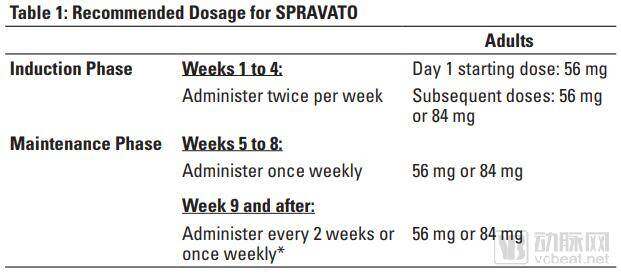
Figure: Content of the English-language prescribing information for Spravato
The trials disclosed in the FDA approval of Spravato and the clinical trials currently registered in China are all short-term studies. According to Chinese regulations, the corresponding trial results can only be used for acute-phase treatment and not for consolidation or maintenance therapy. On the U.S. National Institutes of Health (NIH) website, it is possible to find information indicating that Spravato has already initiated corresponding Phase III long-term clinical trials. The English version of Spravato’s package insert also includes recommended dosages for maintenance therapy. However, there is currently no news emerging from China regarding the initiation of long-term trials.
In addition to Johnson & Johnson, Jiangsu Hengrui Medicine has also submitted applications for multiple ketamine-related drugs or clinical trials, including Ketamine Hydrochloride Injection, Esketamine Hydrochloride Injection, and (R)-Ketamine Hydrochloride Nasal Spray, among others, with specific indications yet to be disclosed. Based on currently available clinical information in China, although the possibility of treating resistant depression cannot be ruled out, the primary intended use is most likely still for anesthesia.
Although Spravato has received FDA approval for market launch, the path to its commercialization in China may not be smooth due to differences in the regulatory frameworks for addictive substances between the United States and China.
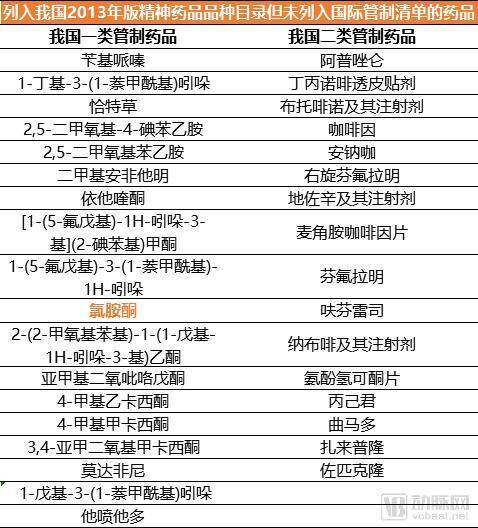
Figure: Drugs included in China's 2013 Catalogue of Psychotropic Substances but not listed in the international control schedules
The downside of Spravato stems from China’s regulatory landscape for psychotropic substances. The active ingredient in Spravato, esketamine, is a variant of ketamine. Ketamine, also known as “K-powder,” was first synthesized in 1962 and was initially used for veterinary anesthesia. The first cases of ketamine abuse were reported in the United States in 1971. On June 9, 2001, China’s State Drug Administration classified ketamine as a Category II psychotropic substance. In 2003, the Ministry of Public Security included it in the category of illicit drugs. In August 2004, ketamine (including its possible salts and formulations) was reclassified as a Category I psychotropic substance, restricting its production exclusively to manufacturers designated by the State Food and Drug Administration. Since July 2004, the sale and purchase of ketamine formulations have been subject to mandatory regulatory requirements.
According to the updated List of Psychotropic Substances under International Control released by the International Narcotics Control Board (INCB) in 2014, a total of 115 substances, including certain variants of these drugs, are subject to international control. Ketamine is not included among these 115 substances. In contrast, China’s 2013 Catalogue of Psychotropic Substances lists 68 Category I psychotropic substances and 81 Category II psychotropic substances, totaling 149 substances. These 149 substances encompass all psychotropic substances under international control, along with additional substances not regulated by the INCB. In China, ketamine is classified as a Category I psychotropic substance, subject to the strictest level of control. This regulatory status prohibits the recruitment of healthy volunteers for clinical trials involving ketamine and its variants. Such restrictions may, to some extent, impede domestic research progress on ketamine and its variants, thereby affecting the clinical development and market approval of ketamine-related pharmaceuticals.
Unlike the strict regulations in China, the United States maintains relatively lax control over ketamine. The U.S. Drug Enforcement Administration (DEA) classifies ketamine merely as a Schedule III controlled substance, indicating its potential for abuse. Although the only FDA-approved indication for ketamine is currently anesthesia, numerous clinics in the U.S. already provide intravenous ketamine services to patients with depression through off-label prescribing.
Consequently, when the FDA approved the marketing application for Spravato, some scholars expressed concerns regarding drug abuse. Patients who do not meet the criteria for Spravato use may seek ketamine treatment through other channels on their own, such as the intravenous ketamine administration mentioned above, which will inevitably exacerbate the social problems associated with ketamine addiction. Moreover, opioid abuse has already caused similar social issues in the United States.
In China, a large number of patients with depression are looking to Spravato to save their lives. However, the risk of drug abuse associated with its neurotoxicity and addictive potential may still raise concerns among relevant government authorities. Short-term clinical trials for Spravato have already been approved in China, indicating that its market launch in the country remains promising. Nevertheless, even if Spravato is launched in China, it will only be indicated for acute-phase treatment, and patients must be closely monitored by hospitals and physicians throughout the entire course of therapy. Given ketamine’s classification as a Class I psychotropic substance in China, the likelihood of conducting long-term trials for Spravato in the future is low, making it unlikely to be ultimately approved for consolidation or maintenance therapy.
In addition, the current price of $295 per Spravato unit excludes a large number of patients. According to the prescribing information for acute treatment, two Spravato units are required weekly over a four-week course. This means that during nearly one month of esketamine therapy, patients need eight Spravato units, totaling close to 16,000 RMB. Such a price may still be slightly high for patients in China.