

Interim Analysis of Phase III REPAIR Study Shows OPSUMIT® (macitentan) Significantly Improves Right Ventricular Function and Reduces Pulmonary Vascular Resistance in Pulmonary Arterial Hypertension
Mar 18, 2019 09:37
CST Updated
09:37

Johnson & Johnson
Healthcare Product Manufacturers, Health Service Providers

Actelion
Pharmaceutical R&D Developer
March 18, 2019/BioonBIOON/--Actelion, a subsidiary of US pharmaceutical giant Johnson & Johnson (JNJ), recently at the 68th Annual Scientific Session of the American College of Cardiology (ACC)MeetingInterim analysis data from the Phase III REPAIR clinical study of Opsumit (macitentan) for the treatment of pulmonary arterial hypertension (PAH) were published. The results demonstrated that Opsumit treatment was associated with significant improvements in right ventricular (RV) function, including reversal of RV remodeling and reduced pulmonary vascular resistance (PVR). Notably, this study is the first multicenter trial to employ MRI for assessing primary endpoints in patients with PAH, enabling clinicians to gain further insights into the direct effects of Opsumit on RV remodeling and function in this patient population. In this study, Opsumit treatment was associated with significant improvements in RV function among patients with PAH.
The REPAIR study was a 52-week, open-label, multicenter study that used cardiac magnetic resonance imaging (MRI) and right heart catheterization to assess the effects of Opsumit on right ventricular (RV) remodeling and function. Opsumit was initially administered as monotherapy, as sequential combination therapy with a phosphodiesterase-5 (PDE-5) inhibitor, or in combination with a PDE-5 inhibitor as initial therapy. The two primary endpoints of the study were: (1) the change in right ventricular stroke volume (RVSV) from baseline to Week 26, determined by pulmonary artery flow MRI; and (2) the change in pulmonary vascular resistance (PVR) from baseline to Week 26, measured by right heart catheterization.
The pre-specified interim analysis included the first 42 enrolled patients with pulmonary arterial hypertension (PAH). The data showed significant improvements in both primary endpoints at Week 26 compared to baseline: a mean increase of 15.2 mL in right ventricular stroke volume (RVSV) (96% CI [9.2, 21.0], p < 0.0001) and a 37% reduction in pulmonary vascular resistance (PVR) (99% CI [26, 46], p < 0.0001). In this study, the safety profile of Opsumit was consistent with previous findings.
The study results were declared positive, and patient enrollment has been halted. All enrolled patients will continue in the study until their 52-week assessment, after which the results will support the final analysis.
Richard N. Channick, Director of the Acute and Chronic Thromboembolic Disease Program at UCLA Medical Center, stated, “Measuring right ventricular (RV) function in patients with pulmonary arterial hypertension (PAH) is highly valuable for monitoring treatment response. The REPAIR study demonstrated that MRI-assessed RV function is a relevant endpoint for evaluating the efficacy of PAH therapies.”
Alessandro Maresta, Vice President and Head of Global Medical Affairs at Actelion, stated, “We are very satisfied with the interim results of the REPAIR study, and we will strive to report the full study results in the near future.”
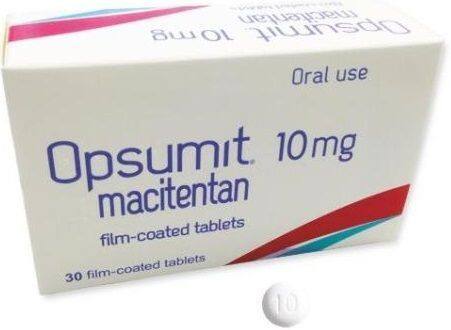
Opsumit is a dual endothelin receptor antagonist (ERA) that relaxes pulmonary arteries and lowers blood pressure. It has been approved in the United States and the European Union for the treatment of pulmonary arterial hypertension (PAH, WHO Group 1) to reduce the risk of disease progression and hospitalization. Like other drugs in its class, it carries a boxed warning for embryo-fetal toxicity. Female patients can access Opsumit treatment through a restricted program called the Opsumit Risk Evaluation and Mitigation Strategy (REMS).
In September 2018, the first Phase III clinical study of Opsumit for the treatment of portopulmonary hypertension (PoPH), PORTICO, was successful. The results showed that after 12 weeks of treatment, Opsumit significantly improved pulmonary vascular resistance (PVR) compared to placebo, achieving the primary endpoint of the study. PoPH is a subset of pulmonary arterial hypertension (PAH) associated with portal hypertension (elevated blood pressure in the portal vein), typically caused by liver cirrhosis. Currently, PoPH is increasingly recognized, and there is evidence indicating it is the fourth most common type of PAH. In many cases, patients with PoPH are diagnosed only during evaluation for liver transplantation. However, severe PAH contraindicates liver transplantation due to poor surgical outcomes.
Headquartered in Switzerland, Actelion is the largest biotechnology company in Europe and a global leader in the treatment of pulmonary arterial hypertension (PAH). Actelion’s focus on rare diseases has made it an highly attractive acquisition target, as such therapies are less susceptible to pricing pressures. In January 2017, Johnson & Johnson acquired Actelion for $30 billion, marking its largest acquisition to date. This deal brought to Johnson & Johnson blockbuster PAH drugs such as Tracleer, Opsumit, and Uptravi, as well as Valchlor, a medication for the treatment of mycosis fungoides-type cutaneous T-cell lymphoma (MF-CTCL). (Bioon.com)