

Amgen Launches $800M VESALIUS-CV Outcomes Study to Evaluate Long-Term Cardiovascular Benefits of Repatha in High-Risk Patients Without Prior Heart Attack or Stroke
Mar 19, 2019 08:43
CST Updated
08:43

Amgen
Developer of Treatment Drugs for Serious Diseases

March 19, 2019/BioonBIOON/--U.S. biotechnology giant Amgen recently announced the launch of a large-scale cardiovascular outcomes study, VESALIUS-CV. The study will enroll at least 13,000 patients worldwide who remain at high risk for experiencing their first cardiovascular (CV) event despite receiving optimized lipid-lowering therapy. The study is scheduled to commence in the second quarter of 2019 and will last for at least four years, recruiting patients who have not yet experienced a heart attack orStroke, but those with severe atherosclerotic disease orDiabetespatients, who are at high risk for a first cardiovascular (CV) event. The study aimed to evaluate the lipid-lowering PCSK9 inhibitor Repatha (evolocumab) in individuals without heart disease orStrokeLong-term Efficacy in Patients with High-Risk Cardiovascular Disease (CVD) and a History of CVD.
The VESALIUS-CV study is the latest study in Amgen’s PROFICIO clinical program, which is evaluating the impact of LDL-C lowering with Repatha on cardiovascular disease (CVD) across multiple patient populations. To date, the PROFICIO program has included 36 studiesClinical Trials, enrolling more than 38,000 patients worldwide.
According to the R&D cost methodology estimated by the pharmaceutical market research firm EvaluatePharma Vision, the VESALIUS-CV study may cost around $800 million. The studyis a Phase III, multicenter, double-blind, randomized, placebo-controlled, parallel-group outcome study conducted by Amgen and Brigham and Women's HospitalMyocardial InfarctionConducted in collaboration with the Thrombolysis in Myocardial Infarction (TIMI) Study Group. Globally, at least 13,000 patients will be enrolled in the study, with at least 6,500 patients in each treatment arm. Repatha (140 mg) or placebo will be administered subcutaneously every 2 weeks for at least 4 years. Follow-up for all randomized patients is planned to continue for at least 4 years, until a sufficient number of patients have experienced the composite endpoint. The two primary endpoints include: a three-component composite endpoint (death from coronary heart disease [CHD],Myocardial Infarction[MI], time to occurrence of ischemic stroke) and the 4-component composite endpoint (time to occurrence of CHD death, MI, ischemic stroke, or any ischemia-driven arterial revascularization), whichever occurs first.
The previously conducted Repatha cardiovascular outcomes study, FOURIER, confirmed that Repatha reduces LDL-C levels and in patients with heart disease orStrokethe efficacy in reducing the relative risk of major adverse cardiovascular events (MACE) among high-risk patients with a history of such events. Building on these pivotal findings, the VESALIUS-CV study explored the use of Repatha to prevent the first heart attack orStrokepotential benefits.
Brigham and Women's HospitalMyocardial InfarctionRobert Giugliano, Senior Investigator of the Thrombolysis in Myocardial Infarction (TIMI) Study Group, stated, “High cholesterol is the most important risk factor for coronary heart and vascular disease; however, we know that recommended LDL-C treatment targets are often not achieved in patients at very high risk. The VESALIUS-CV study will investigate the impact of Repatha on major adverse cardiovascular events (MACE, such as heart attack or stroke) in patients who remain at elevated risk despite receiving lipid-lowering and cardiovascular disease therapies. This will enable us to better understand the benefits of significantly lowering LDL-C across diverse patient populations.”
David M. Reese, Executive Vice President of Research and Development at Amgen, stated, “PROFICIO represents our latest commitment to advancing cardiovascular science and improving patient care worldwide, with VESALIUS-CV serving as a key addition to this growing portfolio. By continuing to invest in new scientific discoveries through the PROFICIO program, we can help address the most critical unmet needs among patient populations at risk for life-altering cardiovascular events.”
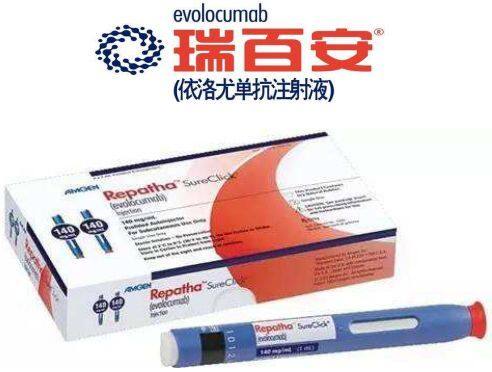
Repatha is a human monoclonal immunoglobulin G2 (IgG2) antibody targeting human proprotein convertase subtilisin/kexin type 9 (PCSK9). The drug binds to PCSK9, inhibiting the binding of circulating PCSK9 to low-density lipoprotein (LDL) receptors (LDLR), thereby preventing PCSK9-mediated LDLR degradation and allowing LDLRs to recycle back to the surface of hepatocytes. By inhibiting the binding of PCSK9 to LDLR, Repatha increases the number of LDLRs available to clear LDL from the blood, thereby reducing LDL-C levels.
To date, Repatha has been approved in more than 60 countries and regions, including the United States, Japan, Canada, and all 28 member states of the European Union. Applications in other countries are currently underway.
In China, Repatha® (Repatha®, generic name: evolocumab) was first approved in August 2018, becoming the first PCSK9 inhibitor for the treatment of homozygous familial hypercholesterolemia (HoFH) in adults or adolescents aged 12 years and older. In January 2019, Repatha® received approval for a new indication: to reduce the risk of cardiovascular events in adult patients with atherosclerotic cardiovascular disease (ASCVD).Myocardial Infarction, stroke, and coronary revascularization. This approval makes Repatha the first PCSK9 inhibitor available in the Chinese market for this indication. (Bioon.com)