

AstraZeneca's Farxiga (Dapagliflozin) Demonstrates Significant Reduction in MACE and Heart Failure Hospitalization Risk in Type 2 Diabetes Patients, New Sub-analyses Reveal
Mar 19, 2019 16:03
CST Updated
16:03

AstraZeneca
Biopharmaceutical Manufacturer

March 19, 2019/BioValleyBIOON/--British pharmaceutical giantAstraZeneca(AstraZeneca) Recently at the 68th Annual Scientific Session of the American College of Cardiology (ACC) held in New Orleans, USAConferencepublished onDiabetesFirst Subgroup Analysis Results from the Phase III DECLARE-TIMI 58 Clinical Study of Farxiga (Chinese Brand Name: Andatang; Generic Name: Dapagliflozin)
Data show that in patients who previously experienced a myocardial infarction (Myocardial Infarction) Type 2DiabetesAmong patients, Farxiga reduced the relative risk of major adverse cardiovascular events (MACE) by 16% compared with placebo. In another subgroup analysis, Farxiga reduced type 2DiabetesRelative Risk of Hospitalization for Heart Failure (hHF) in Patients, Regardless of Ejection Fraction (EF) Status.
The results announced in November 2018 showed that, compared with placebo, Farxiga significantly reduced the composite risk of hospitalization for heart failure (hHF) or cardiovascular (CV) death, and this benefit was consistent across the entire study population. Furthermore, although fewer major adverse cardiovascular events (MACE) were observed in patients treated with Farxiga within a broad patient population, the difference did not reach statistical significance.
Elisabeth Björk, Vice President of Global Drug Development and Head of Cardiovascular, Renal, and Metabolism at AstraZeneca, stated, “These data build upon the existing evidence for Farxiga’s cardiorenal effects, adding important new evidence on heart failure and MACE. Heart failure is a type 2Diabetes“One of the most common early cardiovascular complications, despite advances in healthcare, more work remains to be done for patients in this field.”
Co-Principal Investigator of the DECLARE-TIMI 58 Study, Brigham and Women's HospitalMyocardial InfarctionStephen Wiviott, a senior investigator with the Thrombolysis in Myocardial Infarction (TIMI) Study Group, stated, “These prespecified subgroup analyses provide important clinically relevant insights for cardiologists and their patients. The new evidence we now have from the DECLARE-TIMI 58 study demonstrates that Farxiga consistently reduces hospitalizations for heart failure across a broad population of patients with type 2 diabetes, regardless of whether they have a history of cardiovascular disease, including myocardial infarction or heart failure.”
Farxiga (Dapagliflozin): The First SGLT-2i Antidiabetic Drug Launched in China
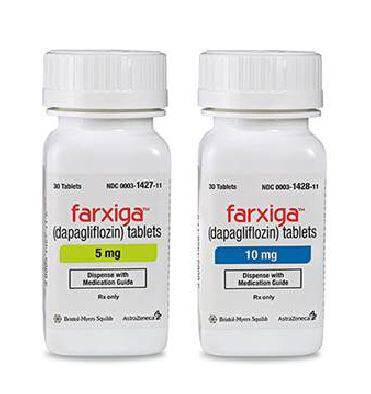
Farxiga is a first-in-class, selective SGLT2 inhibitor that primarily works by inhibiting SGLT2 (a transporter protein involved in glucose reabsorption in the proximal renal tubules of the kidney), thereby reducing renal glucose reabsorption and increasing urinary glucose excretion to lower blood glucose levels. This glucose-lowering effect is independent of β-cell function and insulin resistance.
Farxiga is indicated as monotherapy or in combination with other medicinal products, together with diet and exercise, to improve glycemic control in adult patients with type 2 diabetes mellitus. In addition to its glucose-lowering effects, Farxiga provides additional benefits of lowering blood pressure and reducing body weight. Currently, the use of Farxiga for the treatment of type 1 diabetes mellitus is under regulatory review in the European Union.
In the Chinese market, Farxiga was approved by the China Food and Drug Administration (CFDA) in March 2017.CFDA) approval, as a monotherapy to improve glycemic control in adult patients with type 2 diabetes. This approval makes Forxiga the first SGLT-2 inhibitor (SGLT-2i) marketed in China. Forxiga is an oral tablet, with each tablet containing 5 mg or 10 mg of dapagliflozin. The recommended starting dose is 5 mg once daily in the morning. (Bioon.com)
(BioValley Bioon.com)