

Deeply Aligned with the Project Guidelines, HaiShan Yi® Offers a "Systematic Solution" for the Commercialization of Surgical Robots
At present, the surgical robot industry is shifting from "technology-driven" to "value-driven," and domestically produced surgical robots have clearly entered the second half, which focuses on clinical value while balancing operational efficiency and cost considerations.
On the one hand, the certainty of demand for robotic surgery in clinical settings is becoming increasingly prominent.Even in the context of 2025, where medical insurance has yet to achieve full coverage and out-of-pocket payments remain predominant, the volume of robotic surgeries in China has still experienced robust growth.The dual increase in installation volume and surgical volume is a direct reflection of the continuous release of demand. On the other hand, positive signals are also being continuously released at the policy level. In January this year, the National Healthcare Security Administration officially issued the "Guidelines for the Establishment of Medical Service Price Items for Surgical and Therapeutic Auxiliary Operations (Trial)", which established, for the first time, a unified national charging framework for surgical robots, focusing on the actual participation and clinical value of robots in surgery.
Against this background,Whether it can assist hospitals in achieving higher clinical output and better input-output ratios within the new institutional framework is becoming a new watershed for measuring core competitiveness and widening market positions.
This year's China Medical Equipment Conference and Exhibition also confirmed this trend. Walking through the venue, the booths of surgical robots remained popular, but the attendees' focus had shifted from previous technical inquiries about "degrees of freedom of robotic arms," "accuracy parameters," and "force feedback" to more practical questions—such as the range of indications covered, compatibility with various surgical procedures, whether manual control is smooth and consistent, and how to balance clinical benefits with hospital operational value under new tiered pricing regulations…
In the bustling venue, the Ruilong Surgical booth was essentially a miniature academic exchange site. In front of the booth, visitors came to experience Haishan I®The participants for the split-body surgical robot were coming in an endless stream — some patiently queued up to wait for hands-on control, while others gathered around the equipment to enthusiastically discuss and exchange operation experiences with their peers.
As the first domestically produced split-type endoscopic surgical robot in China, and also the first surgical robot to be approved for full indications across four major specialties—general surgery, thoracic surgery, gynecology, and urology—upon its market launch, Haishan Yi® innovates from the ground up, directly addressing the clinical penetration pain points of traditional endoscopic robotic systems in terms of flexibility, accessibility, and affordability.
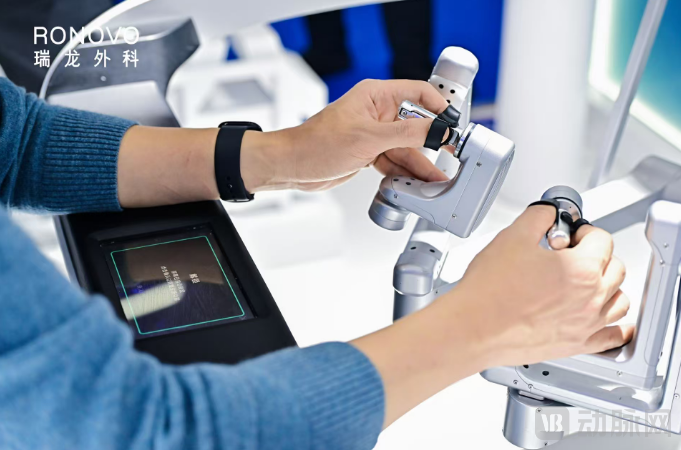
Sea Mountain One®Test Drive
To move surgical robots from "showcases" to "operating tables," technological breakthroughs and training systems alone are not enough; a reasonable and standardized pricing mechanism is the key.
Previously, the charges for surgical robots were mostly independently priced by individual hospitals, with charging models largely determined based on factors such as surgical approach, application site, and domestic and international brands. In January 2026, the National Healthcare Security Administration issued the "Guidelines for Establishing Medical Service Price Projects for Surgical and Treatment-Assisted Operations (Trial)," establishing a unified national charging framework for auxiliary operations like "surgical robots." It clarified a nationwide unified charging logic of "linking to the main surgery, categorizing by function, and applying coefficient-based additional charges." Specifically, the charging system is centered on clinical value—surgical robots that participate more extensively in surgeries, offer more comprehensive functions, and execute with greater precision can achieve higher charging coefficients, directly reflecting their clinical value in pricing.
This milestone document establishes for the first time a unified national charging system, making the fees for surgical robots "legally grounded." By tiered pricing, robots return to their original role in complex surgeries, preventing the misuse of technology. More importantly, it promotes the calculation of surgical robot charges to shift from a sole focus on equipment attributes back to an evaluation of the true clinical value contributed by the robot.
Dr. Ma Changzheng, Founder of Ruilong SurgicalIt is believed that the issuance of this guideline means that hospitals and patients will have more mature robotic platforms to choose from, including HaiShan One.®With the advantages of modular, flexible, and configurable design, it has shown promising results in the initial trial phase at multiple hospitals in China. Against the backdrop of China's large patient population and the DRG/DIP policy, Haishan Yi®Not only suitable for highly complex surgeries, but also advantageous in the widespread application and cost-effectiveness of common surgeries, offering more choices and health benefits for hospitals and patients.
Dr. Mao Ying, Co-founder of Ruilong SurgicalIt was also pointed out that the implementation of this charging guideline clarified that the fees for robot use would be based on the clinical value created by surgical robots. Ruilong Surgical will continue to focus on enhancing clinical value in its product development. The company will highly prioritize the reliability, safety, and intraoperative smoothness of its products, utilizing a modular split design to reduce collisions between robotic arms and improve stability. It will also continue to advance technologies such as remote surgery, providing doctors with more effective intraoperative information and decision support, making surgeries safer and more precise, and delivering better postoperative recovery outcomes for patients.
As the "guidelines for project approval" have been finalized, "payment according to work" has officially become the core measure of the commercial potential of surgical robots. Under the dual scrutiny of hospital精细化运营 and policy guidance, only products that can deeply participate in key steps and create verifiable clinical value will be able to break through in this long-term value competition.
Haisan-1, the independently developed split-type laparoscopic surgical robot by Ruilong Surgical®, undoubtedly providing a valuable empirical sample for reference. In the early stages of development, Ruilong Surgical conducted in-depth visits lasting up to a year, transforming industry pain points such as "high costs, difficult operation, and low coverage of surgical procedures" into research and development concepts. They established the core principle of "making robots adapt to doctors." This pragmatic logic, which starts from the source and balances clinical utility with medical economics, aligns deeply with the value orientation of the project guidelines, allowing Haishan-1® to demonstrate commercial advantages within the new institutional framework:
Interpretation of "Precision Execution" Capability: Deep Cross-Department Participation in the Entire Surgical Process, Competent in Multi-Quadrant Complex Procedures
According to the level of involvement of surgical robots in surgery and their clinical value in promoting precision surgery, the project guidelines have established price categories in three tiers: navigation, participation in execution, and precise execution. The highest tier, "precise execution," requires the robot to "assist medical staff in precisely controlling surgical instruments to complete all steps of the surgery, or to precisely complete all critical steps such as the removal, reconstruction, and repair of organs and tissues during the surgery."
Hai Mountain 1®Not only can it deeply participate across departments in the entire surgical process from exposure, cutting, anastomosis to reconstruction, but it also possesses the capability for complex procedures in multiple quadrants. Whether it is radical resection of colorectal cancer, fertility-sparing surgery for endometrial cancer, or other high-difficulty primary surgeries, it can deliver stable performance. This is due to its unique "modular detachable" architecture – deconstructing the traditional integrated robot into independently mobile, lightweight cart units, with each robotic arm mounted on a separate cart. These can be flexibly repositioned or reconfigured bedside according to surgical needs, effectively avoiding intraoperative collisions. Combined with the self-developed robotic arm configuration by Ruilong Surgical, it can cover an ultra-large surgical space from the pelvic cavity to the abdominal cavity under a single patient position and one preoperative setup.
The ingenious design of Haishan-1® has broken through the site limitations of robot-dedicated operating rooms, enabling robotic surgeries to be performed in regular operating rooms. It can also be easily transferred and efficiently switched between operations, making it possible for robotic surgeries to be introduced into more grassroots hospitals and clinical departments.
Sea Mountain One®The flexibility also expands new application scenarios for robot-assisted surgery – its design makes it possible for "a single cart to complete a single-person surgery," raising the flexibility and universality of robot-assisted surgery to new heights.
Practicing the "On-Demand Configuration" New Concept: Modular Design Optimizes Consumables Costs, Expands Hospital Operational Surplus
Under the dual pressures of DRG/DIP payment reform and hospital self-sufficiency, hospitals must be cost-conscious, paying only for truly needed functions. Haishan Yi®With an innovative modular architecture, it truly enables hospitals to "configure on demand." Hospitals can flexibly combine the number of robotic arms based on actual surgical volume and department needs, while being compatible with multiple mainstream third-party endoscopes, energy devices, and more, without paying a premium for redundant functions. The independently mobile modular carts can adapt to various standard operating rooms without the need for site modifications and can be quickly moved and deployed between different operating rooms, improving equipment turnover efficiency.
At the consumables level, Haishan One®The compatibility of straight-handled instruments with wrist-turning instruments not only gives the surgeon greater freedom but also optimizes the cost structure of consumables for a single surgery, reducing surgical costs and patient burden. From equipment procurement to consumable usage, Haishan...®A set of cost-reducing and efficiency-enhancing solutions has been formed, allowing hospitals to expand healthier operational surplus space while ensuring clinical outcomes.
Driving the Value Implementation of "Remote Surgical Assistance": Independent R&D + Ecosystem Collaboration to Promote the Cross-Regional Accessibility of High-Quality Medical Resources
Project Guidelines Establish "Remote Surgery Auxiliary Operation Fee" to Support Cross-Regional Supply of High-Quality Medical Resources. The deeper intention of the policy is to promote broader clinical accessibility of high-quality medical technology — which requires not only reliable remote surgery technology as a solid support but also the scalable training of surgeons' capabilities.
At the technical level, Ruilong Surgical has prepared for the routine application of remote surgery. In December 2025, a remote animal experiment spanning 200 kilometers and connecting Shanghai and Yangzhou was successfully completed using HaiShan One.®Split-type surgical robot successfully performed remote lobectomy.Relying on Ruilong Surgical's high-reliability communication solutions and functional safety solutions specifically designed for remote surgery, the system achieves millisecond-level response in a regular broadband environment — with overall latency controlled within 20ms, without the need for additional dedicated line deployment.This means that, Hai Mountain One®Already has the capability to deploy remote surgeries at scale under existing network conditions.
At the ecological level,Rui Long Surgical announced at this exhibition that it will officially apply Johnson & Johnson Medical Technologies' remote digital surgical coaching platform to Hai Shan Yi.®This is a digital surgical teaching platform based on remote connectivity, which breaks through the spatiotemporal constraints and labor cost limitations of the traditional "master-apprentice" model through two modes: the "tutoring mode" (where mentors provide real-time remote guidance to students during operations) and the "demonstration mode" (where mentors perform procedures while simultaneously explaining key steps), enabling high-quality surgical experience to be transmitted across regions and standardized.
This collaboration will empower the "last mile" of operator training, assisting doctors in advancing from "mastering operations" to "refining techniques." It will also provide a practical pathway for the standardized training and large-scale application of robotic surgery skills, thereby promoting the continuous advancement of clinical value within a positive cycle.Help hospitals build a良性 clinical ecosystem and promote the普及 of high-quality medical resources.
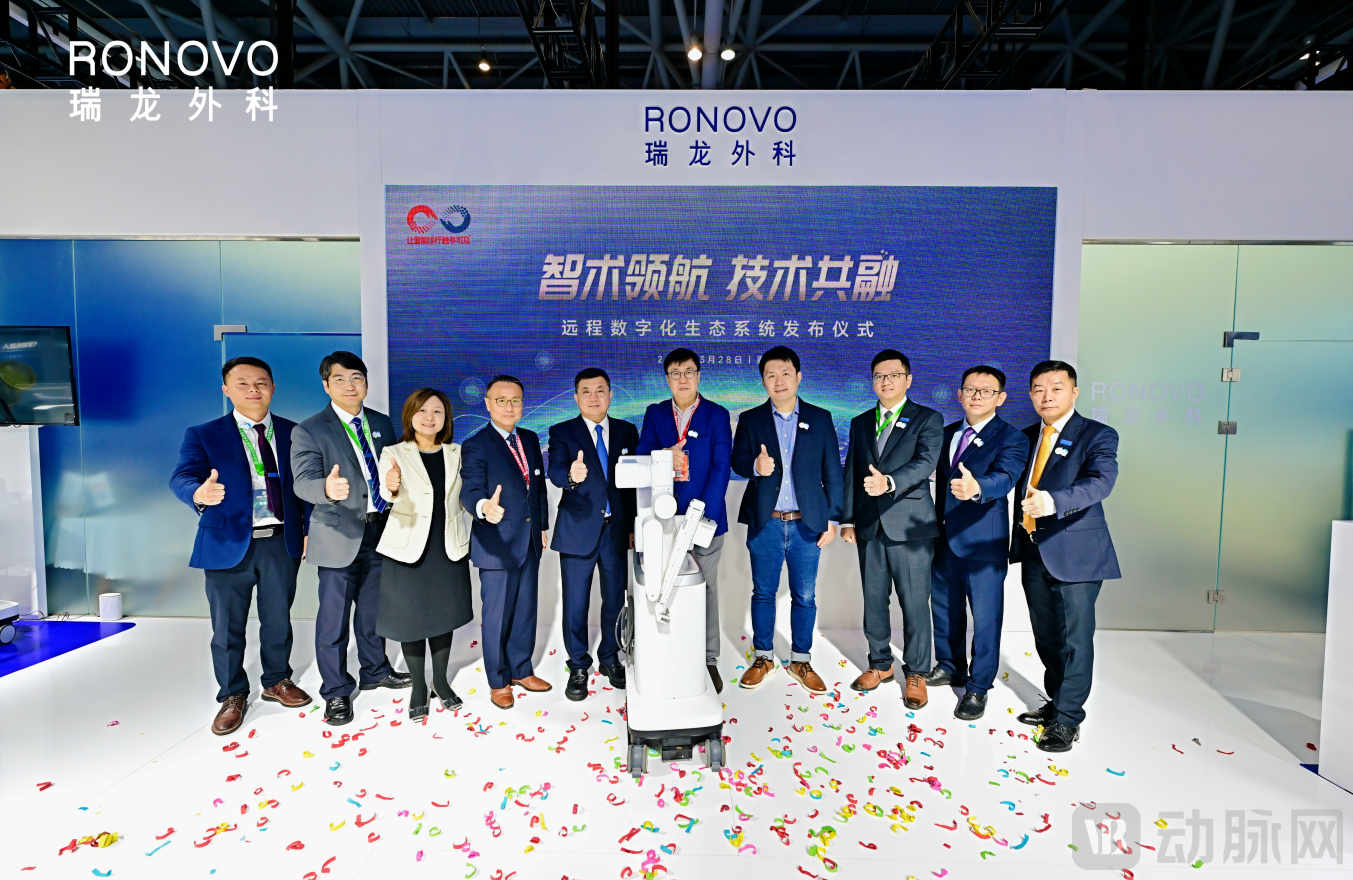
Launch Ceremony of Remote Digital Ecosystem
Under the new charging framework, the long-term competitiveness of a product is determined by its comprehensive performance in real clinical systems. Haishan-1®What is provided is not just a single tool, but a systematic solution built around clinical value.
Empirical evidence is the best footnote to value.Eta Carinae, 2025®The first commercial installation was completed at the Zhejiang Cancer Hospital, successfully assisting doctors in performing multiple radical surgeries for colorectal cancer, endometrial cancer, fertility-preserving cervical cancer surgery, radical prostatectomy, partial nephrectomy, and radical cystectomy.
Looking back at the development process of domestically produced surgical robots, the first half was about achieving a "technological breakthrough" from nothing to something; the second half is about promoting "value popularization" so that high-quality technology can benefit more patients. Rui Long Surgical is doing so with...®As the cornerstone, usher in the commercial spring of high-quality development for domestically produced surgical robots.