

AstraZeneca and Luye Pharma Elevate Strategic Collaboration to Accelerate Internationalization of Traditional Chinese Medicine

Luye Pharma
Innovative Drug Developer

AstraZeneca
Biopharmaceutical Manufacturer
On March 24, the "Forum on the International Development of Traditional Chinese Medicine" was held in Beijing. At the forum, AstraZeneca and Luye Pharma signed a new strategic cooperation memorandum, officially announcing their intention to establish a strategic partnership for the marketing of the proprietary Chinese medicine Xuezhikang capsules in markets outside China, thereby accelerating the internationalization of Xuezhikang and promoting the global reach of Traditional Chinese Medicine.
Earlier this January, AstraZeneca and Luye Pharma signed an agreement, officially granting AstraZeneca exclusive promotion rights for Xuezhikang Capsules in mainland China, thereby pioneering the promotion of high-quality domestic Chinese patent medicines by large multinational pharmaceutical companies. The signing of this new round of strategic memorandum of understanding marks an upgrade in the cooperation between the two parties and signals that AstraZeneca will undertake further initiatives in the field of traditional Chinese medicine.
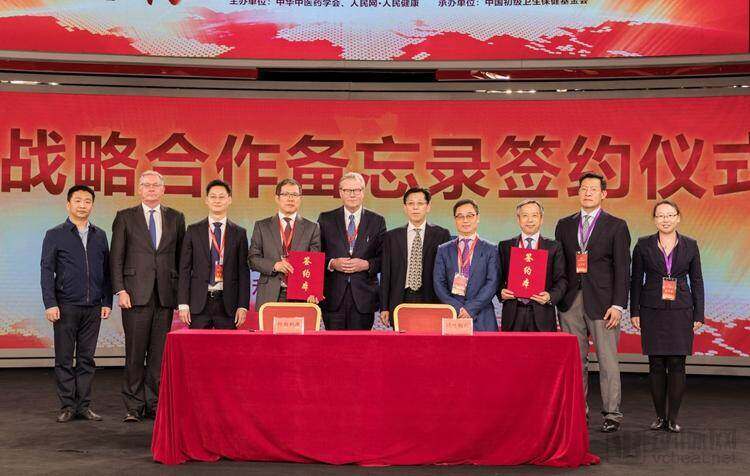
AstraZeneca and Luye Pharma Sign New Strategic Cooperation Memorandum of Understanding
Why Has Xuezhikang Capsule Become the First Proprietary Chinese Medicine to Engage in Comprehensive Strategic Cooperation Between Multinational and Domestic Pharmaceutical Companies? This is largely attributable to its excellent clinical and market performance. According to Luye Pharma, Xuezhikang Capsule is the group’s patented traditional Chinese medicine, prepared from red yeast rice and indicated for the treatment of hyperlipidemia. Based on IQVIA data, the total market value of drugs for hyperlipidemia, including those that lower blood cholesterol, triglycerides, and low-density lipoprotein cholesterol (LDL-C) in China, was estimated at approximately RMB 14.1 billion in 2017. Xuezhikang is the most widely used traditional Chinese medicine for the treatment of hyperlipidemia in China.
Xuezhikang Capsules are currently the only natural lipid-regulating brand in China with proven clinical hard endpoint benefits and completed Phase II clinical studies by the U.S. FDA. Recognized domestically and internationally, it has been recommended as a first-line agent for lipid management in the “Chinese Guidelines for the Prevention and Treatment of Dyslipidemia in Adults (2016 Revised Edition)” based on its clear lipid-lowering efficacy and safety profile, and has been included in the latest editions of China’s “National Reimbursement Drug List” and “National Essential Medicines List.”
Furthermore, the high degree of synergy between Xuezhikang Capsules and AstraZeneca’s existing product portfolio is another significant factor. AstraZeneca boasts a robust commercial network and marketing team, supported by blockbuster cardiovascular products such as Betaloc® ZOK, Crestor®, Plendil®, and Accupril®. Incorporating the promotional rights for Xuezhikang Capsules into its portfolio will further enrich and refine AstraZeneca’s cardiovascular offerings, providing a strong complement to its product lines for dyslipidemia and atherosclerosis. In turn, Xuezhikang Capsules will leverage AstraZeneca’s market resources in the cardiovascular sector, leading to enhanced market performance.
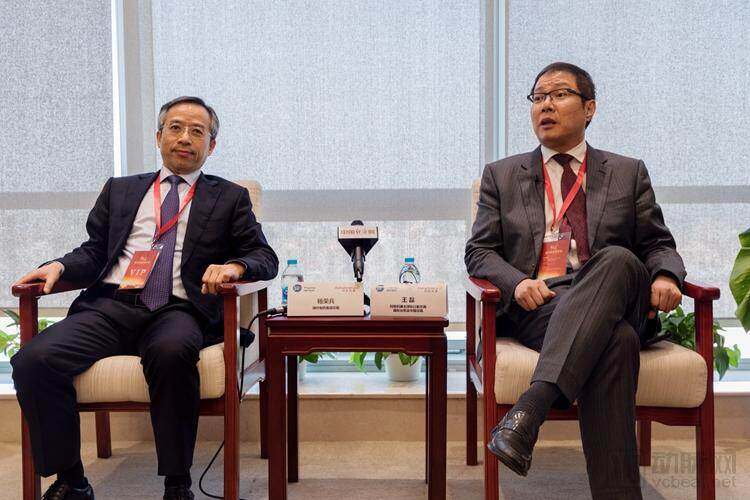
Luye Pharma Group President Yang Rongbing (left) and AstraZeneca Global Executive Vice President, President of International Business and China, Wang Lei (right), being interviewed
“Xuezhikang Capsules are one of the core products independently developed by Luye Pharma, and their lipid-regulating efficacy has been widely recognized by doctors and patients through long-term clinical application. Against the backdrop of the internationalization of traditional Chinese medicine (TCM) and the Belt and Road Initiative, Luye Pharma will deepen its cooperation with AstraZeneca to further strengthen the development and collaboration of Xuezhikang Capsules in the global market, thereby boosting the internationalization process of innovative proprietary Chinese medicines. This move also represents a further advancement of Luye Pharma’s internationalization strategy,” stated Yang Rongbing, President of Luye Pharma Group, regarding the prospects of the partnership between the two parties.
“As a treasure of Chinese civilization, Traditional Chinese Medicine (TCM) has not only made outstanding contributions to the Chinese nation but also exerted a positive influence on global civilization. TCM boasts broad development prospects both in China and worldwide. We hope to join hands with leading Chinese enterprises and experts to unlock the immense potential of TCM modernization, promote its inheritance and innovation, and jointly explore pathways for its internationalization, thereby better serving human health. Through our collaboration with Luye Pharma, we also aim to make positive strides in charting the course for TCM’s global expansion, ensuring that high-quality TCM products can benefit patients around the world at an earlier date,” said Wang Lei, Global Executive Vice President of AstraZeneca, President of International Business and China.
“AstraZeneca aims to apply international pharmaceutical management concepts, integrate the strengths of both parties, and accelerate the global expansion of innovative drugs developed in China, ultimately benefiting more patients. We hope this signing is just the beginning; we will continue to collaborate with more outstanding Chinese enterprises and experts to unlock the immense potential of modernizing traditional Chinese medicine (TCM), ensure its inheritance and continuity, jointly explore pathways for the international development of TCM, and better serve human health,” said Lai Minglong, General Manager of AstraZeneca China.
AstraZeneca’s inclusion of the traditional Chinese medicine product Xuezhikang Capsules into its portfolio is one of its many “cross-industry” initiatives. Wang Lei told VCBeat that AstraZeneca’s cross-sector collaborations are driven by its ambition to be more than just a product-selling company; it aims to become a comprehensive disease-management enterprise covering the entire patient journey—from disease prevention, patient education, and standardized treatment to rehabilitation and follow-up. Accordingly, AstraZeneca is striving to build an ecosystem around the full course of patient care, mobilizing resources across the healthcare industry and even from other sectors, to maximize patient benefits and help healthcare institutions improve efficiency and deliver more effective patient services.
In recent years, AstraZeneca, together with nearly 30 cross-sector partners, has launched leading integrated diagnostic and therapeutic solutions across disease areas including respiratory, cardiovascular, metabolic, oncology, and gastrointestinal disorders. These initiatives include Comprehensive Respiratory Diagnosis and Treatment Centers, Pediatric Nebulization Centers, the China Standardized Metabolic Disease Management Center (MMC), and the China Chest Pain Center (CPC), among others. Some of these disease-specific solutions have already been implemented in key hospitals across China. AstraZeneca has also collaborated with companies such as Alibaba and Tencent to jointly promote the application of artificial intelligence in assisted diagnosis, medical image interpretation, and drug traceability. It is fair to say that among leading pharmaceutical companies, AstraZeneca is at the forefront in embracing new technologies.
“Chest Pain Center” is one of AstraZeneca’s most mature integrated diagnosis and treatment solutions. Leveraging Internet of Things (IoT) technology, AstraZeneca collaborates with healthcare institutions to build a seamless, integrated acute chest pain care system—the Chest Pain Center—spanning pre-hospital, in-hospital, and post-discharge stages. This system minimizes emergency response time and establishes a whole-disease management model featuring early diagnosis, rapid treatment, and scientific follow-up.
When VCBeat asked Wang Lei how AstraZeneca weighs costs and benefits in cross-industry collaborations and commercial innovation, he stated, “AstraZeneca is a large company with a strong foundation for innovation, holding leadership positions in many disease areas. Moreover, we are not content to be merely a pharmaceutical sales company; we are also taking action in disease prevention and standardized treatment. A good model is cost-saving. It does not involve over-treatment but rather conserves resources and helps patients. These two aspects are highly aligned.”
Wang Lei also told VCBeat that AstraZeneca is collaborating with some domestic AI companies specializing in traditional Chinese medicine (TCM) to develop TCM syndrome differentiation for various diseases, aiming to collect a sufficient number of cases so that machines can learn to recognize TCM diagnostic standards such as pulse conditions, facial features, and tongue coating.
“If the traditional Chinese medicine (TCM) diagnosis and treatment system can be standardized, including in areas such as disease prevention, syndrome-based medication, and disease rehabilitation, there could be some intelligent applications. After all, TCM practitioners are a precious and limited resource. This model is currently in the exploratory stage, with partial case data collected, such as phlegm-dampness and wind-heat syndromes in asthma,” said Wang Lei.
In fact, the "standardization" of Traditional Chinese Medicine (TCM) is a crucial task for both its modernization and internationalization. Many participants at the conference pointed out that TCM boasts thousands of years of accumulated knowledge and practice, with extensive clinical experience and a solid public foundation. If TCM is to be promoted globally, it must integrate into the local pharmaceutical regulatory "discourse system," which includes robust clinical evidence, adherence to evidence-based medicine, sufficient safety profiles, and product consistency.
"In recent years, the modernization and internationalization of Traditional Chinese Medicine (TCM) have been guided by 'top-level design.' The Outline of the Strategic Plan for the Development of Traditional Chinese Medicine (2016-2030), issued by the State Council, as well as the Outline of the Healthy China 2030 Plan, have both elevated the vigorous development of TCM to an important strategic level and laid out plans to enhance its international competitiveness. As a unique health resource in our country, TCM is not only a scientific and technological resource with original advantages, an excellent cultural resource, and an important ecological resource, but also plays an increasingly significant role in economic and social development," stated Academician Chen Keji, a National Medical Master from the Chinese Academy of Sciences.
“Traditional Chinese Medicine (TCM), as a distinguished diplomatic emblem, has already facilitated people-to-people connectivity among countries and regions along the Belt and Road. Of course, TCM’s global expansion still faces issues and challenges. We urgently hope to see domestic and international forces join hands to jointly promote the substantial development of TCM. Today, we are delighted to witness the significant step taken together by AstraZeneca and Luye Pharma. We believe this beginning will encourage us to continuously advance innovative development concepts, coordinate efforts from all parties, optimize the overall layout, effectively promote the overseas development of TCM, serve the broader health industry, and benefit people worldwide,” pointed out Zhang Boli, Academician of the Chinese Academy of Engineering and President of Tianjin University of Traditional Chinese Medicine.
Academician Zhang Boli also told VCBeat that he had participated in several activities and research projects related to the integration of traditional Chinese medicine (TCM) with artificial intelligence and big data. “The combination of TCM and AI is highly beneficial for popularizing TCM, addressing the difficulties and high costs associated with accessing medical care, and particularly alleviating the scarcity of high-quality TCM practitioners at the primary care level. We are also leveraging AI and big data technologies to transform TCM production lines, enabling the digitalization and even intelligentization of TCM manufacturing, which has traditionally relied on mechanization and automation. By linking production parameters summarized across batches with final clinical efficacy and safety outcomes, we can identify which batches and processing techniques yield superior results, thereby facilitating further improvement and control, and ultimately driving the upgrading of the traditional TCM manufacturing industry,” said Academician Zhang Boli.
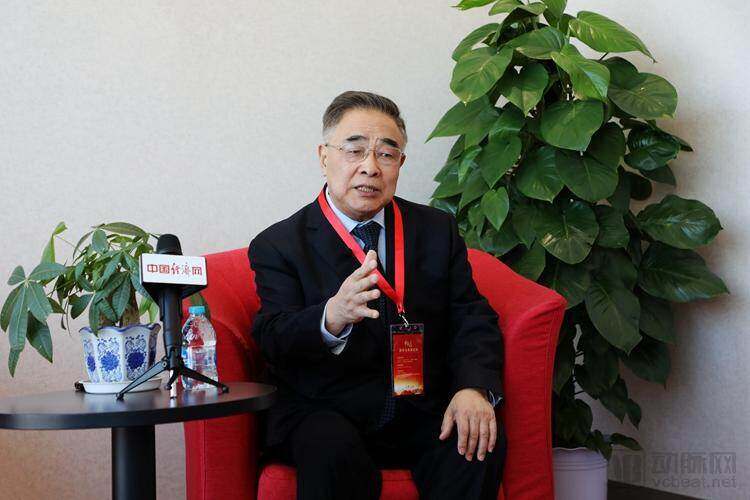
Academician Zhang Boli Accepts an Interview
“Regarding the treatment of diseases, I must emphasize that it can only serve as an adjunctive therapy. Therefore, I propose a strategy wherein primary care physicians undergo specialized training and are supported by an AI-powered Traditional Chinese Medicine (TCM) diagnostic system. After the AI system identifies a condition, its prescriptions must be reviewed and approved by qualified physicians to ensure the appropriateness of the medications, avoid overly biased formulations, and guarantee basic safety. Prescriptions generated solely by AI without professional oversight are unacceptable; we must pursue a dual approach,” added Academician Zhang Boli.
As stated in the opening remarks of the Forum on the Internationalization of Traditional Chinese Medicine (TCM), TCM, as a gem of Chinese culture, a unique medical resource, and an important component of China’s global development strategy, is currently facing historic opportunities and challenges in its modernization. There is an urgent need for an international exchange and cooperation platform that fosters dialogue between traditional Chinese and Western medicine and promotes synergy between domestic and international stakeholders, thereby driving the substantial advancement of TCM.
The upgraded partnership between AstraZeneca and Luye Pharma represents a significant strategic initiative for both companies and serves as an important milestone in the modernization and globalization of traditional Chinese medicine.