

Gilead's HIV Drug Biktarvy Approved in Japan, Projected to Lead 2018’s 62 New Drugs with $5.3B Peak Sales
Mar 27, 2019 16:14
CST Updated
16:14

Gilead Sciences
Antiviral Drug Developer
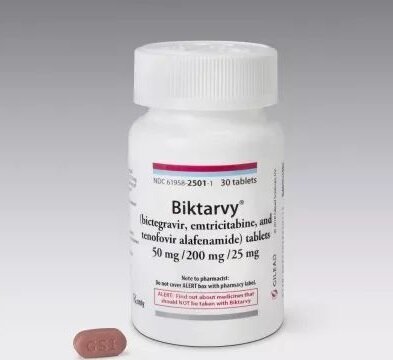
March 27, 2019 /BioValleyBIOON/ -- U.S. pharmaceutical giant Gilead Sciences recently announced that the Japanese Ministry of Health, Labour and Welfare (MHLW) has approved the new triple-combination drug Biktarvy (bictegravir 50 mg/emtricitabine 200 mg/tenofovir alafenamide 25 mg, BIC/FTC/TAF). This medication is a once-daily, single-tablet regimen (STR) for the treatment of HIV-1 infection. Biktarvy is the first HIV product that Gilead will launch and commercialize directly in Japan through its local subsidiary, Gilead Sciences K.K. Notably, Biktarvy was approved in Hong Kong, China, in October 2018, marking the first market in Asia to approve the drug.
Biktarvy combines the potency of the novel integrase strand transfer inhibitor (INSTI) bictegravir (BIC) with the proven efficacy and safety of the marketed drug Descovy (emtricitabine 200 mg/tenofovir alafenamide 25 mg, FTC/TAF), a dual-nucleoside reverse transcriptase inhibitor (NRTI) backbone therapy recommended by clinical guidelines for HIV treatment. In Phase III clinical studies, the Biktarvy regimen achieved very high rates of virologic suppression in both treatment-naïve adult patients and adults who were virologically suppressed and switched therapies, with no emergence of treatment-resistant virus.
In the United States, Biktarvy was approved in February 2018, becoming the third FTC/TAF-based single-tablet regimen (STR) authorized in this market over the past three years. Biktarvy is indicated as a complete regimen for the treatment of HIV-1 infection in adults who have no evidence of current or historical resistance to the integrase inhibitor class, emtricitabine, or tenofovir. No dosage adjustment of Biktarvy is required in patients with an estimated creatinine clearance (CrCL) ≥30 mL/min. The drug offers convenient dosing, does not require HLA-B*5701 testing, and has no requirements regarding food intake or restrictions based on baseline viral load or CD4 count. It should be noted that the labeling for Biktarvy includes a boxed warning regarding the risk of acute exacerbation of hepatitis B following discontinuation of treatment.
The approval of Biktarvy was based on data from four ongoing Phase III clinical studies: Study 1489 and Study 1490 were conducted in treatment-naïve adults with HIV-1, while Study 1844 and Study 1878 were conducted in adults with HIV-1 who had achieved virologic suppression. These studies enrolled a total of 2,414 patients, and the data showed that all four studies met their primary efficacy endpoints at Week 48. During the 48-week treatment period, the BIC/FTC/TAF regimen was well tolerated; no patients developed treatment-emergent resistance, no patients discontinued BIC/FTC/TAF therapy due to renal events, and no cases of proximal renal tubulopathy or Fanconi syndrome occurred. The most commonAdverse ReactionsDiarrhea, nausea, and headache.
Dr. John McHutchison, Head of Research and Development at Gilead Sciences, stated, “Biktarvy is our latest innovation in HIV treatment, offering a new therapeutic option for people living with HIV in Japan. In multipleClinical TrialIn China, Biktarvy demonstrated high efficacy and a high barrier to resistance. Due to its convenient administration and minimal requirements for pre-screening or ongoing monitoring, it has the potential to simplify HIV treatment initiation and subsequent follow-up.”
Currently, Gilead is conducting additional studies to evaluate the efficacy and safety of Biktarvy in adolescents, children, and women living with HIV. In early March this year, at the 2019 Conference on Retroviruses and Opportunistic Infections (CROI) held in Seattle, United States,MeetingData published above demonstrate that Biktarvy exhibits high efficacy in adults aged 50 years and older, women, children and adolescents, and patients with NRTI resistance.
In 2018, the United StatesFDAA total of 62 new drugs were approved. The foreign pharmaceutical industry website PharmaCompass compiled data from multiple sources to estimate the peak sales for these new drugs. The results showed that among the 62 drugs, Biktarvy topped the list with a projected peak sales figure as high as $5.269 billion. (Bioon.com)