

Siyi Intelligence Leverages B2B Strength to Pioneer ToC Home-Based Rehabilitation Market with Soft Exoskeleton Robotics
Siyi Intelligent
Developer of Medical Rehabilitation Robots
Recently, rehabilitation robotics company SIYI INTELLIGENCE launched its latest product, the Yisheng SY-HR06R intelligent soft full-cycle hand function rehabilitation robot. This new product helps meet diverse clinical application scenarios for hand function rehabilitation (including passive training, assistive training, active game-based training, resistance training, innovative mirror therapy, wrist joint training, and ankle joint training), significantly improving hand rehabilitation efficiency and markedly reducing the workload of medical staff. It has gained recognition and acclaim from over a hundred rehabilitation hospitals.
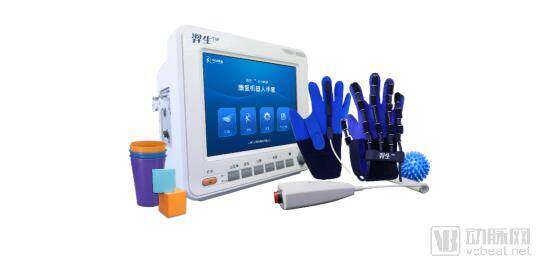
As living standards continue to improve, patients’ expectations and requirements for hand function rehabilitation robots are increasingly high. However, rigid rehabilitation robots have significant limitations and pose a high risk of causing secondary injuries. In contrast, flexible pneumatic bionic muscles are safe and efficient, do not cause secondary injuries, and eliminate the need for therapist supervision during rehabilitation.
SIYI INTELLIGENCE’s YiSheng Rehabilitation Robot Series is dedicated to leveraging soft robotics technology to undertake strenuous and repetitive tasks traditionally performed by rehabilitation therapists. This allows therapists to devote more energy to analyzing patients’ conditions and developing personalized rehabilitation plans. Through the collaboration between robots and therapists, rehabilitation efficiency can be significantly enhanced.
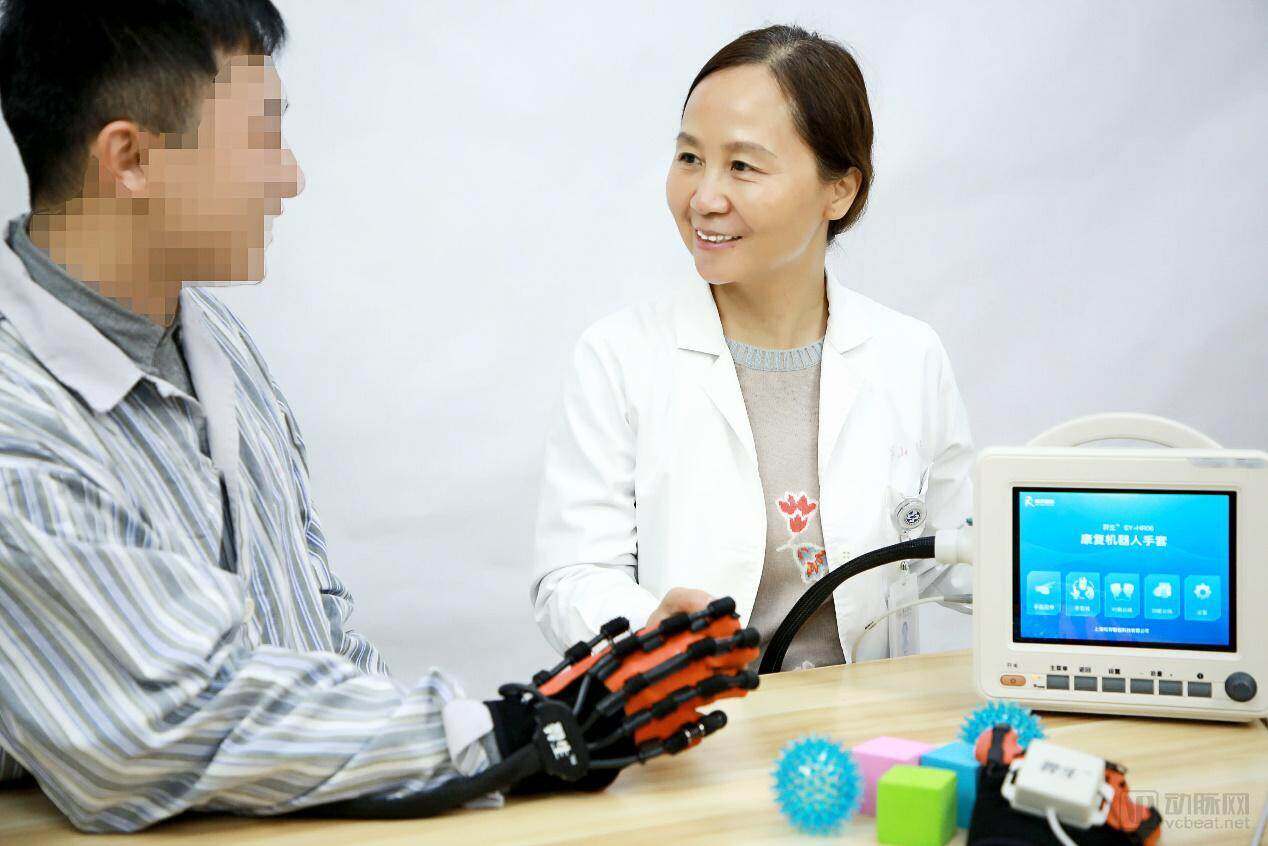
Within just two years of its founding, SIYI INTELLIGENCE has gained recognition from numerous rehabilitation hospitals across China. Its products are recommended by the Hand Function Professional Committee of the Chinese Association of Rehabilitation Medicine, and have successfully helped tens of thousands of patients with hand functional impairments achieve gradual recovery.
Rehabilitation medicine has always been a vital component of modern medical practice. With the continuous influence of international development experiences, coupled with the ongoing improvement and opening-up of domestic policies, new models and technologies in rehabilitation medicine are emerging endlessly, creating significant opportunities for its advancement.
According to the China Health Statistics Yearbook, there were only 552 specialized rehabilitation hospitals in China in 2017. Data from the National Bureau of Statistics shows that there were 11,701 general hospitals nationwide in 2017. Publicly available information indicates that 30%-35% of these general hospitals had established rehabilitation departments, meaning approximately 3,500-4,000 general hospitals in China had rehabilitation departments.
China’s demand for rehabilitation medical services is substantial. However, the number of beds in rehabilitation hospitals across the country fails to meet the growing demand. Taking stroke rehabilitation as an example, the annual incidence of stroke in China is approximately 200 per 100,000 population. Among survivors, more than 70% experience varying degrees of functional impairment, and the five-year recurrence rate reaches as high as 40%. Surveys indicate that only 11.5% of stroke patients in China receive rehabilitation treatment within one week of onset, while 42.4% do not receive any rehabilitation therapy at all after their stroke.
The severe shortage of rehabilitation therapists has long been a key bottleneck hindering the development of rehabilitation medicine in China. Data shows that the total number of professional technical personnel in rehabilitation therapy nationwide is less than 14,000, averaging one technician per 100,000 people. In contrast, developed countries have an average of 60 rehabilitation therapists per 100,000 people. Based on the international standard of eight rehabilitation therapists per 100,000 people, China faces a shortfall of hundreds of thousands of therapists, indicating a significant imbalance between supply and demand;
Compared to the rehabilitation hospital market, which has faced long-term constraints, the consumer-facing (2C) smart home-based rehabilitation market holds greater promise. As a 2C incremental market, it features a sufficiently high ceiling and substantial growth potential. The potential market demand for flexible hand-function home rehabilitation robots is approximately 3.64 million units, with an estimated potential market size of RMB 21.8 billion.
There are approximately 13 million stroke patients in China, with about 3.64 million suffering from hand dysfunction due to stroke. The penetration rate of flexible rehabilitation robotic gloves is projected to reach 1% in the coming years, resulting in a potential demand of approximately 36,000 units.
The Yisheng Rehabilitation Robotic Glove SY-HR01C, developed by SIYI INTELLIGENCE, enables patients to receive standardized rehabilitation services at home that are comparable to those provided in rehabilitation hospitals. Leveraging flexible robotics, intelligent interaction, and IoT-based remote sensing technologies, the system allows therapists to prescribe exercise parameters remotely. Patients can simply adjust the device to the prescribed settings for professional-grade rehabilitation training at home. This eliminates the need for therapists to make home visits, significantly alleviating the severe shortage of rehabilitation therapists and the substantial supply deficit in China’s rehabilitation services.
Strategic expansion into the incremental consumer-side home rehabilitation market is a crucial component of SIYI INTELLIGENCE’s closed-loop strategy. Committed to building an “Intelligent Rehabilitation Empire,” SIYI INTELLIGENCE leverages its strong influence and advantages in business-to-business (B-end) rehabilitation hospitals to rapidly attract a large base of consumer-side (C-end) users. This extensive user adoption drives iterative product upgrades, which in turn enhance the competitive advantages of its B-end hospital partnerships.
Given the limited rehabilitation resources within hospitals, in-hospital rehabilitation constitutes only a part of the patient’s overall recovery cycle. Under current conditions, community- and home-based rehabilitation play a significant role in the continuum of care. Therapists provide remote, personalized exercise prescriptions and capture in real time the movement trajectories of patients performing rehabilitation exercises at home, delivering multidimensional feedback to the therapists. This enables therapists to continuously adjust rehabilitation plans, effectively integrating out-of-hospital rehabilitation systems (home and community) with in-hospital care to support patient recovery.
Once the rehabilitation system spanning from in-hospital to out-of-hospital care is established, SIYI INTELLIGENCE will possess multi-dimensional barriers and a strong moat. The closed-loop rehabilitation services for patients, along with the interactive integration and mutual promotion between therapist communities and patient communities, will enable SIYI INTELLIGENCE to achieve high user stickiness. As a leader in soft robotic rehabilitation devices in China, SIYI INTELLIGENCE will continue to create high-end rehabilitation equipment for hospitals and homes, striving tirelessly to comprehensively improve patients' quality of life.
SIYI INTELLIGENCE is a key incubation project at the Shanghai International Medical Park in Pudong. It has become the primary undertaking entity for the 2018 "Science and Technology Innovation Action Plan" Science and Technology Support Project of Shanghai Municipality, a participating unit in the 2018 Key Special Project of the National Key R&D Program titled "Research and Development of Traditional Chinese Medicine Rehabilitation Equipment for the Elderly and Chronic Diseases," and has undertaken the task of the Shanghai Pudong New Area Science Popularization Project Plan titled "Development and Research of Intelligent Cardiovascular Disease Science Popularization Robots." Relying on innovation through the integration of industry, academia, and research, SIYI INTELLIGENCE continuously advances its technological development.