

Janssen Submits sNDA to FDA for INVOKANA® (Canagliflozin) to Treat Chronic Kidney Disease in Type 2 Diabetes Patients
Mar 29, 2019 15:43
CST Updated
15:43

Johnson & Johnson
Healthcare Product Manufacturers, Health Service Providers

Janssen Pharmaceuticals
Pharmaceutical R&D Developer

FDA
U.S. Food and Drug Administration

March 29, 2019 News /BioonBIOON/ -- Janssen Pharmaceuticals, a subsidiary of U.S. pharmaceutical giant Johnson & Johnson (JNJ), recently announced that it has submitted an application to the U.S. Food and Drug Administration (FDA) submitted a supplemental New Drug Application (sNDA) seeking approval for a new indication for Invokana (canagliflozin): for use in patients with type 2 diabetes mellitus and chronic kidney disease (CKD).Diabetes(T2D) adult patients, reducing the risk of end-stage kidney disease (ESKD)—a doubling of serum creatinine (Scr), which is a key predictor of ESKD, renal or cardiovascular (CV) death in this patient population.
The submission of this sNDA is based on data from the Phase III clinical trial CREDENCE, which evaluated the renal outcomes of Invokana. In July 2018, due to particularly significant efficacy and upon the recommendation of the Independent Data Monitoring Committee (IDMC), Johnson & Johnson made the decision to terminate the CREDENCE study early.
Based on the study results, if approved, Invokana would become the first and only drug in the past 20 years that, when used in combination with standard care, can significantly reduce the risk of end-stage renal disease (ESRD) in patients with type 2 diabetes (T2D).
CREDENCE was conducted in patients with type 2 diabetes and chronic kidney disease (CKD) receiving standard-of-care background therapyDiabetesThe first rigorously designed renal outcomes study conducted in patients with type 2 diabetes (T2D), in whom standard of care included angiotensin-converting enzyme (ACE) inhibitors and angiotensin II receptor blockers (ARBs). This randomized, double-blind, placebo-controlled, parallel-group, multicenter clinical trial enrolled 4,400 patients with T2D and chronic kidney disease (CKD) to evaluate the efficacy and safety of canagliflozin versus placebo in preventing clinically important renal and cardiovascular (CV) outcomes. Participants had an estimated glomerular filtration rate (eGFR) ≥30 and <90 mL/min/1.73 m² and albuminuria (urine albumin-to-creatinine ratio >300 mg/g and ≤5,000 mg/g). All patients were required to receive treatment with ACE inhibitors or ARBs at the maximum labeled or tolerated dose for more than 4 weeks prior to randomization.
The IDMC reviewed the data from the pre-specified interim analysis, which demonstrated that Invokana plus standard of care met the pre-specified efficacy criteria for the primary composite endpoint compared with placebo plus standard of care. The primary composite endpoint comprised end-stage kidney disease (time to dialysis or kidney transplantation), a doubling of serum creatinine, and renal or cardiovascular (CV) death. Detailed data from the study will be presented on April 15 this year at the International Society of Nephrology (ISN) World Congress of Nephrology (WCN) annual meeting in Melbourne, Australia.
Dr. James List, Global Therapeutic Area Head of Cardiovascular & Metabolism at Janssen, a Johnson & Johnson company, stated, “Currently, millions of patients worldwide with both type 2 diabetes (T2D) and chronic kidney disease (CKD) face a high risk of kidney failure. Unfortunately, we have not seen therapeutic innovations for this patient population in nearly 20 years. This supplemental New Drug Application (sNDA) represents an important step toward providing these patients with a much-needed new standard of care. We look forward to presenting the data from the CREDENCE study at the ISN WCN Congress and engaging withFDAwork closely together to provide this important medication to the population of patients with type 2 diabetes (T2D) and chronic kidney disease (CKD) as soon as possible.”
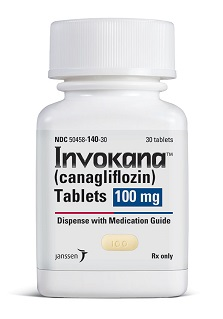
Canagliflozin (卡格列净): Marketed in China under the brand name Invokana®
Canagliflozin is a novel glucose-lowering agent belonging to the class of SGLT2 inhibitors. SGLT2 is a transporter protein involved in glucose reabsorption in the proximal renal tubules of the kidney. Canagliflozin primarily lowers blood glucose levels by inhibiting renal SGLT2, thereby reducing renal glucose reabsorption and increasing urinary glucose excretion. This glucose-lowering effect is independent of β-cell function and insulin resistance. Unlike non-Diabetescompared with the population, type 2DiabetesThe patient's kidneys are able to reabsorb large amounts of glucose into the bloodstream, which may elevate blood sugar levels. In addition to its clear glucose-lowering effects, canagliflozin provides additional benefits such as weight reduction, slowing the progression of proteinuria, and lowering blood pressure.
Currently, Invokana is contraindicated in patients with severe renal impairment (eGFR <30 mL/min/1.73 m²), end-stage renal disease (ESRD), or those undergoing dialysis. Additionally, Invokana is not recommended when a patient’s eGFR is persistently below 45 mL/min/1.73 m².
In the Chinese market, canagliflozin was approved in September 2017 under the brand name Invokana®. When glycemic control is inadequate with metformin monotherapy or with combination therapy of metformin and a sulfonylurea, Invokana® can be used in conjunction with diet and exercise, either with metformin or with metformin and a sulfonylurea, to improve glycemic control in adult patients with type 2 diabetes. Just last week, Janssen Pharmaceuticals and Merck Serono entered into a marketing collaboration agreement to officially launch Invokana® in the Chinese market. Under the agreement, the two companies will collaborate closely on the further development, distribution, promotion, market access, and sales of Invokana®, while Merck holds exclusive promotional rights for the product in the Chinese market. (Bioon.com)