

QBosoN secures RMB 1 billion Series B, leading as the only player in the China's 15th Five-Year Plan's dedicated quantum computing sector

QBOSON
--

CMB International
Integrated Financial Services Institution

ADDOR
Venture Capital Institution
On March 31, 2026, Qboson, the only designated enterprise in the dedicated quantum computer sector under the 15th Five-Year Plan, completed a 1 billion RMB Series B financing round. This round was jointly led by Beijing Financial Holdings, Chaoyang Shunxi, CMB International, Shenzhen Investment Holdings, and Addor Capital, with participation from Turingpe, Rising Investments, Bofu Capital, Guangdong Technology Investment, Guangzhou Financial Holdings, and ICBC Capital, along with follow-on investments from over ten existing shareholders. This fully reflects the confidence of the capital market in Qboson's technological approach and industrialization prospects.
Under the strong guidance of national policies, the investment community, predominantly consisting of state-owned capital, has provided strong recognition and support for Qboson's technological approach, strategic positioning, and industrialization capabilities in the dedicated quantum computer field.
This round of financing will focus on the following four key directions:
Technological Breakthroughs — Continuously develop scalable dedicated quantum computers to set industry benchmarks, while also making breakthroughs in fault-tolerant general-purpose quantum computers to overcome the core technical barriers to practical quantum computing.
Chip Manufacturing — Build a pilot line for quantum computing chips to strengthen independent control over core hardware.
Mass Production — Advance the expansion and operation of China's first large-scale dedicated quantum computer manufacturing facility, achieving a leap from "laboratory single-unit development" to "batch production."
Ecosystem Expansion — Expand the commercial ecosystem for integrated applications such as "quantum computing plus artificial intelligence," "quantum computing plus supercomputing plus artificial intelligence," and "quantum computing plus artificial intelligence for science," accelerating the empowerment of quantum technology across various industries.

On March 13, 2026, the 15th Five-Year Plan explicitly outlined the national strategic deployment to "develop fault-tolerant general-purpose quantum computers and scalable dedicated quantum computers." Qboson, which has been committed to the practical application of dedicated quantum computing since its inception, stands as a steadfast practitioner of this national strategy.
A Practitioner of the 15th Five-Year Plan, the Sole Representative of China's Dedicated Quantum Computing Sector
In the field of scalable dedicated quantum computers, Qboson has completed four iterations and technological leaps in its self-developed scalable dedicated quantum computers over the past five years. Previously, the company successively launched dedicated quantum computer product series with 100, 550, and 1,000 computing qubits, validating that this dedicated quantum computing approach enables rapid scalability in qubit count. In the first half of this year, Qboson will officially release the newly upgraded "Yuliang Great Wall" series dedicated quantum computer—"Yuliang·Shanhai 1000"—successfully establishing a complete product matrix with continuously expanding qubit scales, flexibly matching customers' computing power needs at different stages and across various application scenarios. At the same time, Qboson has built China's first large-scale dedicated quantum computer manufacturing facility, establishing a strategic anchor point for China in the global quantum computing competition.
Currently, Qboson has successfully delivered coherent optical quantum computer systems to customers including the National Supercomputing Center in Chengdu, China Mobile, Electronic City, and North China University of Technology. Both the number of deliveries and delivery metrics far exceed those of international peers, demonstrating that Qboson has fully mastered the end-to-end independent capabilities of dedicated quantum computers—from system integration and stable operation to computing power delivery—placing it among the international leaders in the dedicated quantum computing field.
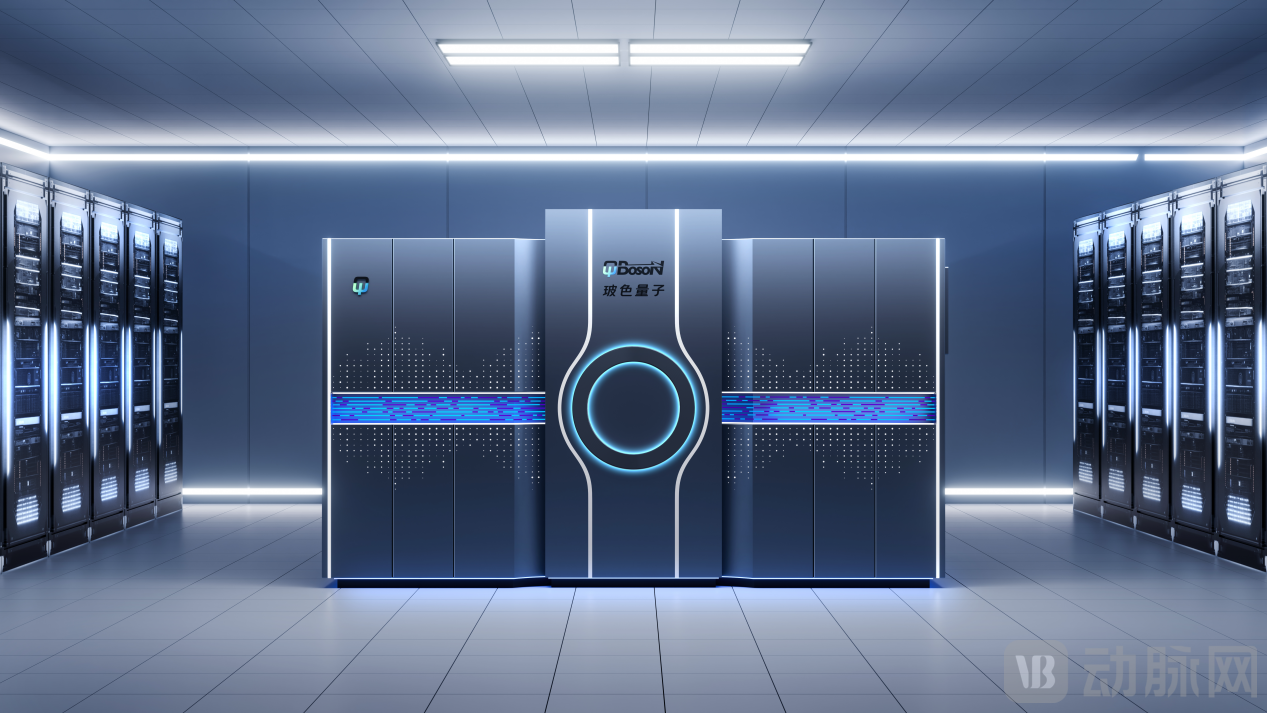
Qboson Releases Concept Image of the "Yuliang Great Wall" Series Dedicated Quantum Computer — "Yuliang·Shanhai 1000"
At the 2026 Zhongguancun Forum, Qboson unveiled its next-generation dedicated quantum computer, the first product in the "Yuliang Great Wall" series—the Yuliang·Shanhai 1000. This is the first scalable dedicated quantum computer in China to exceed the 1,000-qubit scale. In addition to its standard mode stably supporting 1,000 qubits, the system also features a precision mode supporting 550 qubits and an overclocking mode supporting over 3,000 qubits. This not only enables scalability in qubit count across different generations of machines, but also achieves, for the first time, scalability in qubit count within a single system.
The system also features the unique ability to operate stably over extended periods, equipped with an artificial intelligence-driven intelligent control system that enables real-time monitoring and automatic calibration of quantum preparation and quantum measurement and control. This significantly improves equipment utilization and reliability, ensuring stable operation for up to 16 hours per day, 7 days per week. It is ready for practical application across multiple scenarios, including new drug discovery, new material development, brain science computing, power grids, and financial services, marking a significant milestone in the implementation of the 15th Five-Year Plan's goal to "develop scalable dedicated quantum computers."
Parallel Development of General-Purpose and Dedicated Quantum Computing: China's Sole Player in a US-China Benchmark
Currently, Qboson is the only practical quantum computing enterprise in China that has simultaneously pursued both "general-purpose quantum computing" and "dedicated quantum computing." This technological landscape of parallel development in both general-purpose and dedicated quantum computing is rare even on a global scale.
In the field of general-purpose quantum computing, Qboson unveiled its self-developed general-purpose optical quantum chip at the 2026 Zhongguancun Forum. Qboson has achieved breakthroughs in high-speed electro-optic modulation quantum control technology on thin-film lithium niobate materials, realizing multiple high-fidelity two-qubit and multi-qubit quantum entanglement logic gates. It has validated capabilities in preparing superposition states and entangled states, and has completed quantum algorithms for multiple scenarios such as quantum neural networks, image recognition, and ground-state energy computation for chemical molecules, establishing a general-purpose optical quantum chip architecture and technological approach.
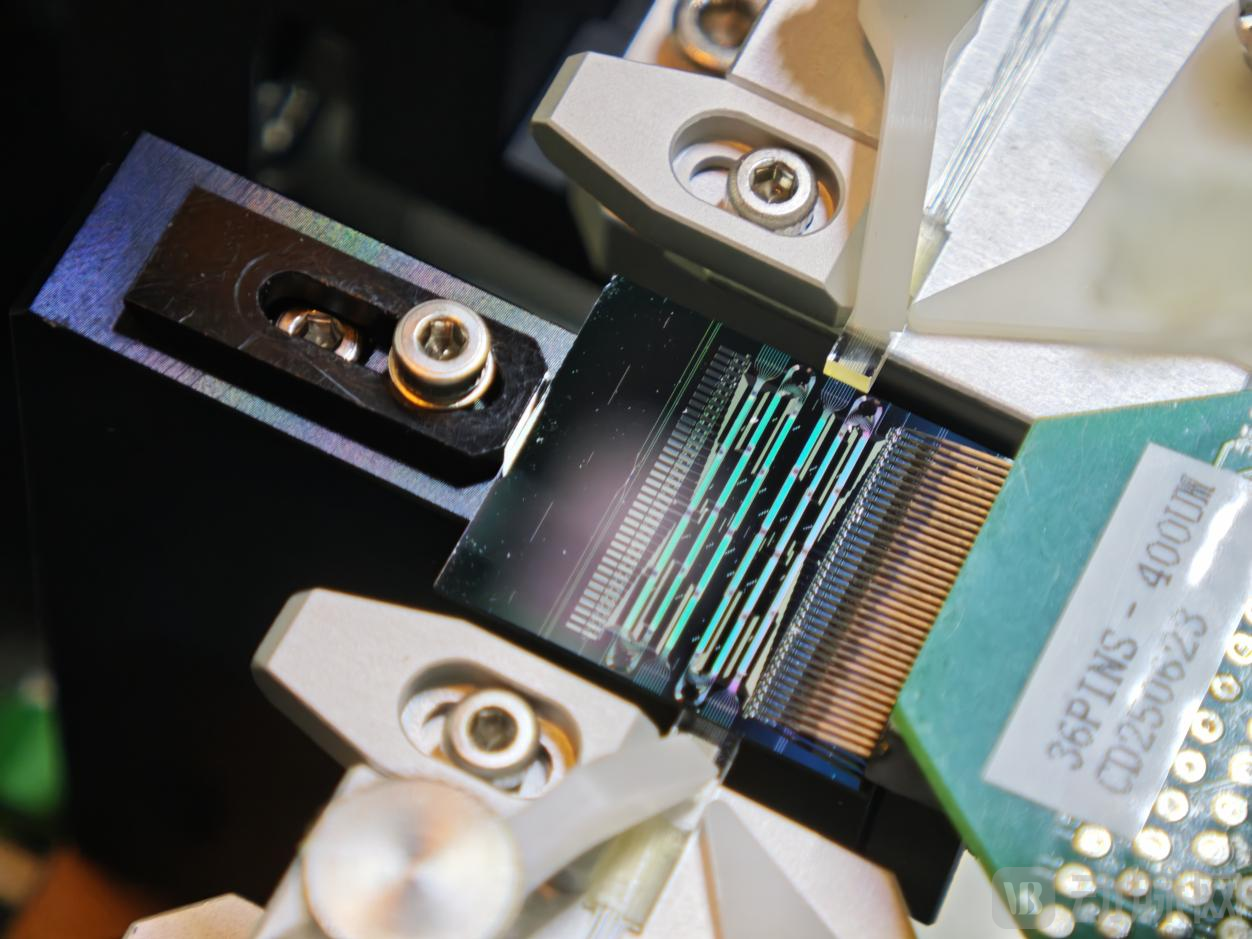
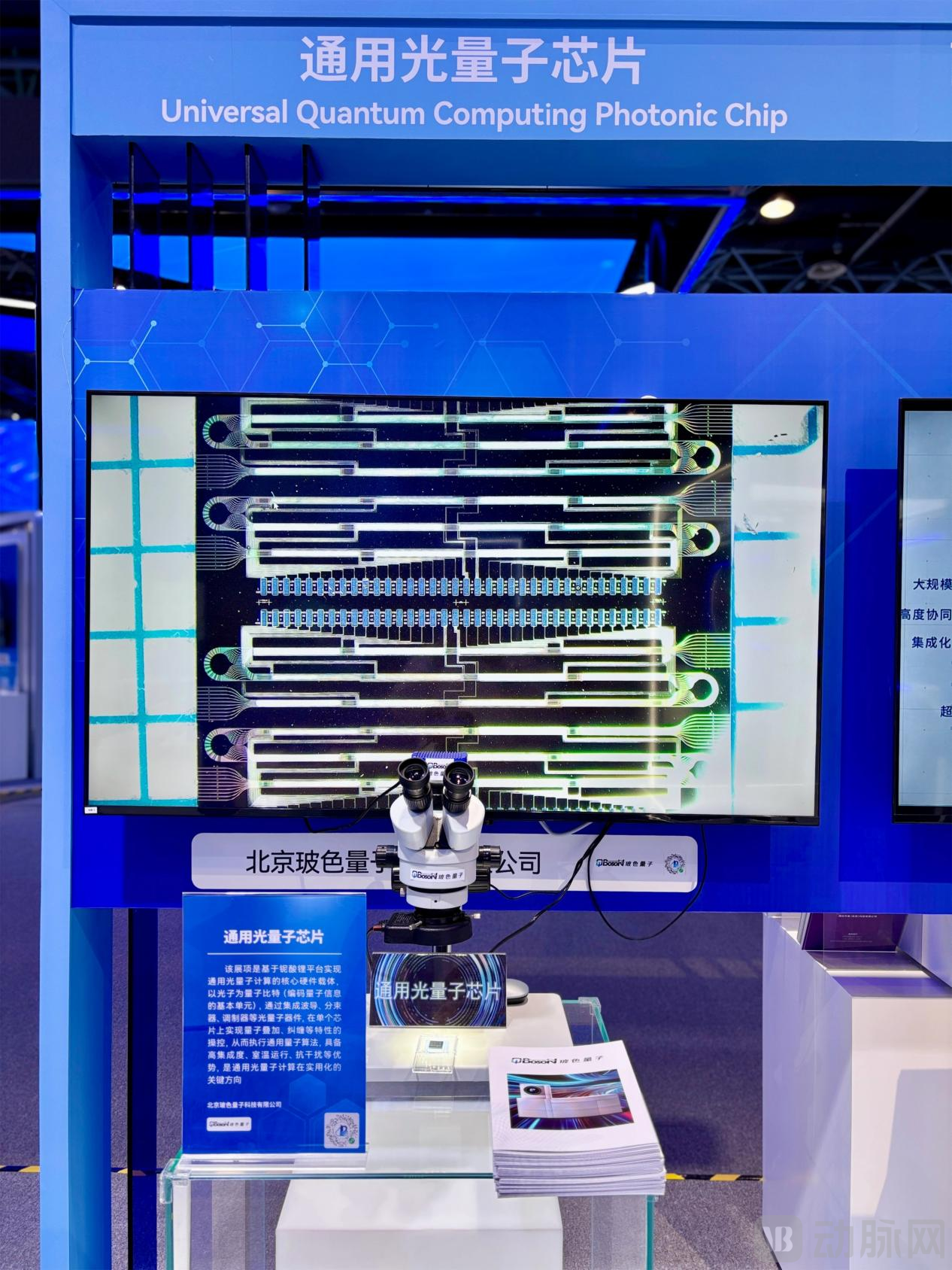 Qboson's Self-Developed General-Purpose Optical Quantum Chip
As one of the earliest companies in China to focus on the practical application of optical quantum computing, Qboson has long adhered to a parallel development path of "general-purpose plus dedicated" quantum computing. Guided by the top-level national strategy, Qboson has rapidly emerged as a leading force in the quantum computing sector.
Betting on Three Major Trends in Quantum Computing to Sustain Global Leadership
Recent strategic positioning in quantum computing by technology giants such as Nvidia, IBM, and Google reveal that Nvidia is accelerating the integration of "quantum plus artificial intelligence," targeting the launch of a practical integrated system by 2028; IBM has released the industry's first "quantum-centric supercomputing" reference architecture, deeply integrating quantum processors with modern supercomputing environments (graphics processing unit clusters, central processing unit clusters, high-speed networks, and shared storage), and has proposed a three-stage evolution roadmap; Google has formally positioned quantum computing, robotics, and artificial intelligence-driven drug discovery as three frontier areas, establishing a dual-engine structure of "current competitiveness plus future growth engines."
Clearly, three major trends are collectively defining the next wave of breakthroughs in quantum computing:
First, integration of quantum computing, supercomputing, and artificial intelligence. The core advantage of this innovative architecture lies in "complementary advantages and on-demand scheduling"—the synergistic collaboration of quantum computing, supercomputing, and artificial intelligence, also known as "integration of the three computing paradigms." This is essential to achieve a computational efficiency leap where "one plus one is greater than two," meeting the computational demands of varying complexity and scale from research to industry, and truly realizing the complementary strengths of quantum computing, artificial intelligence computing, and classical computing.
Qboson's collaborations with the National Supercomputing Center in Chengdu and Qilu University of Technology represent forward-looking explorations and practices in the technological development trend of "quantum computing plus supercomputing plus artificial intelligence" in China. Leveraging its dedicated quantum computer systems, Qboson has been deploying a unified computing resource management and scheduling cloud platform. By automatically decomposing computational tasks through underlying algorithmic logic, it achieves seamless invocation of quantum-classical hybrid computing power, significantly lowering the barrier to using cutting-edge quantum computing resources and strongly promoting the accessibility and practicality of quantum computing.
Second, deep integration of quantum computing and artificial intelligence. The powerful computing advantage unique to quantum computing can overcome the core bottlenecks that current artificial intelligence models face on the path to artificial general intelligence.
Currently, leveraging innovative products and technologies such as its 1,000-computing-qubit coherent optical quantum computer, quantum Boltzmann machine, and open-source programming suite, Qboson has demonstrated unique advantages in the artificial intelligence field: using quantum parallelism to solve NP-hard problems that classical computers cannot handle, significantly improving the training efficiency of artificial intelligence models; in the biopharmaceutical field, building a quantum Boltzmann machine-enhanced deep variational autoencoder model to significantly shorten drug screening time and greatly reduce costs in the drug discovery phase, accelerating the translation of technological value into tangible industrial benefits.
Recently, Qboson, in collaboration with the Beijing Natural Science Foundation, established a special fund of 10 million RMB per year, with guidelines expected to be officially released in the second half of this year. This special fund aims to leverage the technological advantages of dedicated quantum computers to assist researchers in solving challenges in cutting-edge fields such as scientific research and artificial intelligence, promoting the industrialization of quantum technology.
Qboson has also jointly launched the "Chinese Association for Artificial Intelligence-Qboson Quantum Computing Application Innovation Fund (Phase II)" with the Chinese Association for Artificial Intelligence, continuously building a "quantum computing plus" industry-university-research collaborative innovation platform for scholars across China. It supports scholars in conducting interdisciplinary applied research in quantum computing and areas such as artificial intelligence, large language models, optimization algorithms, and industry scenarios. By deepening cross-disciplinary collaboration and bridging the gap between technology validation and commercialization, it accelerates the journey of quantum computing from laboratory to industrial application, cultivating talent, building a body of research outcomes, and accumulating momentum for the integrated innovation of quantum technology and artificial intelligence in China.
Third, quantum computing empowering artificial intelligence for science. When quantum computing is fully integrated into the scientific research paradigm, it can empower cutting-edge foundational science fields such as new material discovery and innovative drug development, providing revolutionary tools and possibilities.
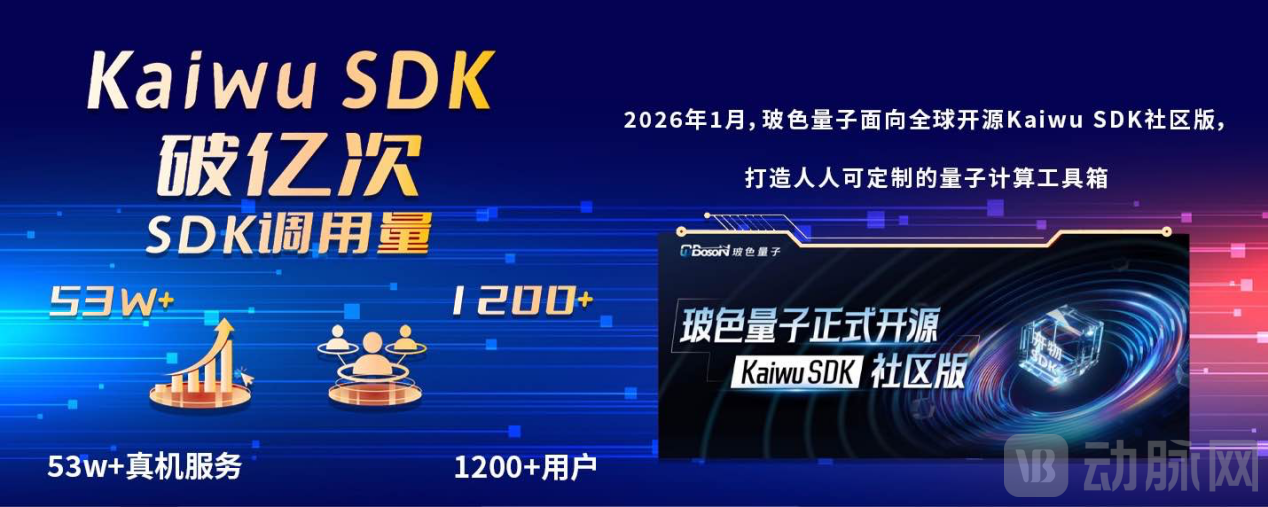
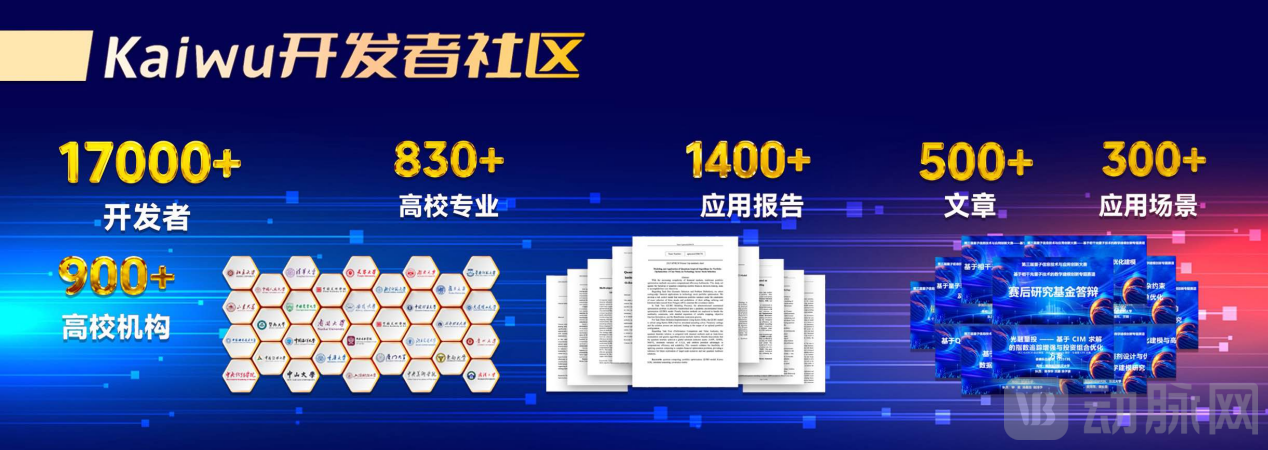
With the increasing number of users including government and enterprise entities, researchers, and quantum algorithm developers, Qboson's cloud service has exceeded 100 million cumulative computation requests, covering over 900 universities and colleges, with more than 10,000 developers participating in research and development. Its quantum computing power service capabilities are strong and world-leading. Qboson's dedicated quantum computing capabilities are at the world-leading level. Its ecosystem partners comprehensively cover outstanding listed companies across various industries, units directly under ministries and commissions, and large state-owned enterprises. The company has achieved over 100 scenario explorations and applications across more than 20 industries, including artificial intelligence, communications, finance, pharmaceuticals, energy, and new material discovery, and has achieved a series of breakthroughs.
These three trends are intertwined, collectively driving quantum computing from the laboratory into the deep waters of industrial application, and will become the core engine for the future breakout of the quantum industry.