

Despite Tariff Cuts, Cancer Drug Price Relief Remains Elusive: What Will It Take for Chinese Patients to Access Affordable Therapies?
Roche
Oncology Drug Research, Development, and Manufacturing
Perjeta, a New Breast Cancer Drug, Officially Launched: At Approximately RMB 18,000 per Box, It Is the Cheapest Globally, Yet Still Out of Reach for Most Patients. How Can Chinese Patients Access More Affordable Anti-Cancer Drugs? Merely Reducing Tariffs and Value-Added Tax on Anti-Cancer Drugs Is Clearly Far from Sufficient. A Beijing Daily Client Reporter’s Investigation Reveals That to Significantly Alleviate the Financial Burden on Patients, Three Measures Are Indispensable: Simultaneous Increased Investment by Government and Enterprises in Domestic New Drug Research and Development, Expansion of the National Reimbursement Drug List, and Medical Assistance Programs.
High Prices of Imported New Anti-Cancer Drugs Remain Stubbornly High
In China, the annual number of new breast cancer cases exceeds 300,000. Recently, Roche received approval from the National Medical Products Administration to launch Perjeta, an innovative targeted therapy for breast cancer, in the Chinese market. This medication can reduce the risk of recurrence or death by approximately 25% in relevant patients. However, many patients were less than thrilled upon learning that the drug costs around RMB 18,000 per box.
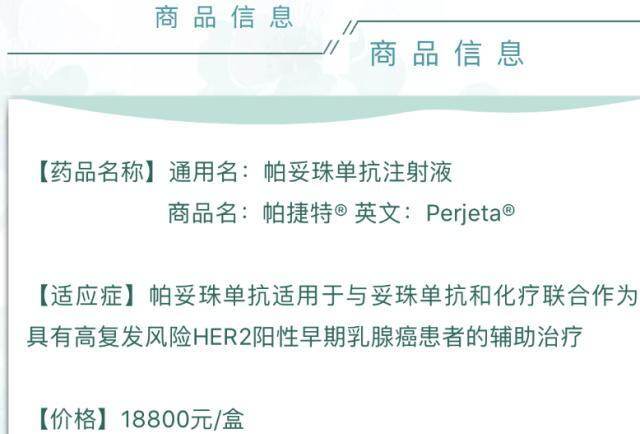
“Roche invested over $2 billion in the development of Perjeta,” explained Zhou Hong, President of Roche Pharmaceuticals China. Currently, the pricing of Perjeta has taken into account factors such as the reduced import tax rate for new anti-cancer drugs in mainland China and residents’ income levels, making it the lowest globally—20% cheaper than its price in Hong Kong.
The high cost of developing original drugs remains a significant burden. Although the Chinese government announced zero tariffs on anticancer drugs last year, resulting in an approximate 3% reduction in import duties, followed by a further 5% cut in value-added tax, the cumulative 8% decrease in drug prices still leaves many costly anticancer medications unaffordable for a large number of patients. Can more new anticancer drugs be included in the national medical insurance reimbursement list? This is the urgent expectation of patients nationwide.
“The National Medical Insurance program is indeed the primary and most effective mechanism for significantly reducing drug prices; inclusion in the insurance coverage typically results in an approximate 90% reduction in costs, a magnitude unmatched by any other approach,” said Professor Qiu Yulin from the Department of Social Security at the School of Labor and Human Resources, Renmin University of China.
The National Healthcare Security Administration recently announced that the new edition of the National Reimbursement Drug List (NRDL) is scheduled to be issued in June this year. A new round of “vacating the cage for new birds”—the optimization and replacement process—for the NRDL is about to commence.
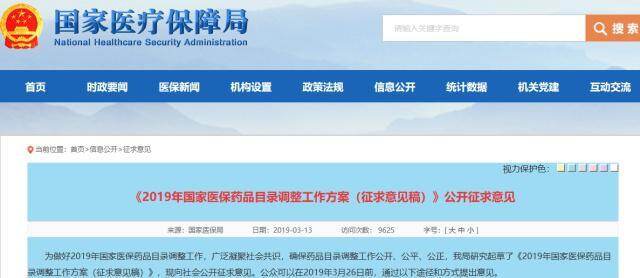
“Regarding the anticancer drug Perjeta, we have already begun negotiations with relevant national authorities, striving to include it in this year’s updated National Reimbursement Drug List,” said a Roche representative. According to the representative, to facilitate its inclusion in the updated list, the price of Perjeta may indeed be reduced in the future.
Qiu Yulin analyzed that the current National Reimbursement Drug List (NRDL) contains more than 2,000 drugs, and the number of adjustments typically hovers around 100. “Compared with other drugs, anticancer drugs are generally more expensive and have drawn significant public attention. Relevant authorities are also engaged in intensive negotiations with multinational pharmaceutical companies. Therefore, this adjustment to the NRDL may see a considerable number of new anticancer drugs added collectively,” said Qiu Yulin.
Limited Room for Expansion of the National Reimbursement Drug List
However, it cannot be ignored that the total amount of medical insurance funds is limited, and the capacity to absorb high-priced imported new anticancer drugs is also limited.
Li Ling, a healthcare reform expert and professor at the China Center for Economic Research of Peking University, told reporters that the average annual reimbursement amount for employees covered by China’s basic medical insurance is currently only around RMB 4,000. Simply put, the medical expenses reimbursed to patients are the costs saved by other insured individuals who require less medical care.
Data from the National Healthcare Security Administration shows that in 2018, the revenue of the basic medical insurance fund for employees reached RMB 1.325928 trillion, an increase of 8.7%; fund expenditures amounted to RMB 1.050492 trillion, a rise of 11.5%. The growth rate of fund expenditures has far exceeded that of revenues, becoming the biggest obstacle to expanding the national reimbursement drug list to include imported high-priced new drugs.
Under such rigid constraints, it is imperative to accelerate the research and development of domestically produced novel anticancer drugs, as this represents the most effective approach to reducing medication costs for patients.
Accelerated Approval of Domestically Produced Novel Anti-Cancer Drugs
In January 2015, Chidamide, an original anticancer new drug developed over 12 years by Shenzhen Chipscreen Biosciences, was approved for global launch, with its initial indications being relapsed or refractory peripheral T-cell lymphoma. Previously, only three companies worldwide produced similar drugs, two of which were based in the United States, with monthly treatment costs equivalent to 280,000 RMB and 140,000 RMB, respectively. In comparison, the monthly cost of the domestically produced new drug Chidamide was reduced to just over 20,000 RMB. By July 2017, Chidamide was successfully included in the National Reimbursement Drug List, allowing patients to access this innovative medication for only a few thousand RMB per month.
In the second half of this year, Sinopharm Holdings (Beijing) Co., Ltd. is set to launch CT-707, an innovative targeted therapy for non-small cell lung cancer. Li Wenjun, Chairman of Sinopharm Holdings and a member of the Beijing Municipal Committee of the Chinese People's Political Consultative Conference, told this reporter that the drug’s preliminary price range is approximately RMB 5,000 to 6,000, which is only about one-third the cost of similar foreign products.
Based on international experience, it typically takes an average of ten years for a biologic drug to go from research and development to successful market launch; however, China is seeking ways to appropriately shorten this R&D cycle. On September 4, 2017, Innovent Biologics (Suzhou) Co., Ltd. and the Shanghai Institute of Organic Chemistry of the Chinese Academy of Sciences jointly announced that they had reached a cooperation agreement on the licensed development of targeted small-molecule drugs for tumor immunotherapy. Innovent Biologics obtained the exclusive global development license for the IDO small-molecule inhibitor developed by the Shanghai Institute of Organic Chemistry, Chinese Academy of Sciences, through an upfront payment, R&D milestone payments, and sales milestone payments totaling $457 million, plus sales royalties. This marks the largest institute-enterprise collaboration project in China’s pharmaceutical sector to date.
“Full integration of industry, academia, and research can significantly reduce the R&D costs of innovative drugs,” said Li Wenjun. He revealed that Shouyao has collaborated with many universities and research institutes, such as the Chinese Academy of Medical Sciences, and has further developed certain “semi-finished” products originating from academic research, all of which help lower the cost of new drug development. For example, the innovative lung cancer drug CT-707 is a product of collaboration between Shouyao and Peking Union Medical College Hospital.
In Li Wenjun’s view, making innovative drugs affordable for patients requires strong measures to lower prices, such as government equity participation in pharmaceutical companies or direct investment in the research and development (R&D) of innovative drugs. “I recommend that relevant authorities establish an R&D platform for innovative drugs, organize collaborations between multiple enterprises and academic institutions, and concentrate government funding on tackling the development of specific drugs. This approach would leverage additional corporate investment and accelerate the R&D of high-quality, low-cost innovative drugs,” said Li Wenjun.
Beyond the expansion of the national medical insurance catalog and the accelerated development of domestically produced anticancer drugs, are there other measures to alleviate the financial burden on patients? Reporters have learned that patient assistance programs are also an essential avenue.
Shi Anli worked for many years at the former Ministry of Health and is currently Chairman of the Management Committee of the Beijing Aipu Cancer Patient Care Foundation, collaborating year-round with pharmaceutical companies to provide assistance to impoverished patients.
According to her, taking the anti-cancer drug Herceptin as an example, its initial price per vial was over 10,000 yuan. Nearly 80% of patients who needed this medication ultimately discontinued its use due to cost issues. However, after relevant corporate assistance programs were launched, selected patients could receive eight additional boxes of the drug free of charge after purchasing six boxes, leading to a sharp increase in the number of users. “Over the past six years, more than 100,000 people have benefited from the Herceptin assistance program,” said Shi Anli.
Nevertheless, she acknowledged that, relative to the at least tens of millions of cancer patients currently in China, the assisted population mainly consists of impoverished patients, primarily those receiving subsistence allowances, with only several hundred thousand individuals nationwide receiving assistance each year.
Shi Anli also revealed that an international pharmaceutical company is currently in negotiations with them to pilot a “no-threshold assistance” program in China. Under this program, patients would no longer need to be recipients of minimum living allowances or classified as impoverished; simply by purchasing the company’s anticancer drugs, they would qualify for an offer of at least one free box for every box purchased.
On April 2 this year, the State Council approved the establishment of an inter-ministerial joint conference system on vaccine management, composed of 13 departments. In this regard, Li Ling further stated that the current management of drug prices also lacks such a multi-departmental, coordinated approach. “Since China liberalized drug prices, the management efforts to reduce them have been overly fragmented, with the National Healthcare Security Administration basically shouldering the burden alone.” Li Ling suggested that “the Ministry of Finance, the General Administration of Customs, the National Health Commission, and the National Medical Products Administration, among others, should collectively participate in drug price negotiations, leveraging combined forces to accelerate the reduction of drug prices.”
Original Title: Zero Tariffs on Imports, Yet Price Cuts for Anti-Cancer Drugs Still Fall Short—These Supporting Measures Are Indispensable!