

AstraZeneca's Fasenra Demonstrates Robust Efficacy in Phase II Trial for Hypereosinophilic Syndrome
Apr 08, 2019 14:01
CST Updated
14:01

AstraZeneca
Biopharmaceutical Manufacturer

April 08, 2019 /BioValleyBIOON/ -- UK pharmaceutical giantAstraZeneca(AstraZeneca) recently announced that the Phase II clinical study evaluating the novel anti-inflammatory drug Fasenra (benralizumab) for the treatment of hypereosinophilic syndrome (HES) has been published in The New England Journal of Medicine. The study results showed that Fasenra treatment led to near-complete depletion of eosinophils in patients. In the United States,FDAOrphan drug designation for Fasenra in the treatment of HES was granted in February this year.
This study was conducted in collaboration between the National Institutes of Health (NIH) and AstraZeneca. It is a randomized, double-blind, placebo-controlled trial that enrolled a total of 20 patients diagnosed with platelet-derived growth factor receptor alpha (PDGFRA)-negative hypereosinophilic syndrome (HES).Leukemia) patients who were receiving stable HES medication but had an eosinophil count ≥1000 cells/μL. In the study, the efficacy and safety of Fasenra (30 mg subcutaneous injection every 4 weeks) versus placebo were evaluated. Following the randomized phase, there was an open-label extension period, during which background HES medications could be gradually reduced within tolerance limits.
The primary efficacy endpoint during the randomized period was the proportion of patients with a ≥50% reduction in absolute blood eosinophil count at Week 12. Data showed that 30% of patients in the placebo group achieved the primary endpoint, compared to 90% in the Fasenra treatment group, demonstrating a statistically significant difference. During the open-label extension phase, 74% of patients maintained reduced eosinophil counts and experienced clinical improvement in symptoms over 48 weeks, with 64% of patients able to gradually reduce their background HES medications. In patients who underwent tissue biopsies (gastrointestinal and skin), eosinophils were nearly completely depleted following treatment with Fasenra.
During the 48-week treatment period, three most common adverse events were considered related to Fasenra, including headache, elevated lactate dehydrogenase (LDH) levels, and chills. The observed elevation in LDH occurred after the first dose of Fasenra and resolved within 48 hours.
Mene Pangalos, Executive Vice President and President of BioPharmaceuticals R&D at AstraZeneca, stated, “In patients with hypereosinophilic syndrome (HES), elevated levels of eosinophils can lead to a range of debilitating symptoms and may even cause life-threatening organ damage. We are encouraged by the Phase II study results of Fasenra in patients with HES. Given the limited treatment options for this debilitating disease, these data are highly significant. We believe that Fasenra has the potential to address the serious unmet medical needs in patients with HES.”
Hypereosinophilic Syndrome (HES) is a group of rare disorders characterized by the presence of large numbers of eosinophils in the blood and tissues, causing progressive damage to any organ in the body over time. If left untreated, the condition can be fatal. HES commonly affects the skin, heart, lungs, gastrointestinal tract, and central nervous system. Symptoms of HES may include cough, fever, fatigue,Asthma, dyspnea, wheezing, recurrent upper respiratory tract infections, abdominal pain, vomiting, diarrhea, rash, arthritis, myalgia, and arthralgia. Clinically, the treatment goal for HES is to reduce eosinophils in the blood and tissues, prevent organ damage, and slow disease progression. Clinical treatment regimens for this condition typically include glucocorticoids, immunomodulatory therapy, and cytotoxic therapy.
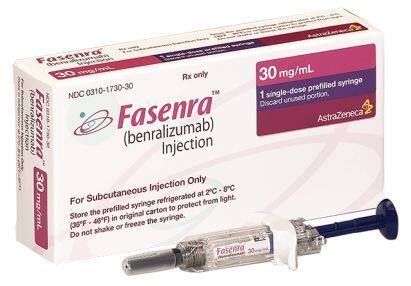
The active pharmaceutical ingredient of Fasenra is benralizumab, a monoclonal antibody that directly binds to the alpha subunit of the interleukin-5 receptor (IL-5Rα) on eosinophils and uniquely recruits natural killer (NK) cells throughApoptosis(Programmed cell death) induces rapid and nearly complete depletion of eosinophils. Fasenra has been shown to be effective in severe eosinophilicAsthmaEffective; this drug may also provide therapeutic benefits to patients with HES.
To date, Fasenra has been approved in the United States, the European Union, Japan, and several other countries as an add-on maintenance therapy for severe eosinophilicAsthmaPatient Treatment. Regarding medication, Fasenra can be administered as a fixed-dose subcutaneous injection via a pre-filled syringe, with the first three doses given every 4 weeks, followed by dosing every 8 weeks thereafter.
Fasenra was licensed to AstraZeneca from BioWa, a wholly owned subsidiary of the Japanese pharmaceutical company Kyowa Hakko Kirin. In late March this year, AstraZeneca and Kyowa Hakko Kirin signed a new agreement, granting AstraZeneca the Asian rights for all indications of Fasenra. Currently, AstraZeneca is also evaluating the potential of Fasenra in treating severe nasal polyps. (Bioon.com)