

Sandoz Resubmits BLA for Pegfilgrastim Biosimilar to US FDA
Apr 08, 2019 14:00
CST Updated
14:00

Novartis
Drug Development and Manufacturing

Sandoz
Global Supplier of Novel Patent Medicines

FDA
U.S. Food and Drug Administration
April 08, 2019 News /Bio ValleyBIOON/ -- Swiss pharmaceutical giantNovartisSandoz, a subsidiary of Novartis, isBiosimilarspioneer and global leader in the field. Recently, the company announced that it has submitted to the U.S. Food and Drug Administration (FDA) resubmitted its pegfilgrastimBiosimilarsBiologics License Application (BLA).
This BLA aims to address the issues received in June 2016.FDAComplete Response Letter (CRL), which incorporates new data from the pivotal pharmacokinetic (PK) and pharmacodynamic (PD) study, a single-dose, three-period crossover study that compared Sandoz pegfilgrastim with US-sourced reference pegfilgrastim, Sandoz pegfilgrastim with EU-sourced reference pegfilgrastim, and US-sourced versus EU-sourced pegfilgrastim.
In Europe, the European Commission (EC) approved Sandoz’s pegfilgrastim in November 2018BiosimilarsZiextenzo (pegfilgrastim) is indicated for all indications of Amgen’s blockbuster biologic Neulasta (pegfilgrastim), specifically: for use in patients receiving cytotoxic chemotherapy for malignanciesTumor(Chronic MyeloidLeukemiaadult patients (excluding those with myelodysplastic syndromes), to reduce the duration of neutropenia and the incidence of febrile neutropenia.
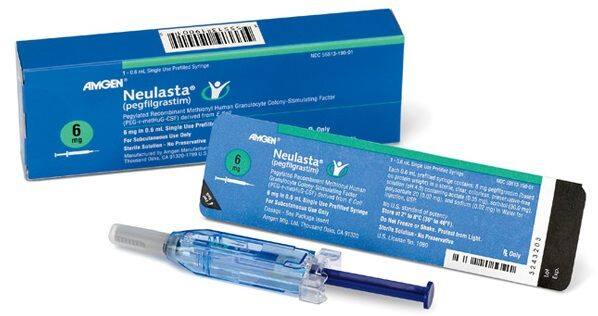
Pegfilgrastim (培非格司亭) is a long-acting version of filgrastim (非格司亭, recombinant human granulocyte colony-stimulating factor [G-CSF]), with its metabolic duration in the body extended through polyethylene glycol (PEG) modification, resulting in improved efficacy. Both drugs are "white blood cell-boosting" agents used to increase the number of white blood cells in patients. Clinically, G-CSF is primarily used for the prevention and treatment of leukopenia caused by tumor radiotherapy or chemotherapy, the treatment of bone marrow hematopoietic dysfunction and myelodysplastic syndromes, the prevention of potential infectious complications associated with leukopenia, and the acceleration of recovery from neutropenia caused by infection.TumorPatients often experience leukopenia and reduced anti-infective capacity following radiotherapy or chemotherapy. Therefore, leukocyte-promoting agents are commonly used in clinical practice to increase patients' white blood cell counts.
Neutropenia is one of the most severe side effects of chemotherapy. Studies have shown that in the United States, 4,000 cancer patients die annually from febrile neutropenia, and 60,000 are hospitalized due to neutropenia. Over the next decade,BiosimilarsIt is expected to save up to $54 billion for the US healthcare system. There is an urgent need for more treatment options for neutropenia in this market, as hospitalizations related to cancer-associated neutropenia cost up to $2.3 billion annually.
To date, in the United States,FDATwo Filgrastim Products ApprovedBiosimilars, namely: Zarxio (filgrastim-sndz, March 2015, Sandoz) and Nivestym (filgrastim-aafi, July 2018,Pfizer). Furthermore,FDATwo pegfilgrastim products have also been approved.Biosimilars, respectively: Fulphila (pegfilgrastim-jmdb, June 2018, Mylan) and Udenyca (pegfilgrastim-cbqv, November 2018, Coherus BioSciences).
It is worth noting that Sandoz’s Zarxio (filgrastim) was also the first biosimilar approved in the U.S. market. Sandoz is committed to promotingBiosimilarscompetition, providing high-quality, low-cost medicines, and contributing to a more sustainable healthcare system. (Bioon.com)
Original Source:Sandoz resubmits biosimilar pegfilgrastim application to US FDA