

From Technical Competition to System Definition! BCIFlex Releases 1000-Channel Invasive Flexible Brain-Computer Interface System

BCIFlex
Invasive High-Throughput Ultra-Thin Flexible Brain-Computer Interface System Developer
At the recently concluded 2026 Zhongguancun Forum Annual Conference, brain-computer interface undoubtedly became one of the most prominent tracks.
As a national platform for global scientific and technological innovation and exchange, this forum was jointly organized by the Ministry of Science and Technology, the National Development and Reform Commission, the Ministry of Industry and Information Technology, the State-owned Assets Supervision and Administration Commission of the State Council, the Chinese Academy of Sciences, the Chinese Academy of Engineering, the China Association for Science and Technology, and the Beijing Municipal Government. With the theme "Deep Integration of Scientific Innovation and Industrial Innovation," it focuses on cutting-edge fields such as 6G, brain-computer interfaces, and cell and gene therapy, outlining a clear path for future industries to transition from technological breakthroughs to application implementation.
Among a group of innovative achievements,The "Thousand-Channel Invasive Flexible Brain-Computer Interface System" independently developed by BCIFlex has drawn significant attention. At this forum, the groundbreaking achievement was officially launched for the first time and, with its internationally and domestically leading breakthrough technology, successfully made it into the "2026 Innovative Brain-Computer Interface Achievements," becoming one of the most representative innovations in the future brain-computer interface industry.
At the "Forward-looking Layout of Future Industries" exhibition area of the 2026 Zhongguan Village Forum, the booth of BCIFlex also attracted much attention, drawing visits and exchanges from numerous experts and audiences, as well as coverage from multiple media outlets such as CCTV, Xinhua News Agency, and People's Daily. It can be said that from the first release and exhibition of the "Thousand-Channel Invasive Flexible Brain-Computer Interface System" to being selected as one of the "2026 Innovative Achievements in Brain-Computer Interfaces," this is not only the debut of a technology and a company but also a microcosm of China’s brain-computer interface field moving from "catching up" to "keeping pace" and "taking the lead."
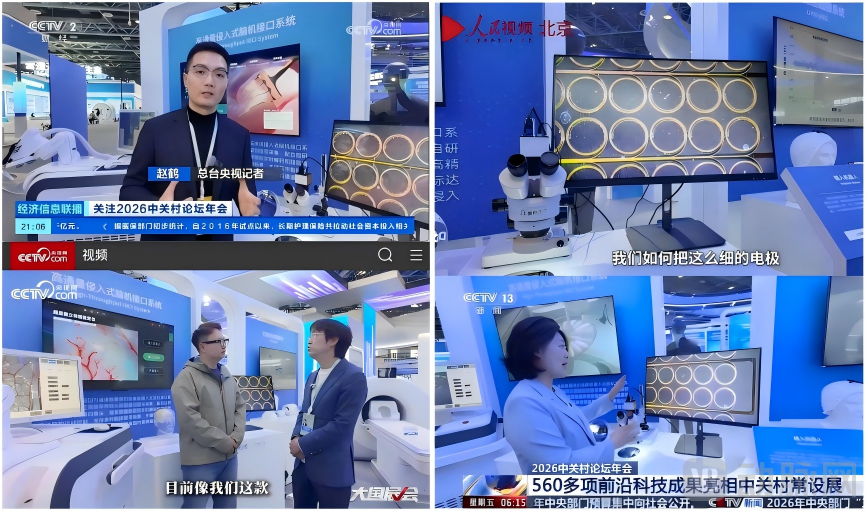
Brain-computer interface has become a strategic battleground for technologically advanced countries. Globally, major economies such as the United States, the European Union, and Japan have listed brain-computer interfaces as key projects, investing substantial support funds. In China, brain-computer interfaces have also been forwardly included as one of the six future industries prioritized for development in the country's "15th Five-Year Plan," entering a critical window of opportunity for growth.
It is against this backdrop that the 15 "Innovative Achievements in Brain-Computer Interface" released at the 2026 Zhongguan Village Forum Annual Conference Brain-Computer Interface Innovation and Development Forum sent a clear signal to the industry—China's brain-computer interface innovation and industry development have taken the global lead.More importantly, after years of technical accumulation, this field is experiencing a critical stage of transitioning from laboratory to clinical application, and from technological breakthroughs to industrialized utilization.
Specifically, the selected products have achieved accumulation and breakthroughs in four core indicators. First, academic innovation, meaning high-impact papers were published in top journals or conferences in the brain-computer interface field. Second, product compliance, with the product obtaining a medical device registration certificate within the past two years, possessing the capability and qualification to enter clinical applications. Third, clinical breakthrough, verifying its feasibility and safety in real medical scenarios. Fourth, ecosystem co-construction, providing systematic support for the systematic development of the brain-computer interface industry ecosystem.
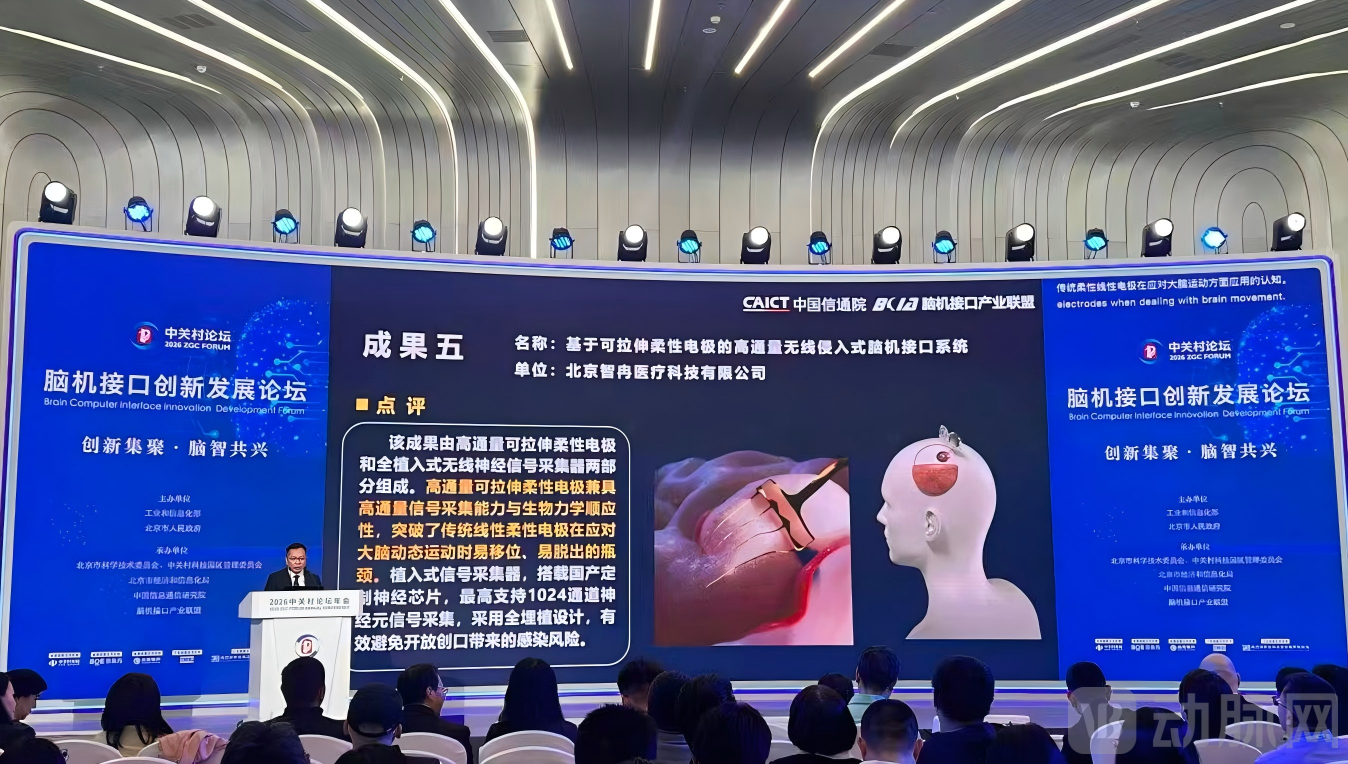
Thousand-Channel Invasive Flexible Brain-Computer Interface System
As one of the selected innovative achievements, the BCIFlex Thousand-Channel Invasive Flexible Brain-Computer Interface System consists of two parts: a high-throughput stretchable flexible electrode and a fully implantable wireless neural signal collector. The high-throughput stretchable flexible electrode combines high-throughput signal acquisition capabilities with biomechanical compliance, overcoming the bottleneck of traditional linear flexible electrodes that are prone to displacement and dislodgement during brain dynamic movements. The implantable signal collector, equipped with a domestically customized neural chip in China, supports up to 1024-channel neuron signal acquisition and adopts a fully implanted design, effectively avoiding the risk of infection caused by open wounds.
The product is so powerful, but BCIFlex, the company that created it, has been established for less than four years.As a leading innovative enterprise in China's本土侵入式脑机接口赛道, BCIFlex is committed to the mission of "building a world-leading next-generation brain-computer interface platform." The company has obtained more than 40 core technology patents domestically and internationally, with its system covering key technical aspects such as invasive brain-computer interface electrodes, software algorithms, and hardware. This fully demonstrates the innovation speed and technological strength of Chinese enterprises in the cutting-edge field of invasive brain-computer interfaces.
As an intersection of high-barrier hard technology and high-risk serious medical care, invasive brain-computer interfaces have never been a competition of single technology. From electrodes to chips, from surgical implantation to system lifespan, any weak link in a module may constrain the overall performance of the system; and any mistake in a single step could impact the success or failure of the product, even affecting patient safety.
It is precisely because of this that products with true system-level integration capabilities have the confidence to move towards clinical applications and truly benefit patients. The thousand-channel invasive flexible brain-computer interface system, which made its debut and was first exhibited at this forum, is a concentrated manifestation of this capability. It has not only passed comprehensive tests in four dimensions—academic innovation, product compliance, clinical breakthroughs, and ecosystem co-construction—but also demonstrated BCIFlex's leading position in system-level solutions.
First, at the perception level, the globally pioneering stretchable flexible electrode solves the industry's "disconnection" problem.
The brain is not a static organ. After implantation, traditional flexible electrodes may experience relative slippage due to the dynamic pulsation of brain tissue, leading to displacement or even dislodgement. This not only directly reduces the quantity of neural signal acquisition and decoding accuracy but may also trigger inflammatory responses in brain tissue—a core bottleneck that has long plagued Neuralink and the entire invasive brain-computer interface industry.
BCIFlex's independently developed "stretchable flexible electrode" converts stretching loads into bending and torsional deformation, reducing stretching force to just 1% of Neuralink's linear electrode, solving the long-standing industry problem of "electrode disconnection."
Specifically, this electrode, which adopts ultra-thin flexible materials, can dynamically follow the pulsation of the brain, minimize relative motion with brain tissue, significantly reduce mechanical damage, and effectively suppress immune responses and glial scar formation, providing reliable assurance for the long-term, efficient, and stable acquisition of neuronal signals. This globally unique design has gained high recognition in the international academic community—related findings were published in the top-tier international journal *Nature Electronics*.

Stretchable Flexible Electrode
Secondly, in terms of processing, the thousand-channel fully implantable wireless neural signal acquisition device balances performance and safety.
If stretchable flexible electrodes solve the fundamental challenges of signal acquisition and implantation, then the high-throughput fully implantable wireless signal collector serves as the core engine of system performance. This collector supports the acquisition of neuronal signals across 560 to 1024 channels, firmly ranking at the top for the number of channels in clinical-grade brain-computer interface systems in China. When paired with stretchable flexible electrodes, the effective number of channels reaches an internationally leading level. After being equipped with domestically customized neural chips, the overall power consumption of the system is reduced by 75%, ensuring high performance and long battery life while effectively mitigating safety risks associated with heat generation from power usage.
Moreover, it is the collaboration on the algorithm side.BCIFlex's self-developed deep neural network algorithm can perform online real-time decoding of high-throughput EEG signals. At the same time, by introducing an adaptive network, the model can be automatically updated online, further improving the decoding accuracy and the algorithm's versatility.
Finally, as the entire industry moves from laboratories to scaled clinical applications in a critical phase, a consensus is emerging—leading in one aspect does not equate to system reliability. The true barrier for invasive brain-computer interfaces lies in the deep integration between modules.
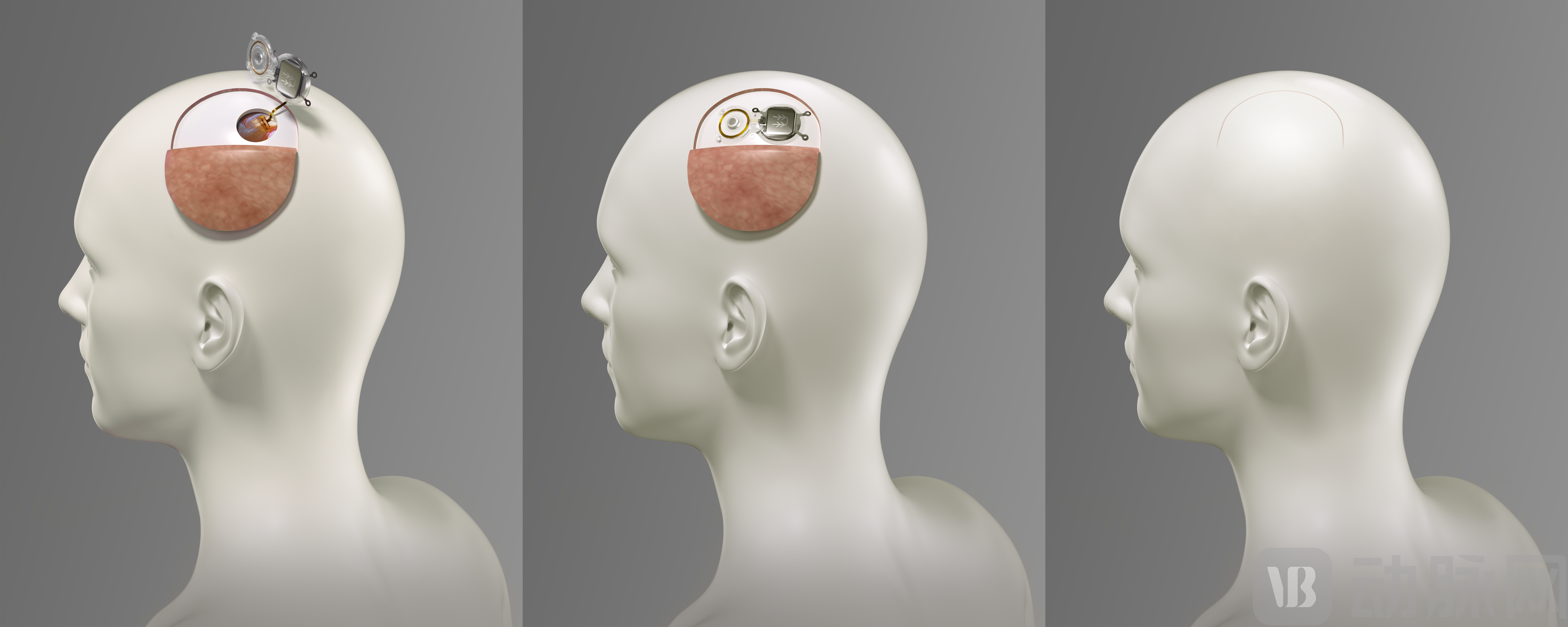
Invasive Flexible Brain-Computer Interface System
BCIFlex's leading advantage lies in the construction of a fully autonomous and controllable system that spans from hardware to software, and from research and development to implantation. This system covers the entire process from neural signal acquisition, decoding, to driving external devices, taking less than 50 milliseconds — a speed 3 to 5 times faster than human physiological response. It provides a precise and smooth technical foundation for patients with motor function disorders to achieve mind control.
In addition, to maximize the clinical value of invasive brain-computer interfaces and ensure the precision, intelligence, and efficiency of the electrode implantation process, BCIFlex has also independently developedElectrode Implantation Robot with Cell-Level Positioning Accuracy, further promoting the qualitative leap of China-produced high-throughput invasive flexible brain-computer interface systems from "functional" to "user-friendly", providing support for the large-scale clinical application of this system in the future.
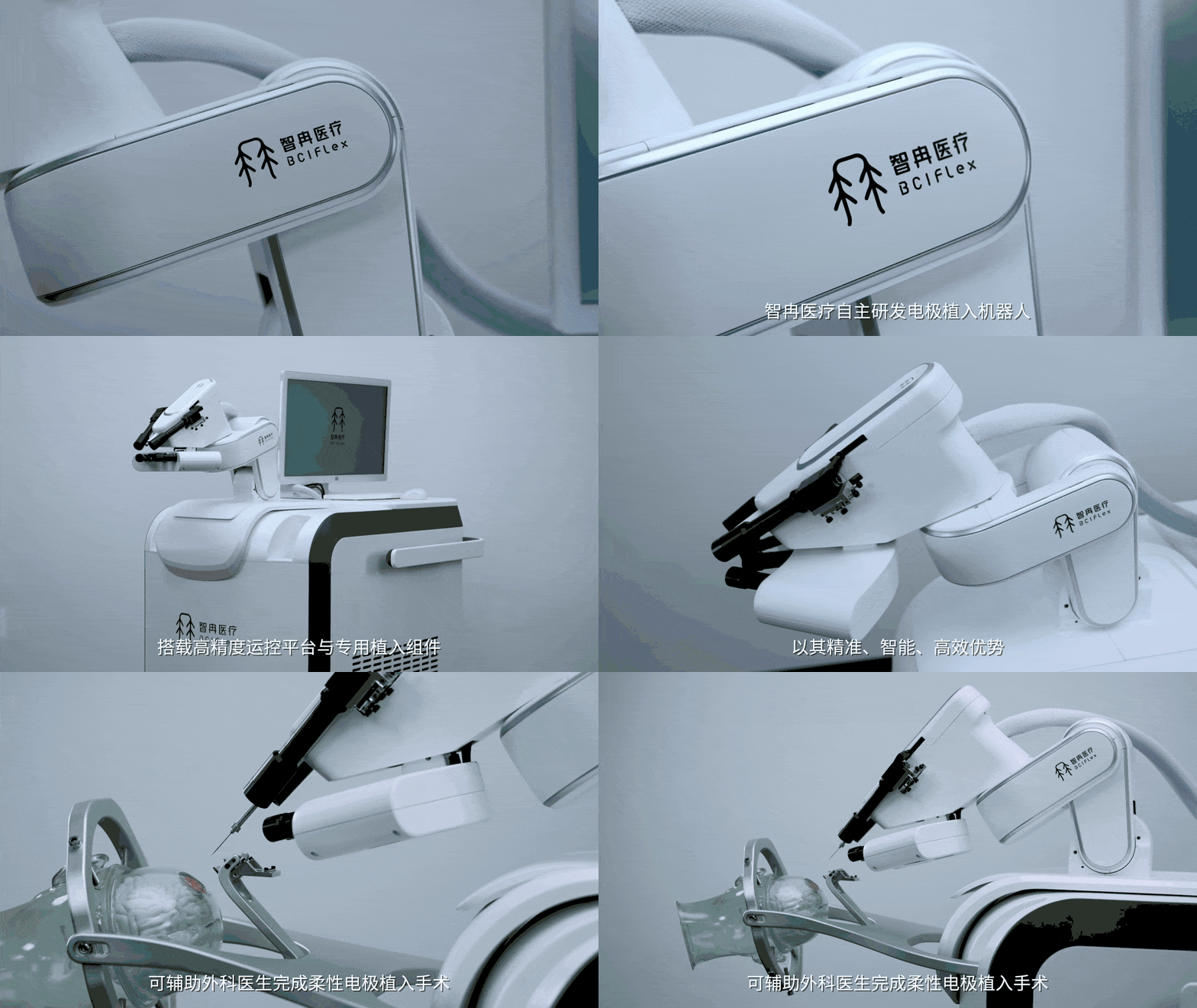
Electrode Implantation Robot
The ultimate testing ground for leading medical technology is always the clinic.
China's brain-computer interface industry is currently entering a golden period of policy-driven product acceleration. In 2025, seven departments jointly issued a document, systematically planning the industry development path at the ministry level for the first time, with a clear goal of cultivating 2-3 global leading enterprises by 2030. At the same time, the National Medical Products Administration and the National Healthcare Security Administration are working in tandem to address key links in clinical access and commercialization, creating fast-track channels for innovative products, promoting independent project-based pricing, and resolving payment bottlenecks.
With the dual support of policy and regulation, companies that possess independent core technologies, systematic platform capabilities, and clear clinical pathways will be the first to gain the initiative in market access and commercialization.
BCIFlex is steadily advancing along this path. In 2025, the company collaborated with China-Japan Friendship Hospital of Jilin University to complete China's first clinical implantation of an invasive flexible brain-computer interface with over a hundred channels. The safety and efficacy of the product have been preliminarily validated. Additionally, the digital electroencephalograph developed by the company was approved for marketing in 2025 and has entered the clinical application phase.Building on this foundation, the company plans to launch a large-scale, multi-center registration clinical trial in 2026, accelerating the market entry process for its invasive brain-computer interface product.
At the industrialization level, BCIFlex has nearly 2,000 square meters of clinical-grade micro-nano processing workshops and GMP workshops, establishing a full-chain capability from core technology research and development to large-scale mass production. This layout not only achieves complete independent control of clinical-grade invasive brain-computer interface systems but also provides assurance for the next phase of clinical trials, large-scale applications, and continuous innovation.
Since its establishment in 2017, each session of the Zhongguan Village Forum has been redefining the boundaries and possibilities of future technology for China and even the world. At this year's forum, from the successful selection of its product into the "2026 Brain-Computer Interface Innovation Achievements" to the overwhelming attention at the exhibition booth, BCIFlex will take this as a milestone to accelerate the clinical validation and industrialization of its products around clinical pain points. It aims to promote the rapid implementation of cutting-edge technologies to benefit a wide range of patients and help China’s invasive brain-computer interface achieve a leap from "keeping pace" to "taking the lead."
Reference Content
1. "Zhongguan Village Forum Releases Fifteen Significant Brain-Computer Interface Achievements" Brain-Computer Interface Community
2. "This Company in Haidian Has Solved the Toughest Challenges of Brain-Computer Interface ——" Beijing Haidian