

Jardiance (Empagliflozin) Demonstrates Significant Cardiac Function Improvement in Heart Failure Models, Supporting Expanded Therapeutic Use Beyond Diabetes
Apr 23, 2019 09:54
CST Updated
09:54

Boehringer Ingelheim
Developer of Innovative Drugs and Therapies

Eli Lilly
Global Pharmaceutical R&D and Production Company
April 23, 2019/BioValleyBIOON/--Boehringer Ingelheim andEli LillyDiabetesThe SGLT2 inhibitor antidiabetic drug Jardiance (empagliflozin), developed by the alliance, was approved in the United States in 2014FDAApproved for marketing, it has now become a treatment for type 2Diabetesa blockbuster drug. However, these two companies have been committed to getting the drug approved for the treatment of patients withoutDiabetesheart failure patients, and now, preclinical data have shown the promise of Jardiance in treating this indication.
Researchers from the Icahn School of Medicine at Mount Sinai in New York, USA, found that Jardiance improved cardiac function in a porcine model of heart failure. The study showed that after two months of pharmacological treatment, the left ventricle of the model pigs became smaller and thinner, with increasingly stronger contractility. This study has been published in the Journal of the American College of Cardiology (JACC).
Jardiance is an SGLT2 inhibitor that has shown signs of positive effects on heart health.Eli Lillyand Boehringer Ingelheim in 2015 onDiabetesThe EMPA-REG OUTCOME trial reported a significant reduction in cardiovascular risk; over the past few years, both parties have been conducting cardiac trials in patients without diabetes.
In a study published in JACC, researchers used a total of 14 pigs with heart failure and administered Jardiance to seven of them. The researchers employed advanced imaging techniques, such as cardiac magnetic resonance imaging and three-dimensional echocardiography, to observe changes in the animals' hearts. According to a press release, they reported that cardiac function improved in all model pigs treated with Jardiance, along with reductions in pulmonary congestion (which typically causes shortness of breath) and heart failure.BiomarkerDecrease.
Eli LillyBoehringer Ingelheim has long known that Jardiance can reduce the risk of cardiac death, but it remains unclear how this drug exerts such beneficial effects on the heart. Researchers at Mount Sinai have discovered that the drug improves cardiac metabolism. Specifically, when model pigs were administered the drug, their hearts consumed more fatty acids and less glucose, which in turn helped them function more efficiently and generate more energy.
Carlos Santos Gallego, MD, a postdoctoral fellow at Mount Sinai and co-lead author of the article, stated in a press release, “This study offers a new therapeutic strategy for heart failure, a field with an urgent need for novel treatments, particularly given that no new effective medications for heart failure have been introduced since the 1990s.”
Improving cardiac metabolism is a strategy being investigated by many researchers studying heart disease. For example, a study published last month by scientists at The Ohio State University demonstrated that a deficiency in an active lipid compound called acyl-CoA leads to the toxic accumulation of harmful fats and impairs the heart’s ability to efficiently pump blood.
As forEli LillyBoehringer Ingelheim and its partner are conducting extensive research to demonstrate the cardiac benefits of Jardiance in non-diabetic patients. Last year, the two parties further expanded their clinical program by adding two Phase III studies evaluating 12 weeks of Jardiance versus placebo for the treatment of heart failure. These studies are scheduled to conclude this year, at which time results on Jardiance’s efficacy in alleviating symptoms and improving exercise capacity will be announced.
The authors of the Mount Sinai study are participating in a trial sponsored by Boehringer Ingelheim andEli LillyInitiated study, which aims to further investigate whether the effects of Jardiance on cardiac health occur independently of its glucose-lowering mechanisms.
Jardiance: The First Glucose-Lowering Drug Globally to Reduce the Risk of Cardiovascular Death, with Sales Expected to Reach $3.5 Billion in 2024
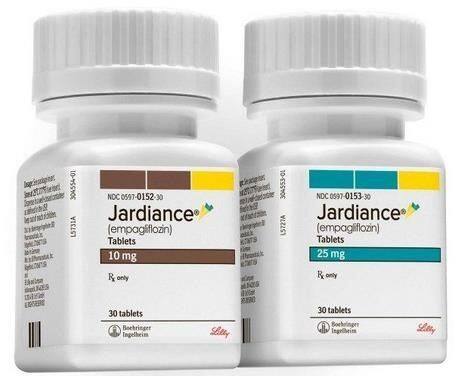
Jardiance (empagliflozin) belongs to the class of sodium-glucose cotransporter-2 (SGLT-2) inhibitors. Emerging SGLT-2 inhibitors have been proven to block glucose reabsorption in the kidneys, excreting excess glucose from the body, thereby achieving a reduction in blood glucose levels. Moreover, this glucose-lowering effect is independent of β-cell function and insulin resistance.
Notably, Jardiance is the first type 2 diabetes medication to include data on reducing the risk of cardiovascular death in its drug labeling. In the United States, Jardiance was approved by the FDA for marketing in August 2014, as an adjunct to diet and exercise, to improve glycemic control in patients with type 2 diabetes. At the end of 2016, Jardiance received furtherFDAApproved for reducing the risk of cardiovascular death in patients with type 2 diabetes and concurrent cardiovascular disease. This approval makes Jardiance the first glucose-lowering medication approved globally to reduce the risk of cardiovascular death in patients with type 2 diabetes. It is well established that diabetes increases the risk of heart disease,Stroke...the risk of such diseases, while cardiovascular complications can also significantly impact the physical health and life expectancy of patients with diabetes.
It is estimated that globally, approximately 50% of deaths in patients with type 2 diabetes are caused by cardiovascular disease; in the United States, this proportion is as high as two-thirds. Therefore, there is an urgent need in this field for a diabetes medication that can effectively reduce such complications. Consequently, the approval of Jardiance for its new indication marks a significant milestone in the clinical management of patients with type 2 diabetes and comorbid cardiovascular disease.
Since its market launch, Jardiance has experienced rapid sales growth, with global sales surpassing the $1 billion mark in 2017. In June 2018, the pharmaceutical market research firm EvaluatePharma released a report predicting that Jardiance’s global sales would reach $3.51 billion by 2024, making it the best-selling SGLT-2 inhibitor worldwide and the third best-selling antidiabetic drug globally. (Bioon.com) (Bioon.com)