

FDA Approves Merck’s KEYTRUDA (pembrolizumab) in Combination with Pfizer’s Inlyta (axitinib) as First-Line Treatment for Advanced Renal Cell Carcinoma

MSD
Pharmaceutical R&D and Manufacturer

FDA
U.S. Food and Drug Administration

Pfizer
Pharmaceutical R&D Developer
Merck & Co., the giant of tumor immunotherapy, has recently received significant regulatory good news in the United States for its PD-1 immunotherapy Keytruda (brand name: Keytruda; generic name: pembrolizumab). The U.S. FDA has approved Keytruda in combination with Pfizer’s next-generation targeted therapy for kidney cancer, Inlyta (axitinib; a tyrosine kinase inhibitor [TKI]), as first-line treatment for patients with advanced renal cell carcinoma (RCC). This approval came two months earlier than expected. The new indication is based on data from the KEYNOTE-426 study (NCT02853331).
This study is a randomized, multicenter, open-label trial conducted in 861 patients with advanced renal cell carcinoma (RCC) who had not previously received systemic therapy, regardless of tumor PD-L1 expression status. It compared the Keytruda + Inlyta regimen with Sutent (sunitinib), the standard-of-care first-line treatment for advanced RCC. In the study, patients were randomized into two treatment groups:
(1) Keytruda + Inlyta treatment group: receiving 200 mg of Keytruda via intravenous infusion once every three weeks, along with oral administration of 5 mg of Inlyta twice daily;
(2) Sutent treatment group: received 50 mg of Sutent once daily for 4 weeks, followed by a 2-week drug-free period.
All patients continued treatment until confirmed disease progression or unacceptable toxicity. Keytruda was administered for a maximum of 24 months.
Detailed results from the study were presented in February this year at the 2019 American Society of Clinical Oncology Genitourinary Cancers Symposium (ASCO-GU).
Data show that, in patients with previously untreated advanced or metastatic renal cell carcinoma (RCC), the Keytruda plus Inlyta regimen demonstrated statistically significant improvements in overall survival (OS), progression-free survival (PFS), and objective response rate (ORR) compared with Sutent, the standard-of-care first-line therapy for advanced RCC, while maintaining a manageable safety profile. These data suggest that the Keytruda plus Inlyta regimen should become the new standard of care for this patient population.
The detailed data presented at the ASCO-GU meeting are as follows:
The study met the primary endpoints of OS and PFS, as well as the key secondary endpoint of ORR: With a median follow-up of 12.8 months, 59.0% and 43.1% of patients in the Keytruda + Inlyta and Sutent treatment groups, respectively, remained on treatment. Compared with the Sutent group, the Keytruda + Inlyta group demonstrated significant improvements in OS (HR=0.53 [95% CI: 0.38–0.74], p<0.0001; 12-month OS rate: 89.9% vs. 78.3%), PFS (HR=0.69 [95% CI: 0.57–0.84], p=0.0001; median PFS: 15.1 vs. 11.1 months), and ORR (59.3% vs. 35.7%, p<0.0001), along with a prolonged median DOR (median DOR: not reached vs. 15.2 months). Treatment benefits with Keytruda + Inlyta were observed across all patient subgroups, including all IMDC risk and PD-L1 expression subgroups. The incidence of grade 3–5 treatment-related adverse events was 62.9% in the Keytruda + Inlyta group and 58.1% in the Sutent group, while discontinuation rates due to adverse events were 6.3% and 10.1%, respectively.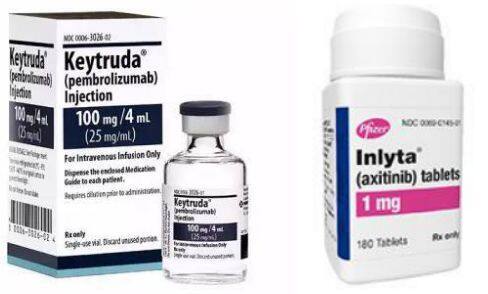
Keytruda belongs to the class of PD-1 cancer immunotherapies, a currently high-profile category of cancer immunotherapy designed to harness the body’s own immune system to fight cancer. By blocking the PD-1/PD-L1 signaling pathway, it induces cancer cell death and holds potential for treating various types of tumors. Inlyta, developed by Pfizer, is an oral therapy aimed at inhibiting tyrosine kinases, including vascular endothelial growth factor (VEGF) receptors 1, 2, and 3, which may promote tumor growth, angiogenesis, and cancer progression (tumor spread). Sutent, also developed by Pfizer, is a multi-receptor tyrosine kinase inhibitor and has been the standard-of-care first-line treatment for renal cell carcinoma (RCC) over the past decade. Merck Sharp & Dohme (MSD) has an extensive clinical development program in clear cell (cc) and non-clear cell (ncc) RCC, advancing multiple potential registrational studies supporting Keytruda, both as monotherapy and in combination with other therapies, including KEYNOTE-564 and KEYNOTE-581. Renal cell carcinoma (RCC) is by far the most common type of kidney cancer, accounting for approximately 90% of all kidney cancer cases. The incidence of RCC in men is twice that in women. Modifiable risk factors include smoking, obesity, occupational exposure to certain substances, and hypertension. In 2018, there were approximately 403,000 new cases of kidney cancer diagnosed worldwide, with about 175,000 deaths. In the United States alone, it was estimated that in 2019 there would be 74,000 new cases of kidney cancer diagnosed, and approximately 15,000 people would die from the disease.