

Science: New Method 'DISCOVER-Seq' Targets CRISPR Off-Target Effects to Overcome Clinical Translation Hurdles

AstraZeneca
Biopharmaceutical Manufacturer
Since its emergence in 2012, the “Magic Scissors” technology, CRISPR, has demonstrated immense potential in treating various refractory diseases. CRISPR edits the genome by cleaving DNA at specific sites; however, the tool can sometimes “malfunction,” such as by cutting at other locations in the DNA, a phenomenon known as off-target effects. Scientists have been striving to overcome this “stumbling block” to the clinical application of CRISPR technology.
Scientists at the Gladstone Institutes and the Innovative Genomics Institute (IGI), in collaboration with AstraZeneca, have developed a new method to identify these off-target cuts. The findings were published in Science on April 19. Dr. Beeke Wienert and Stacia Wyman are co-first authors of the study, and Jacob Corn is the corresponding author.
Dr. Beeke Wienert stated, “When CRISPR cleaves DNA, the DNA is damaged. To survive, cells recruit numerous different DNA repair factors to specific sites in the genome to repair the breaks and ligate the cut ends. If we can identify the locations of these DNA repair factors, we can determine the cleavage sites of CRISPR.”
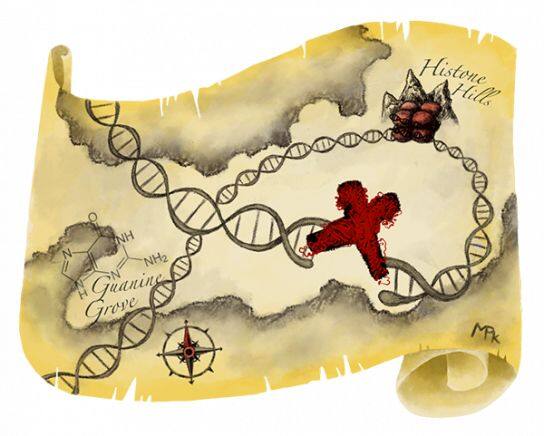
MRE11 Marks Cas9 DNA Break Sites
To validate this hypothesis, they investigated a distinct set of DNA repair factors. They found that MRE11 was among the first proteins to arrive at the DNA cleavage site. MRE11 serves as a guidepost on a treasure map, directing researchers to the protein's location. Leveraging MRE11, the researchers developed a novel technique named DISCOVER-Seq, which can identify the precise genomic sites cleaved by CRISPR.
The human genome is vast; if all DNA sequences were printed in full, the resulting book would tower 16 stories high. Using CRISPR to cleave DNA is akin to attempting to delete a specific word from a specific page in such a book—somewhat like finding a needle in a haystack. Remarkably, however, MRE11 can precisely excise every letter of the target word.
Unlike previous methods that were limited to detecting off-target effects through cell culture in the laboratory, the new DISCOVER-Seq method relies on the natural repair processes of cells to identify nicks, making it less invasive and more reliable. “We tested the new DISCOVER-Seq method in induced pluripotent stem cells, patient-derived cells, and mice. The results showed that this new approach can be applied to any system, not just limited to the laboratory,” said Dr. Jacob Corn, corresponding author and principal investigator at ETH Zurich.
Notably, DISCOVER-seq is the first method capable of directly identifying cleavage sites from CRISPR editing tools in any living tissue. The MRE11 protein, one of the earliest participants in key DNA repair pathways, is present in mammalian cell lines (both mouse and human). This means it can be used to arbitrarily locate cleavage sites and can be readily applied to diverse systems that were previously difficult to utilize. “There are already some excellent off-target detection methods, but they work best in highly controlled systems, such as cells cultured in the laboratory,” said Corn. “One advantage of DISCOVER-seq is that it can identify off-target sites in any system undergoing genome editing.”
Because MRE11 allows researchers to amplify the cleavage site immediately after cutting, researchers have also discovered new methods for DNA repair work. They may ultimately leverage this knowledge to improve CRISPR-Cas9 genome editing.
Conklin, Professor of Medical Genetics and Molecular Pharmacology at the University of California, San Francisco (UCSF), expressed great enthusiasm for the discovery of the new DISCOVER-Seq method. He stated, “DISCOVER-Seq greatly simplifies the process of identifying off-target effects while also improving the accuracy of results, allowing us to better predict how genome editing will perform in clinical settings.”
References:
[1]New method to detect off-target effects of CRISPR
[2]Unbiased detection of CRISPR off-targets in vivo using DISCOVER-Seq
[3]DISCOVERing Off-Target Effects for Safer Genome Editing