

Sanofi and Regeneron’s Praluent (Alirocumab) Approved by FDA to Reduce Cardiovascular Risk in Adult Patients with Established Cardiovascular Disease
Apr 29, 2019 09:37
CST Updated
08:51

Regeneron
Biopharmaceutical Manufacturer

FDA
U.S. Food and Drug Administration

Sanofi
Pharmaceutical R&D Developer

April 29, 2019/BioonBIOON/--French pharmaceutical giant Sanofi and its partner Regeneron recently announced that the U.S. Food and Drug Administration (FDA) has approved a new indication for the PCSK9 inhibitor lipid-lowering drug Praluent (alirocumab): to reduce heart attacks in adult patients with cardiovascular (CV) disease,Stroke, the risk of unstable angina requiring hospitalization. High levels of low-density lipoprotein cholesterol (LDL-C) increase patients' risk of serious cardiovascular (CV) events, such as myocardial infarction orStroke. Having experienced a heart attack orStroke...among adults, the risk of recurrent cardiovascular (CV) events is significantly elevated.
Furthermore,FDAAlso approved Praluent as monotherapy or in combination with other lipid-lowering therapies (such as statins and ezetimibe), adjunctive to diet modification, for the treatment of adult patients with primary hyperlipidemia (including heterozygous familial hypercholesterolemia) to reduce LDL-C.
John Reed, Global Head of Research and Development at Sanofi, stated, “TodayFDAapproval, marking a significant milestone in the treatment of adult patients with cardiovascular disease, who are among those at highest risk of death or disability due to serious cardiovascular events. Praluent has helped many adult patients lower their low-density lipoprotein cholesterol (LDL-C) levels, and this newly approved indication will provide an opportunity to reduce the risk of serious, life-threatening cardiovascular events, including heart attack andStroke, to help appropriate patients.”
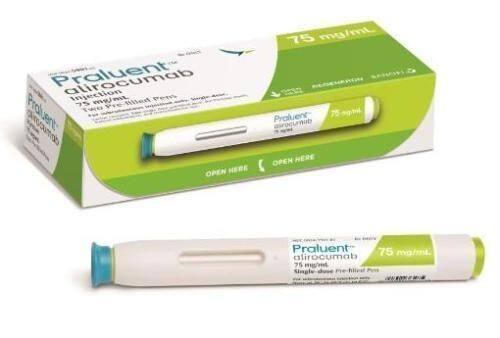
Praluent is aMonoclonal Antibody Drugs, targeting a protein called proprotein convertase subtilisin/kexin type 9 (PCSK9), which reduces the liver's ability to clear low-density lipoprotein cholesterol (LDL-C) from the blood. LDL-C is widely recognized as a major risk factor for cardiovascular disease (CVD). PCSK9 inhibitors offer a completely new therapeutic approach to combating LDL-C and are regarded as the most significant advancement in lipid-lowering therapy since statins.
The approval of this new indication is based on the results of ODYSSEY OUTCOMES, a large-scale, landmark Phase 3 clinical study evaluating the cardiovascular outcomes of Praluent. Conducted in 18,924 patients who had experienced an acute coronary syndrome (ACS) event 1 to 12 months prior to enrollment (median time: 2.6 months) and were already receiving maximally tolerated statin therapy, the study assessed the impact of adding Praluent to maximally tolerated statin therapy on cardiovascular outcomes.
The results showed that, among patients who experienced an acute coronary syndrome (ACS) event (such as a heart attack) in the short term, Praluent significantly reduced the risk of major adverse cardiovascular events (MACE) compared with placebo. Specifically: (1) The risk of MACE was significantly reduced by 15% (HR=0.85, CI: 0.78–0.93, p=0.0003) in the Praluent treatment group. The primary endpoints included first occurrence of myocardial infarction, stroke, coronary heart disease (CHD) death, and unstable angina requiring hospitalization. (2) The risk of stroke was reduced by 27%, the risk of nonfatal myocardial infarction by 14%, and the risk of unstable angina requiring hospitalization by 39%. (3) The risk of all-cause mortality was reduced by 15% (HR=0.85, CI: 0.73–0.98; nominal p=0.026).
In addition to injection site reactions (Praluent 3.8%, placebo 2.1%), the Praluent and placebo groupsAdverse ReactionsSimilar. In the ODYSSEY OUTCOMES study, adverse events occurring in more than 5% of patients included: non-cardiac chest pain (Praluent 7.0%, placebo 6.8%), nasopharyngitis (Praluent 6.0%, placebo 5.6%), and myalgia (Praluent 5.6%, placebo 5.3%). (Bioon.com)