

Janssen Submits sNDA to FDA for ERLEADA® (apalutamide) in Metastatic Castration-Sensitive Prostate Cancer Under RTOR Program
Apr 30, 2019 15:03
CST Updated
15:03

Johnson & Johnson
Healthcare Product Manufacturers, Health Service Providers

Janssen Pharmaceuticals
Pharmaceutical R&D Developer

FDA
U.S. Food and Drug Administration

April 30, 2019/BioonBIOON/--Janssen Pharmaceuticals, a subsidiary of U.S. pharmaceutical giant Johnson & Johnson (JNJ), recently announced that it has submitted a supplemental New Drug Application (sNDA) to the U.S. Food and Drug Administration (FDA), seeking approval for a new indication for Erleada (apalutamide): in combination with androgen deprivation therapy (ADT) for the treatment of metastatic castration-sensitive prostate cancer (mCSPC).FDAwill be conducted in real-timeTumorThe Real-Time Oncology Review (RTOR) program is reviewing this sNDA.
This sNDA is based on the results of the Phase III clinical study TITAN (NCT02489318), a randomized, placebo-controlled, double-blind study in newDiagnosisconducted in patients with mCSPC, regardless of prognostic risk, disease volume, prior docetaxel treatment, or prior treatment for localized disease. In the study, more than 1,050 patients were randomized to receive either Erleada plus ADT or placebo plus ADT, with treatment continuing until disease progression, unacceptable treatment-related toxicity, or end of treatment. The two primary endpoints were radiographic progression-free survival (RPF) and overall survival (OS). The four secondary endpoints included time to chemotherapy, time to pain progression, time to chronic opioid use, and time to skeletal-related events.
Analysis following the unblinding in late January 2019 demonstrated that both primary endpoints of the study were met: significant improvements in radiographic progression-free survival (RPF) and overall survival (OS). Based on these results, the Independent Data Monitoring Committee (IDMC) recommended that patients in the placebo plus androgen deprivation therapy (ADT) arm be offered the opportunity to cross over to treatment with Erleada plus ADT. As part of the TITAN study, patients will continue to undergo follow-up for OS and long-term safety.
Data from the TITAN study will be presented at the American Society of Clinical Oncology (ASCO) Annual Meeting to be held on May 31 this year. Dr. Craig Tendler, Vice President of Oncology Clinical Development and Medical Affairs at Janssen Research & Development, stated, “This submission marks an important step toward providing a potential treatment option for patients with metastatic castration-sensitive prostate cancer (mCSPC), regardless of their prior therapy or disease burden. We look forward to delivering efficient real-timeTumorReview of Pilot Projects andFDAwork closely together to bring Erleada to patients with early metastatic prostate cancer as soon as possible.”
Globally, prostate cancer is the second leading cause of cancer-related death in men, surpassed only by lung cancer. It is estimated that one in seven men will be diagnosed with prostate cancer during their lifetime. The disease predominantly affects older populations and is often driven by an excess of male hormones, including testosterone (androgens). Consequently, standard treatment aims to reduce androgen levels in patients, which can be achieved clinically through surgical castration and/or androgen deprivation therapy (ADT).
Metastatic prostate cancer refers to cancer cells that have spread to other parts of the body. Metastatic castration-sensitive prostate cancer (mCSPC) refers to prostate cancer that remains responsive to androgen deprivation therapy (ADT). NewDiagnosisPatients with metastatic disease have a poor prognosis, and there is an unmet medical need for new and effective treatment options.
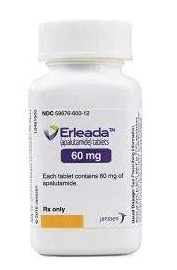
Erleada is a next-generation androgen receptor (AR) inhibitor administered orally, which helps block the activity of male hormones (such as testosterone) and delays disease progression; these male hormones can promoteTumorgrowth.
In the United States, Erleada was approved in February 2018 for the treatment of adult patients with non-metastatic castration-resistant prostate cancer (nmCRPC) at high risk of metastasis. This approval made Erleada the first drug worldwide for the treatment of nmCRPC. In the European Union, Erleada was approved for the same indication in January 2019.
The industry holds a highly optimistic view of Erleada’s commercial prospects. According to forecast reports released by the pharmaceutical market research firm EvaluatePharma, global sales of Erleada are projected to reach $2.115 billion in 2024. (Bioon.com)