

15 Imported Generic Drugs Enter China's $30B Market: Will Qilu Pharmaceutical or Korean Rival Win the Battle for Ceftazidime?

Novartis
Drug Development and Manufacturing
Highlights
Recently, Novartis announced that rosuvastatin produced by its Sandoz subsidiary, Lek Pharmaceuticals d.d., has passed the consistency evaluation, becoming the first generic drug from a foreign pharmaceutical company to achieve this milestone. The approval of Lek’s rosuvastatin calcium tablets confirms that imported generic drugs are also subject to consistency evaluation in China. Given the enormous potential of China’s generic drug market, foreign pharmaceutical companies are unlikely to cede their share willingly. Data shows that, in addition to rosuvastatin, there are currently 14 other imported generic drugs applying for consistency evaluation.
The First Imported Generic Drug to Pass the Consistency Evaluation
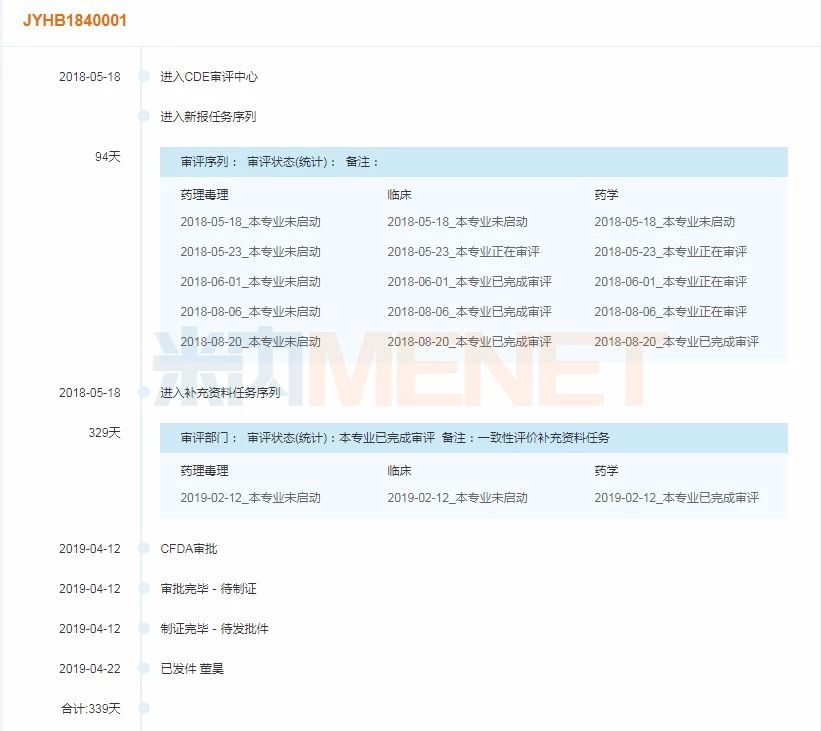
Figure 1: Review Timeline for Rosuvastatin Calcium Tablets (Acceptance No. JYHB1840001) by Lek Pharmaceuticals d.d.
(Menet Network MED Drug Review Database 2.0)
According to data from Menet, Lek Pharmaceuticals d.d.’s rosuvastatin calcium tablets (application numbers JYHB1840001 and JYHB1840002) were both accepted for review on May 18, 2018, and approved as having passed the consistency evaluation in April 2019, taking approximately 330 days.
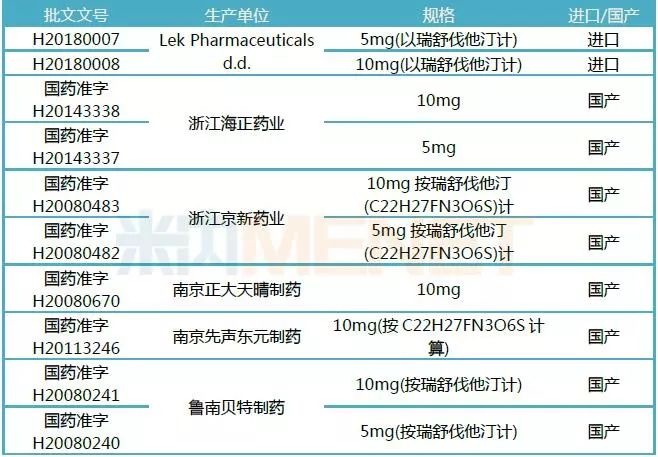
Table 1: Rosuvastatin Calcium Tablets Currently Passing the Consistency Evaluation
(Menet Network One-Click Search)
As of May 9, 2019, six companies had obtained or were deemed to have obtained approval for the consistency evaluation of Rosuvastatin Calcium Tablets. The terminal sales revenue of this product in China’s public medical institutions (including urban public hospitals, county-level public hospitals, urban community health centers, and township health centers) reached RMB 5.02 billion in 2017. In the “4+7 Volume-Based Procurement” program launched at the end of last year, Rosuvastatin Calcium Tablets were included as a selected variety, with Zhejiang Jingxin Pharmaceutical winning the bid at a price of RMB 21.8 per box (10 mg × 28 tablets).
In its 2018 annual report, Jingxin Pharmaceutical stated that to ensure the supply of products under the “4+7” centralized procurement program with guaranteed quality and quantity, the company would enhance finished dosage form production capacity and secure market supply through internal management measures, including rational allocation of production line products, scaled-up validation of production batches, and refined on-site management. Volume-based procurement has become the dominant trend in the pharmaceutical industry, and generic drugs that have passed the consistency evaluation will become the main force in market competition.
15 Imported Generic Drugs Submitted for Consistency Evaluation, 13 Still Under Review
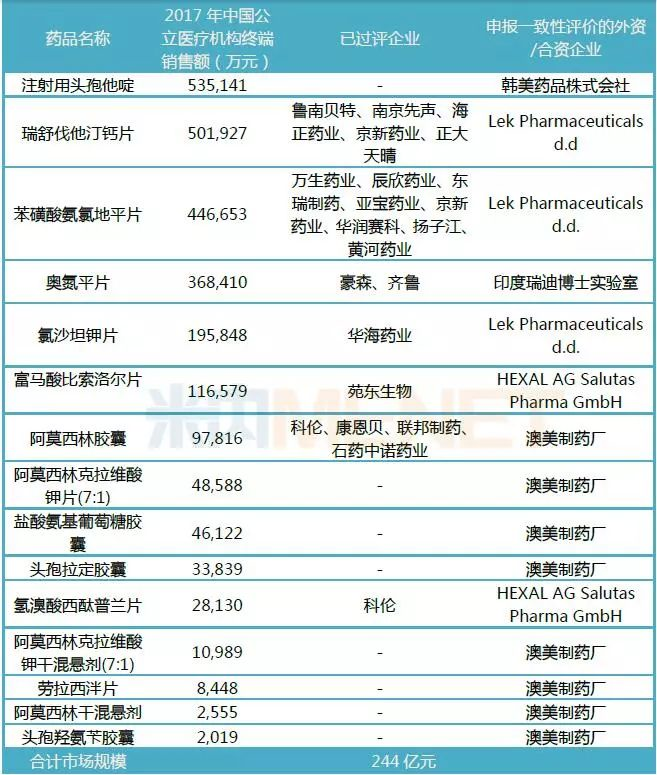
Table 2: Relevant Information on 15 Imported Generic Drugs Currently Submitted for Consistency Evaluation
(Menet Database)
According to data from the Menet MED China Drug Evaluation Database 2.0, as of now, a total of 15 imported generic drugs have submitted applications for consistency evaluation. Among them, Lek Pharmaceuticals d.d.'s Rosuvastatin Calcium Tablets have passed the evaluation. HEXAL AG Salutas Pharma GmbH (a subsidiary of Novartis)'s Citalopram Hydrobromide Tablets (application number JYHB1850001) have been issued documents, suggesting that they have not yet passed the consistency evaluation. The remaining 13 imported generic drugs' supplementary applications for consistency evaluation are currently under review and approval.
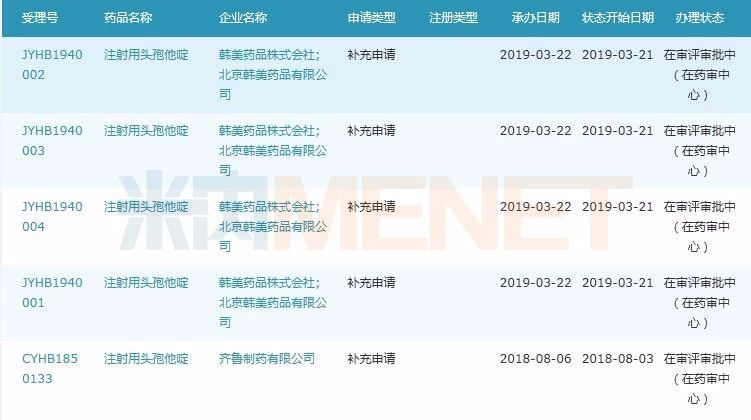
Among these 15 imported generic drugs, there are no shortage of blockbuster products with annual sales exceeding RMB 1 billion. Currently, except for rosuvastatin calcium tablets, amlodipine besylate tablets, olanzapine tablets, losartan potassium tablets, and bisoprolol fumarate tablets, which have already passed the consistency evaluation by domestic manufacturers, Qilu Pharmaceutical is the only domestic company that has submitted an application for the consistency evaluation of ceftazidime for injection. Whether domestic companies will ultimately prevail or Hanmi Pharmaceutical Co., Ltd. will successfully break through remains to be seen. However, given the slow progress of the consistency evaluation for injectables, it is estimated that a considerable amount of time will be required before a final conclusion can be reached.
Figure 2: Status of Supplementary Applications for the Consistency Evaluation of Ceftazidime for Injection
(Menet Network MED Drug Review Database 2.0)
Furthermore, among the aforementioned products with annual sales exceeding RMB 100 million, no manufacturers have yet passed the consistency evaluation for Amoxicillin and Clavulanate Potassium Tablets (7:1), Glucosamine Hydrochloride Capsules, Cefradine Capsules, and Amoxicillin and Clavulanate Potassium for Suspension (7:1).
Currently, there are two manufacturers of amoxicillin and clavulanate potassium tablets (7:1) on the market, with only Ausome Pharmaceutical Factory having submitted an application for consistency evaluation for this product. The amoxicillin and clavulanate potassium dry suspension (7:1) available on the market is exclusively produced by Ausome Pharmaceutical Factory, which has also submitted an application for consistency evaluation.
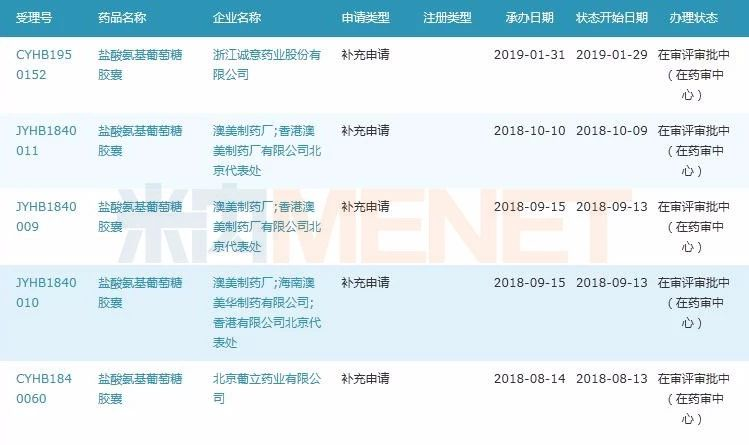
Figure 3: Supplementary Application Status for the Consistency Evaluation of Glucosamine Hydrochloride Capsules
(Menet Network MED Drug Review Database 2.0)
Glucosamine Hydrochloride Capsules are anti-inflammatory and antirheumatic agents. In 2017, sales at public medical institution terminals in China reached RMB 460 million, with Aomei Pharmaceutical Factory accounting for over 51%, Beijing Kangbide Pharmaceutical Co., Ltd. for 20%, Zhejiang Chengyi Pharmaceutical Co., Ltd. for 20%, and Beijing Puli Pharmaceutical Co., Ltd. for approximately 8%. Currently, in addition to Aomei Pharmaceutical Factory, both Zhejiang Chengyi Pharmaceutical Co., Ltd. and Beijing Puli Pharmaceutical Co., Ltd. have submitted applications for consistency evaluation, and the relevant acceptance numbers are under review and approval.
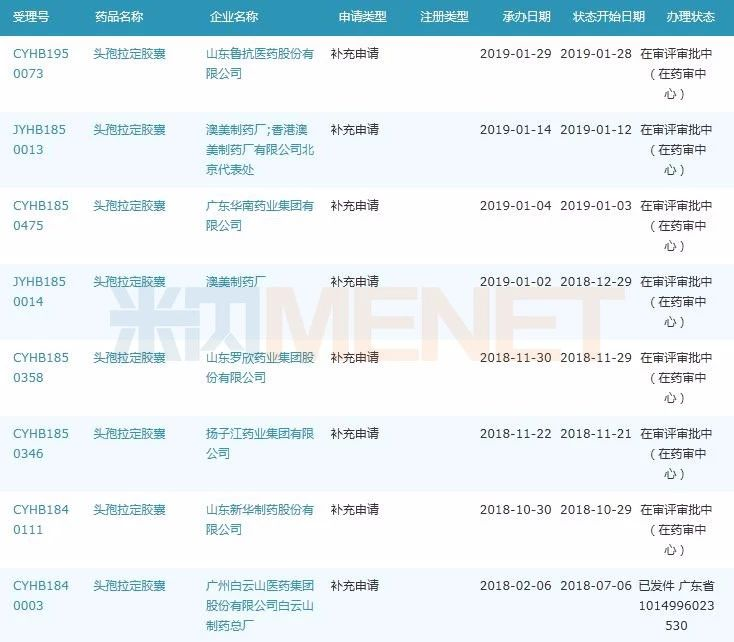
Figure 4: Status of Supplementary Applications for the Consistency Evaluation of Cefradine Capsules
(Menet Network MED Drug Review Database 2.0)
Cefradine capsules are systemic antibacterial agents. In 2017, sales at the terminal of public medical institutions in China reached RMB 338 million. In terms of market share, Hunan Kelun Pharmaceutical accounted for over 20%, while Yangtze River Pharmaceutical Group, Shandong Luoxin Pharmaceutical Group, Shandong Lukang Pharmaceutical, and Bristol-Myers Squibb each held more than 10%. Currently, in addition to Ausome Pharmaceutical Factory, the supplemental applications for consistency evaluation submitted by Shandong Lukang Pharmaceutical, Guangdong South China Pharmaceutical Group, Shandong Luoxin Pharmaceutical Group, Yangtze River Pharmaceutical Group, and Shandong Xinhua Pharmaceutical are all under review and approval. The acceptance number for Guangzhou Baiyunshan Pharmaceutical Group has been issued, with the Center for Drug Evaluation (CDE) recommending non-approval.
This imported generic drug is deemed to have passed the consistency evaluation.
Figure 5: Approval Status of Cefazolin Sodium for Injection/Sodium Chloride Injection

(Menet Network MED Drug Review Database 2.0)
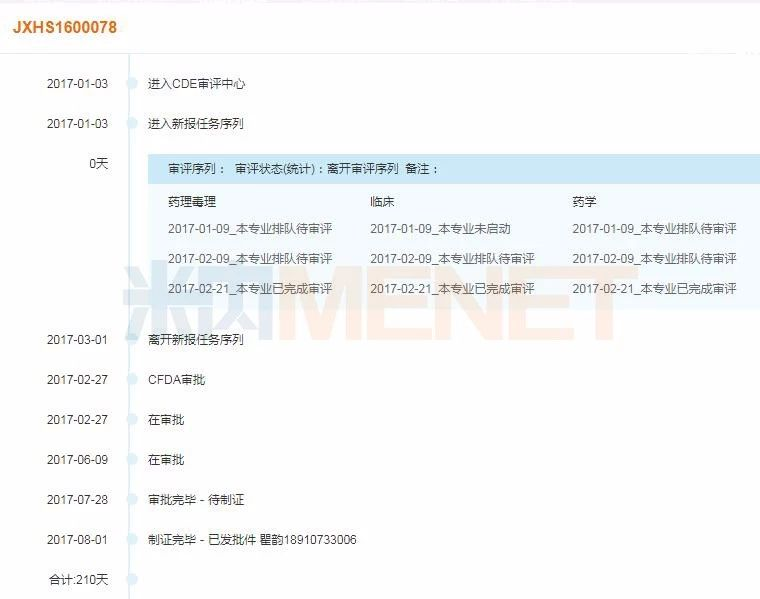
Figure 6: Review Timeline for Cefazolin Sodium for Injection/Sodium Chloride Injection
(Menet Network MED Drug Review Database 2.0)
Cefazolin Sodium for Injection/Sodium Chloride Injection is a systemic antibacterial agent. Otsuka Pharmaceutical submitted the application for this imported generic drug under Category 5.2 registration. On July 26, 2017, it was included in the Catalogue of Marketed Drugs in China, classified as a generic drug approved under the new chemical drug registration classification, and deemed to have passed the consistency evaluation.
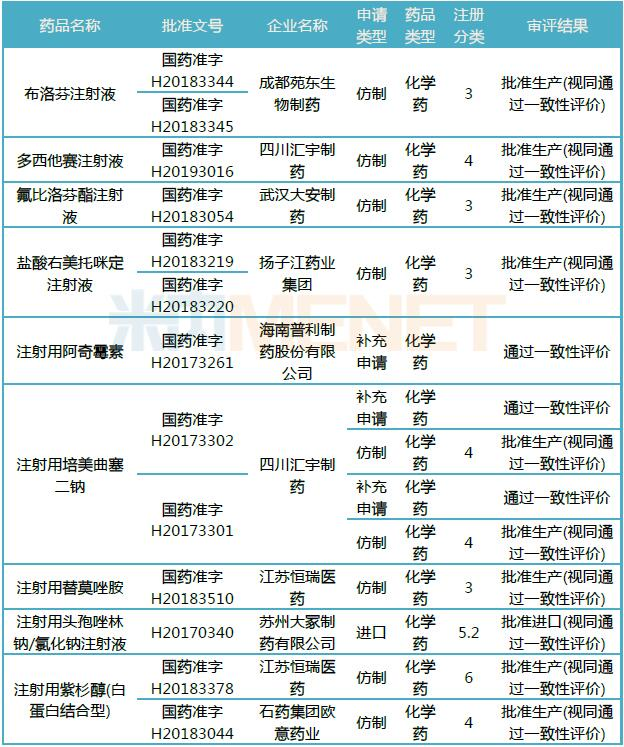
Table 3: Injectable Drugs Currently Approved or Deemed to Have Passed the Consistency Evaluation
(Meneth Network MED Drug Review Database 2.0)
Progress in the consistency evaluation of injections has been slow. According to data from Menet, currently, nine injections have passed or are deemed to have passed the consistency evaluation, eight of which are generic drugs approved under the new chemical drug registration classification (both the Class 4 generic application and the supplemental application for pemetrexed disodium for injection have been approved). This indicates that national-level review and regulatory oversight of injections are gradually intensifying.
Conclusion
Currently, the consistency evaluation of generic drugs in China is becoming increasingly intense. With the further advancement of volume-based procurement, winning bidders have begun to reap tangible benefits, and support for consistency evaluation from both within and outside the industry has gradually increased. While we closely monitor how domestic generic drugs challenge originator products and compete for market share, imported generic drugs from foreign-funded and joint-venture pharmaceutical companies are also poised to enter the fray. This indicates that competition in China’s generic drug market will become even fiercer in the future. High-quality generic drugs will gradually become the mainstay of the market, driving the development of China’s pharmaceutical industry. The “4+7” volume-based procurement document states that originator drugs, reference listed drugs, and products that have passed or are deemed to have passed consistency evaluation are all eligible to apply. This is expected to become the entry ticket for enterprises bidding in subsequent centralized procurement rounds. As imported generic drugs also participate in consistency evaluation, what challenges will arise in the subsequent centralized procurement of varieties? We wait and see.
Source: Menet Database
Data statistics as of May 9, 2019