MicroCyto raises RMB 300M Series A+, launches AI biocomputing platform PoseX at ICLR 2026

MicroCyto
Synthetic Biology Technology Developer
Recently, MicroCyto announced the completion of a RMB 300 million Series A+ financing round, with participation from Henan Investment Group's Huirong Fund and Mr. Tan Ruiqing. Previously, Henan Investment Group had already established a deep presence in the AI infrastructure sector, spanning from investing in chips to holding controlling stakes in hyperscale computing power, and further to the comprehensive integration of HALO assets (Heavy Assets, Low Obsolescence), providing ample power and computing support for AI applications across various scenarios.
This financing round will empower MicroCyto to further expand the application boundaries of AI-driven biocomputing, increase investment in core technology research and development and scenario-based implementation, and further strengthen MicroCyto's technological leadership and industry standing in the field of AI-enabled biomanufacturing.
In January 2026, MicroCyto, in collaboration with globally renowned research institutions such as Stanford University, Princeton University, Peking University, ByteDance, and NVIDIA, published its latest achievement, PoseX, at ICLR 2026, a premier academic conference in the field of artificial intelligence. The company has also been invited to deliver a special academic presentation on PoseX at ICLR 2026. PoseX is an open collaboration platform designed for scientists worldwide, aimed at solving molecular docking challenges in real-world scenarios, providing the fairest and most authentic capability assessments for different docking algorithms and models, and offering the most robust digital foundation for biomanufacturing, bio-based materials, and industrial enzyme design.
Introduction: From Experience to Rationality, the "Digital Foundation" of Biomanufacturing
As life sciences enter the era of synthetic biology characterized by "on-demand design," accurately predicting the binding mode between a molecule (ligand) and a protein (receptor) is akin to searching for a "key" that unlocks the door to the life factory at the microscopic level. This process is known as protein-ligand docking.
In the past, this task relied primarily on scientists' empirical knowledge or computationally expensive physical simulations. However, the complexity of biological systems often exceeds expectations: proteins are not static locks but rather "jelly-like" structures that constantly change shape. How can the binding mode between molecules and proteins be accurately predicted even when protein structures are dynamic? This is widely recognized as a "deep-water" challenge in biopharmaceutical R&D and industrial enzyme engineering.
The release of PoseX is expected to accelerate the breakthrough of the limitations of traditional molecular docking methods in dynamic protein scenarios. With its AI-driven precise prediction capabilities, it aims to overcome this long-standing core challenge, making on-demand design of molecule-protein binding a reality and bringing fundamental technological innovation to synthetic biology, new drug discovery, and enzyme engineering.
Industry Pain Points: Why is "Practical" Integration So Difficult?
In the field of molecular docking, there are two scenarios:
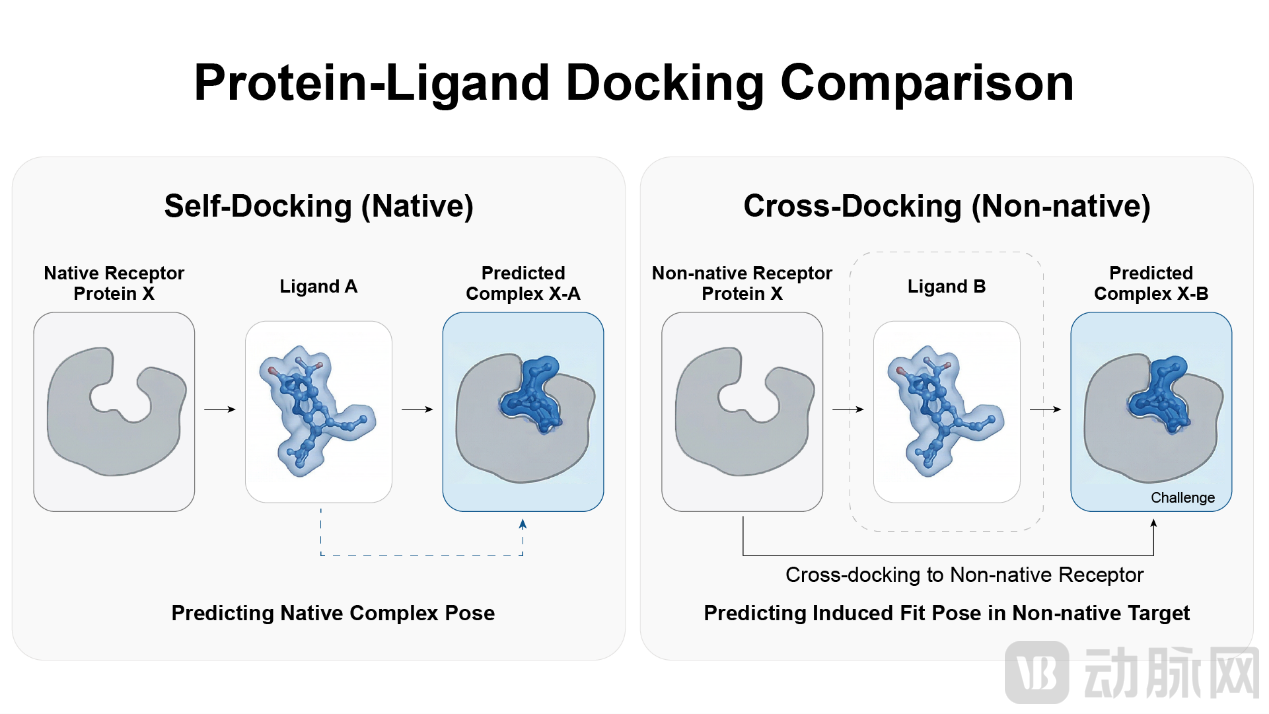
1. Self-docking: Take the ligand from a co-crystal structure and re-dock it back into its original, perfectly fitting pocket. This is like placing the final piece of a puzzle—as long as the shape matches, everything falls into place.
2. Cross-docking: You only have the conformation of the protein when it was co-crystallized with ligand A, but you need to dock ligand B into it. Side chains must rotate, the backbone must "breathe," and the pocket shape may be completely reshaped—this is the true battleground of enzyme design and drug discovery.
For a long time, the industry has lacked a unified, high-quality benchmark to evaluate the performance of various algorithms in cross-conformation scenarios. Many algorithms that perform well under experimental conditions fail when faced with real-world scenarios. The emergence of PoseX is precisely aimed at defining a "real-world standard." In this study, the researchers not only constructed a high-difficulty dataset specifically designed for cross-docking, but also conducted a rigorous "battle royale" evaluation of 24 mainstream methods—ranging from established approaches such as Glide and AutoDock Vina to emerging stars such as AlphaFold3, Boltz, and Chai.
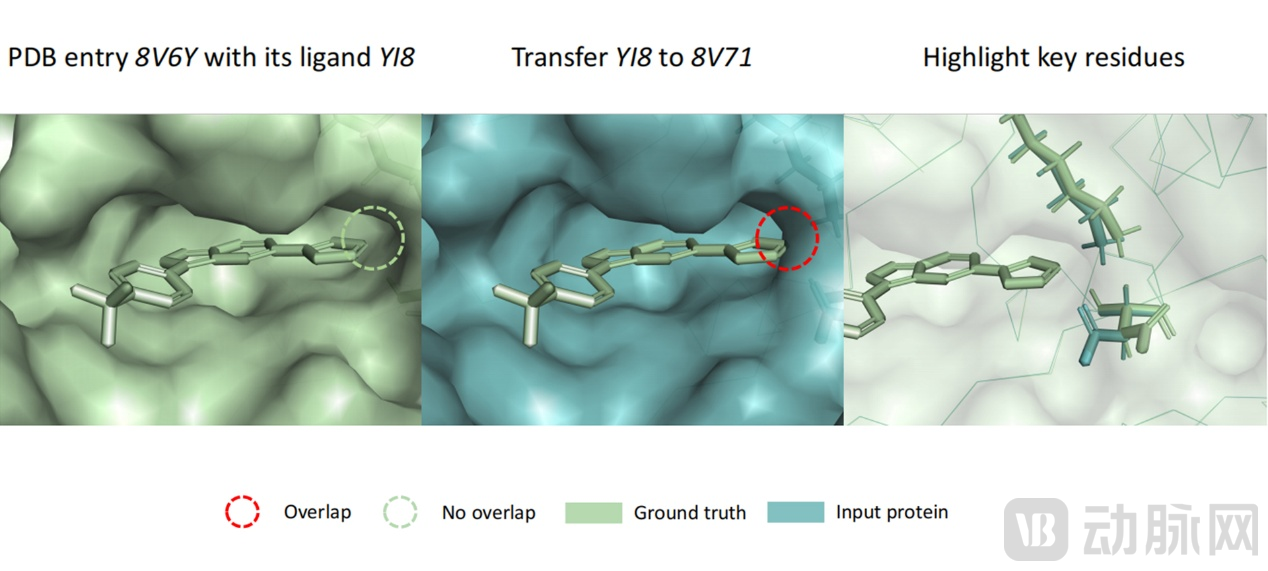
Why is cross-docking so difficult? Figure S12 in the original paper provides a vivid example. When ligand YI8 is transferred from its co-crystal structure 8V6Y to the protein 8V71, a severe steric clash occurs—the position where the ligand originally fit perfectly is now "blocked" by side chains in the new protein conformation. All physics-based methods failed on this case (RMSD ≥ 2Å), while SurfDock and AlphaFold3 successfully predicted the correct pose.
In-depth Analysis: Technical Breakthroughs of the PoseX Platform
As a significant step in MicroCyto's strategic expansion into "AI + synthetic biology," the PoseX platform demonstrates exceptional depth and breadth of expertise:
1Fill the Gap: The World's First Large-Scale Cross-Docking Benchmark
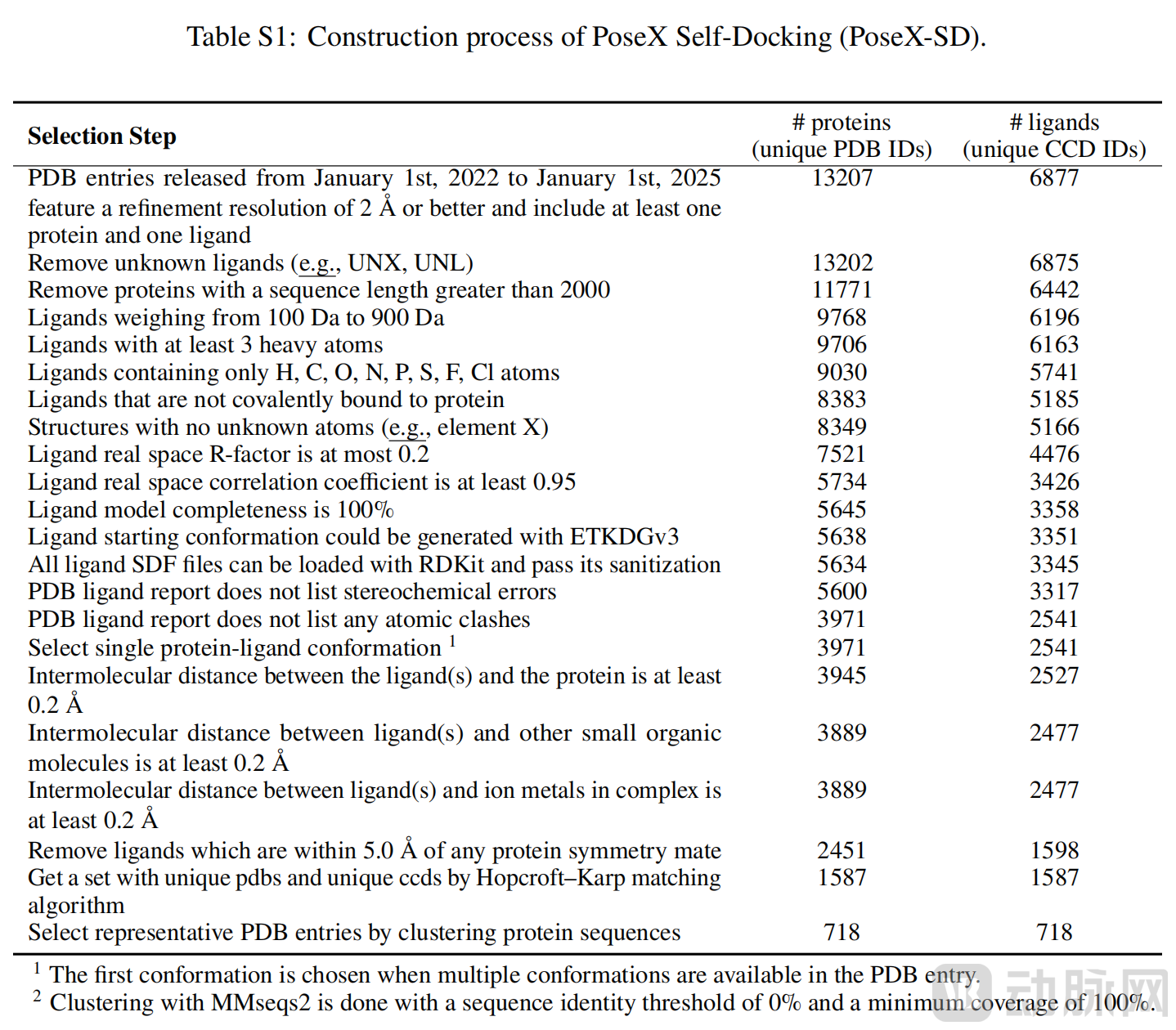
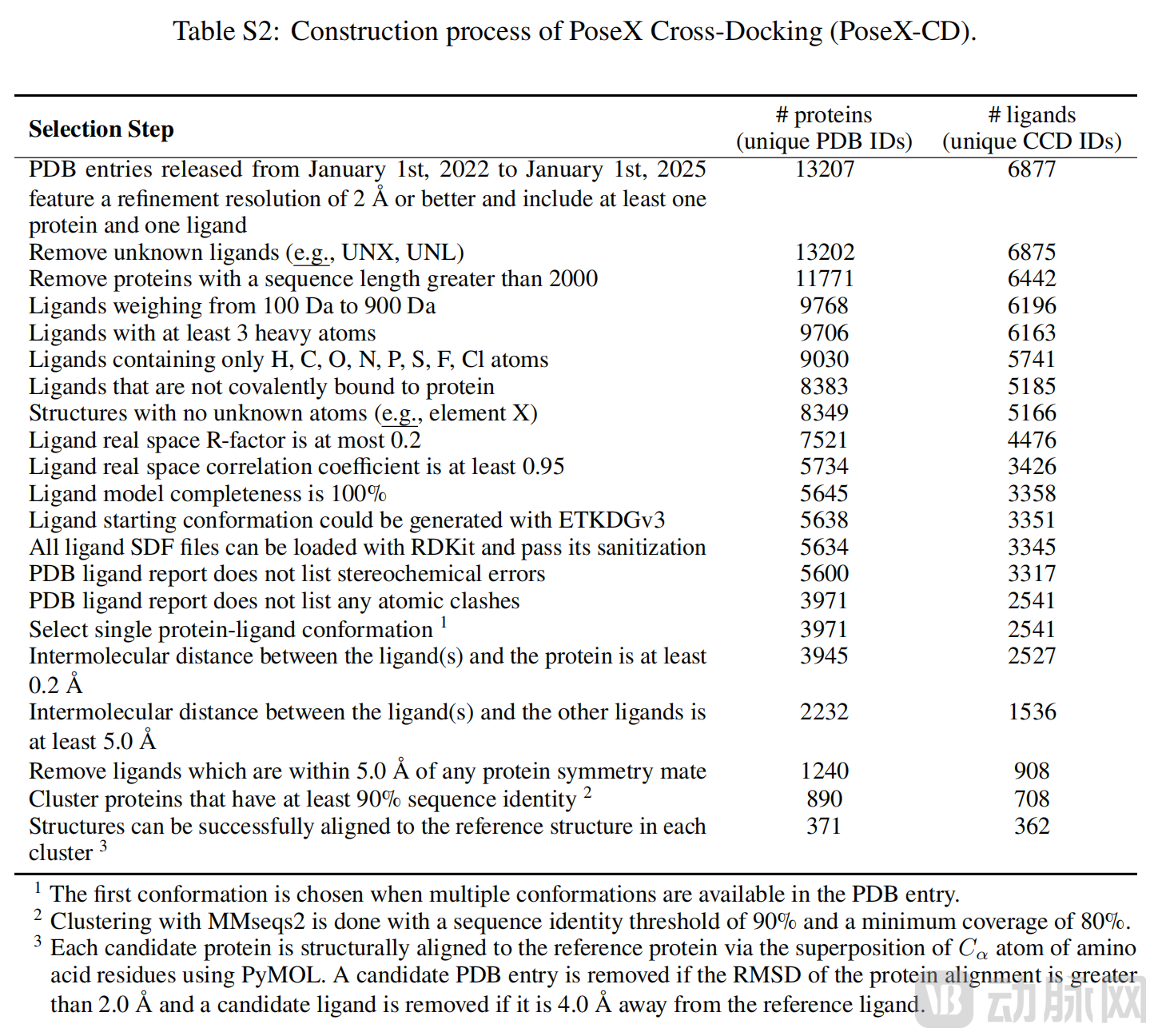
PoseX has respectively constructed a self-docking dataset containing 718 samples and a cross-docking dataset containing 1,312 samples. This represents the world's most realistic open-source docking benchmarking platform in terms of alignment with real-world R&D scenarios and data quality, addressing the long-standing issues of homogeneous benchmark data, poor generalizability, and deviation from practical application scenarios.
2Full Algorithm Coverage: The "Showdown" Between AI and Physical Methods
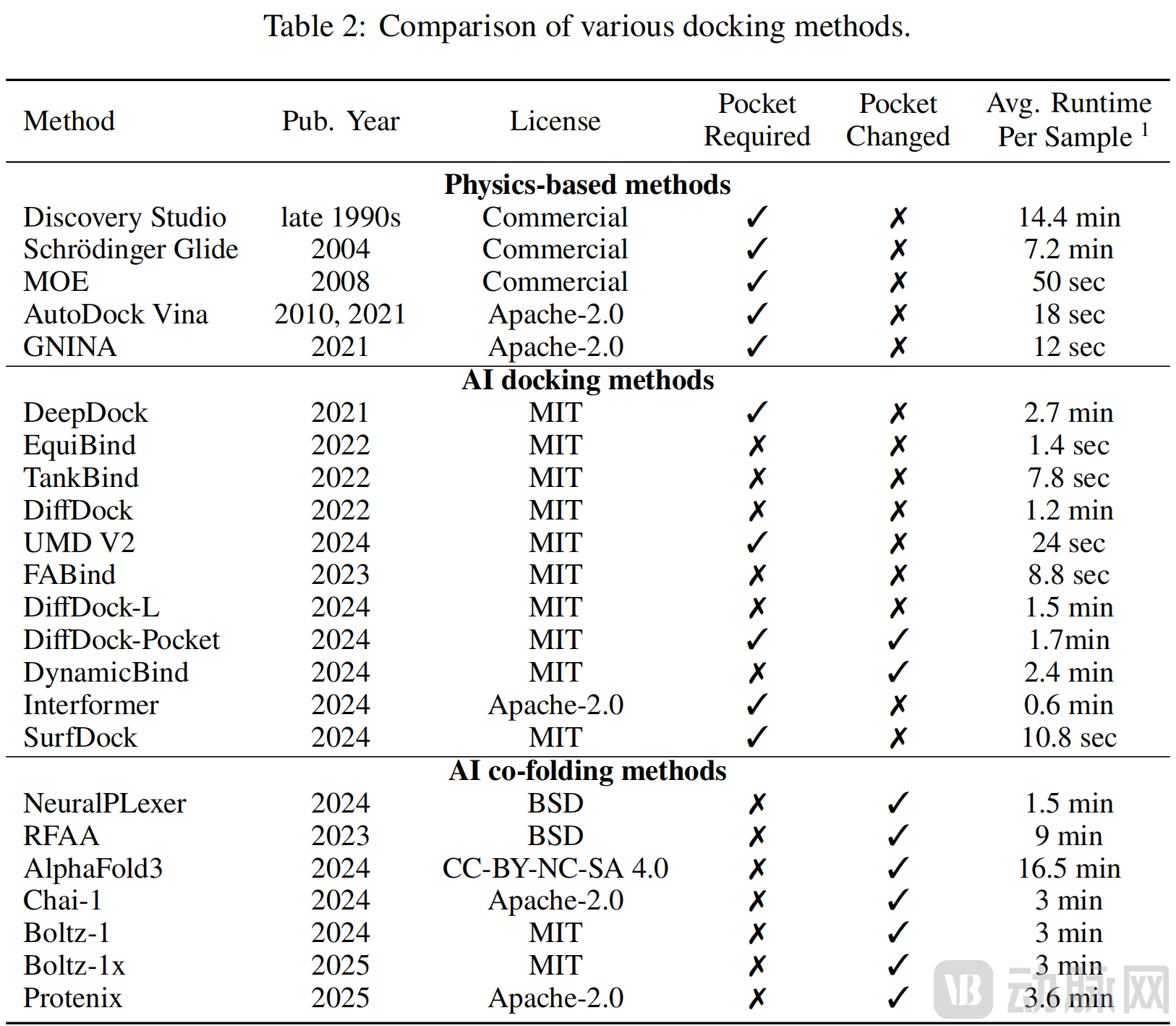
On the PoseX platform, we have integrated 24 representative algorithms, covering three major categories:
Physics-based methods: Industry benchmarks such as Schrödinger Glide, MOE, Discovery Studio, and others.
AI-based docking methods: Deep learning-powered approaches such as DiffDock, SurfDock, and others.
AI-based co-folding methods: Industry-disrupting approaches such as AlphaFold3, RoseTTAFold-All-Atom, Boltz, Chai, and others.
3Core Discovery: AI Algorithm Surpasses Traditional Physical Methods for the First Time
Under PoseX's rigorous evaluation, we have reached a landmark conclusion: state-of-the-art AI-based docking methods (such as SurfDock) and co-folding methods (such as AlphaFold3) have comprehensively surpassed the accuracy and robustness of physics-based models that have dominated the industry for decades, particularly when tackling the most challenging cross-docking tasks. This finding provides a strong theoretical foundation for the industry's full-scale transition to an "AI-native" R&D workflow.
3.1 Overall Ranking: Who is the King of Cross-Docking?
|
|
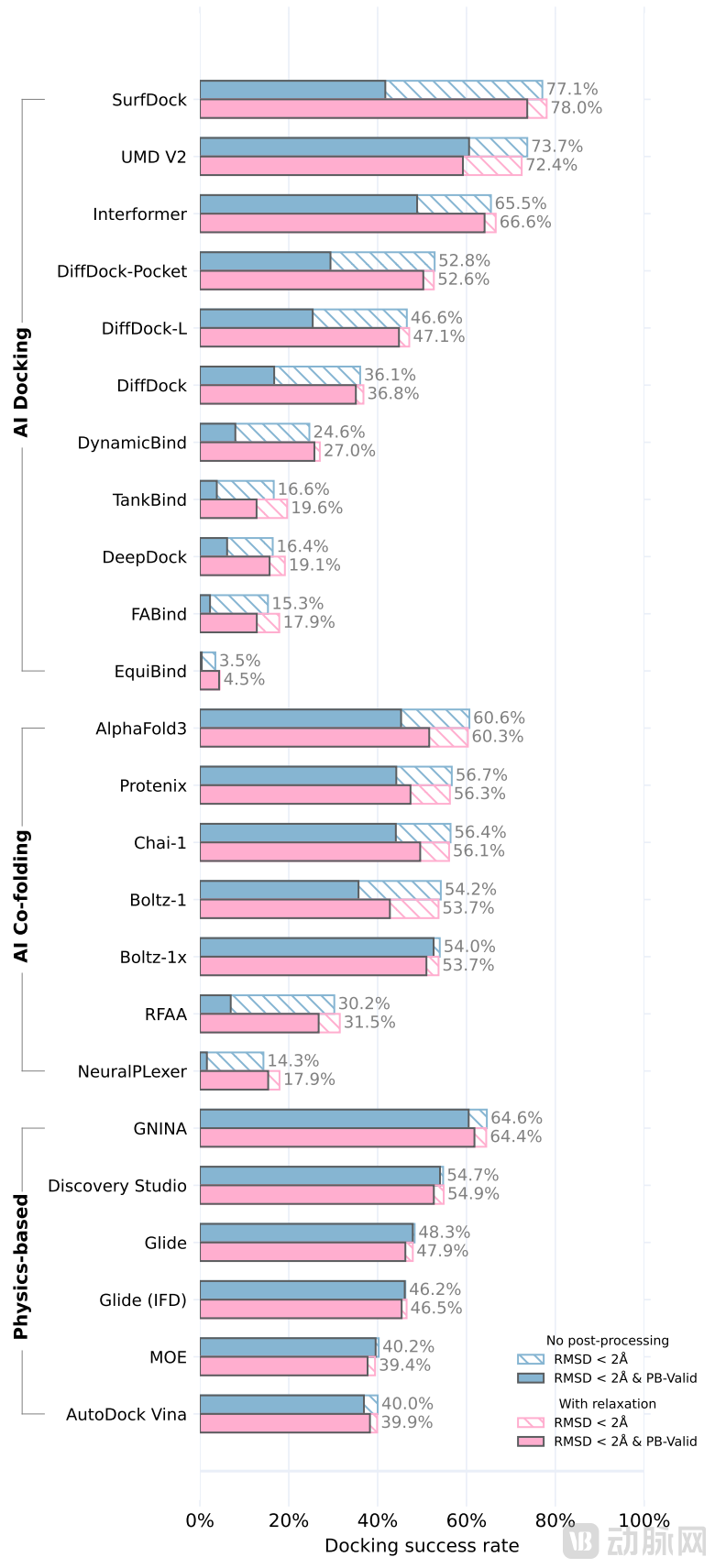
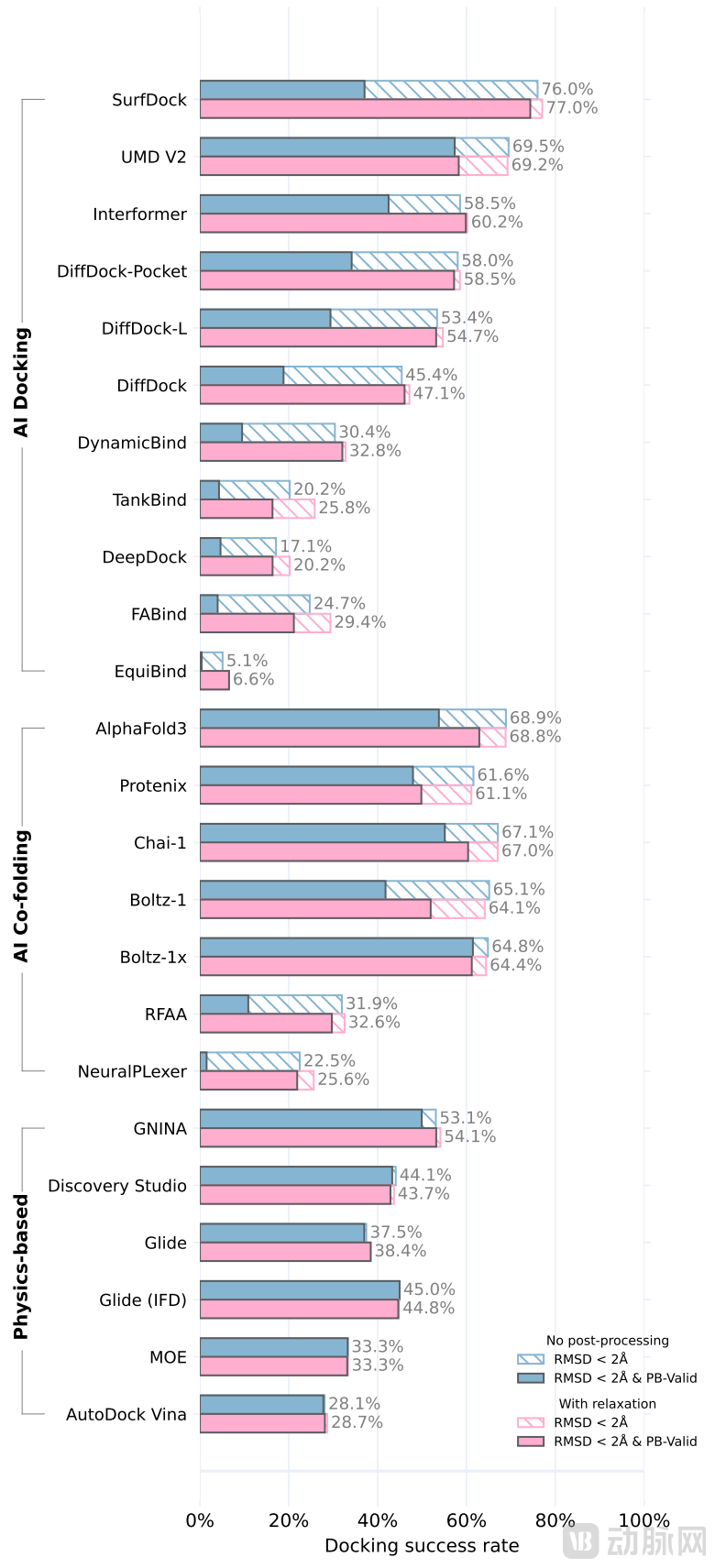
Self-docking Evaluation Results and Cross-docking Evaluation Results
Three Key Results:
AI leads across the board: Among the top 9 methods, 5 are AI-based docking methods and 4 are AI-based co-folding methods.
SurfDock stands far ahead: It outperforms the second-ranked Uni-Mol by nearly 8 percentage points, with exceptionally fast runtime (10.8 seconds per sample).
Physics-based methods lag significantly: The best among them, GNINA, achieves only approximately 54%, trailing the top AI methods by about 20 percentage points.
3.2 In-depth Exploration: Does AI Truly Understand Integration, or Is It Just "Memorizing Questions"?
To further analyze the generalization capability of AI models, the study also examined the impact of pocket similarity between the evaluation data and the training data on each model. Regardless of the pocket, physics-based methods consistently maintain relatively stable prediction results—a unique advantage of physics-based approaches. In contrast, most AI methods, such as DiffDock and AlphaFold3, exhibit a sharp decline in performance on novel pockets. Notably, SurfDock demonstrates the best generalization among AI methods, with prediction results superior to those of physics-based docking methods even in unseen pocket scenarios.
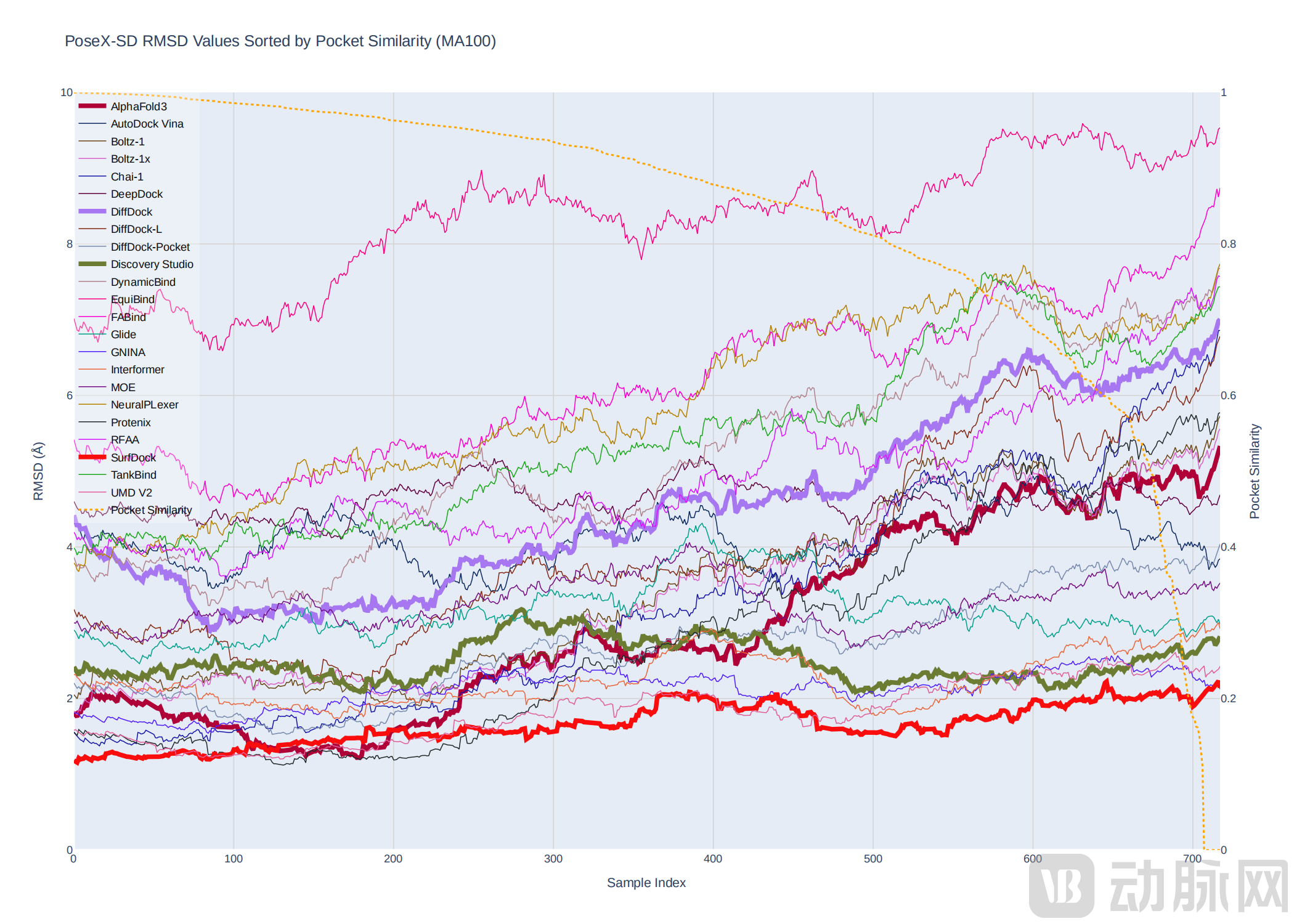 Evaluation Results Sorted by Pocket Similarity on PoseX-SD
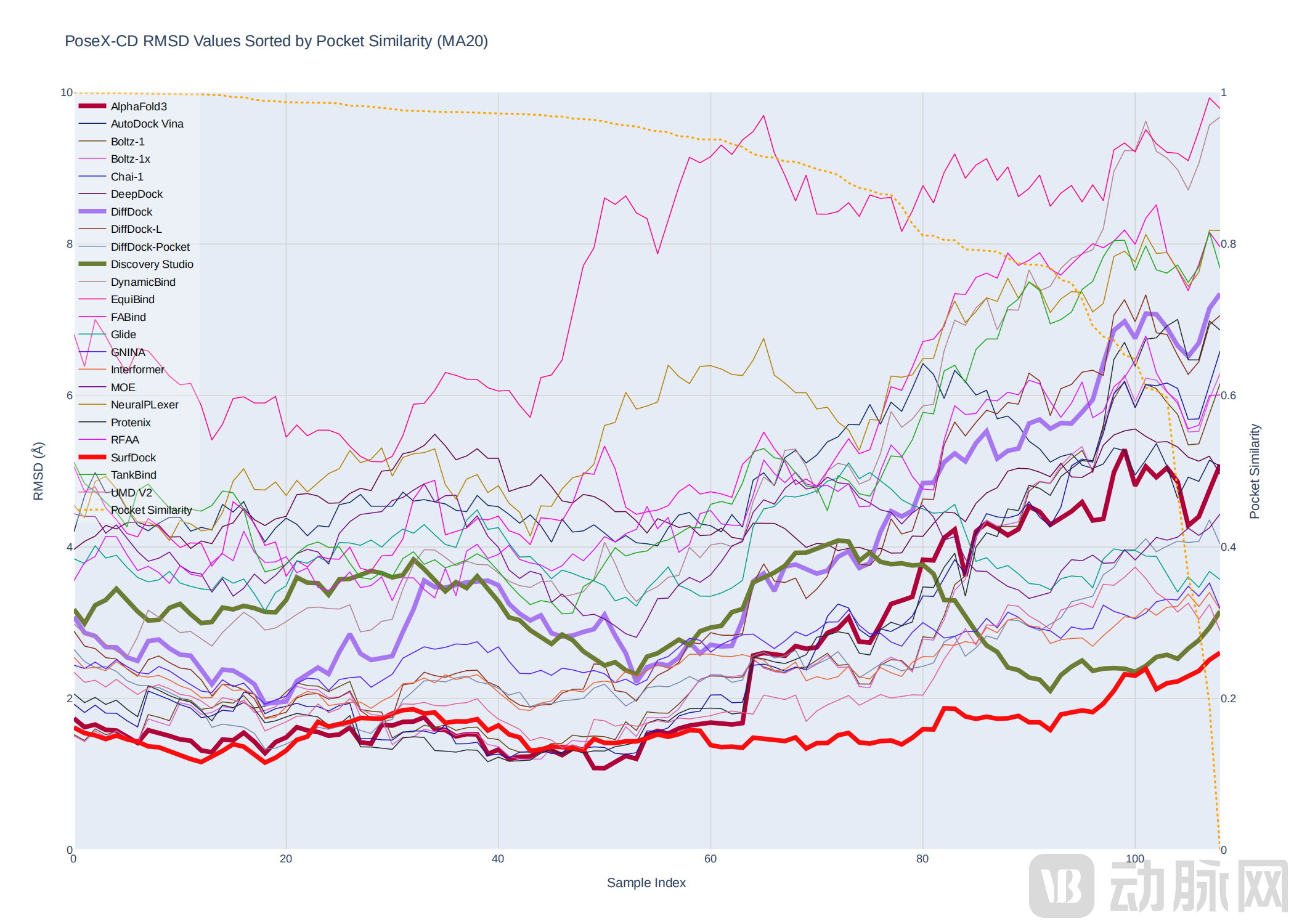 Evaluation Results of PoseX-CD Sorted by Pocket Similarity
3.3 The Role of Pocket Information
The study found that explicit modeling combined with pocket information significantly improves docking performance. Current AI-based co-folding methods (such as AlphaFold3 and Chai-1) perform blind docking and do not require pocket specification. In scenarios where pocket information is provided, SurfDock achieves the highest success rate of 77.0%, followed by UMD V2. These methods benefit from pocket information to handle cross-conformational changes, and their performance surpasses that of physics-based methods. In the blind docking track, AlphaFold3 leads other models with a success rate of 68.8%.
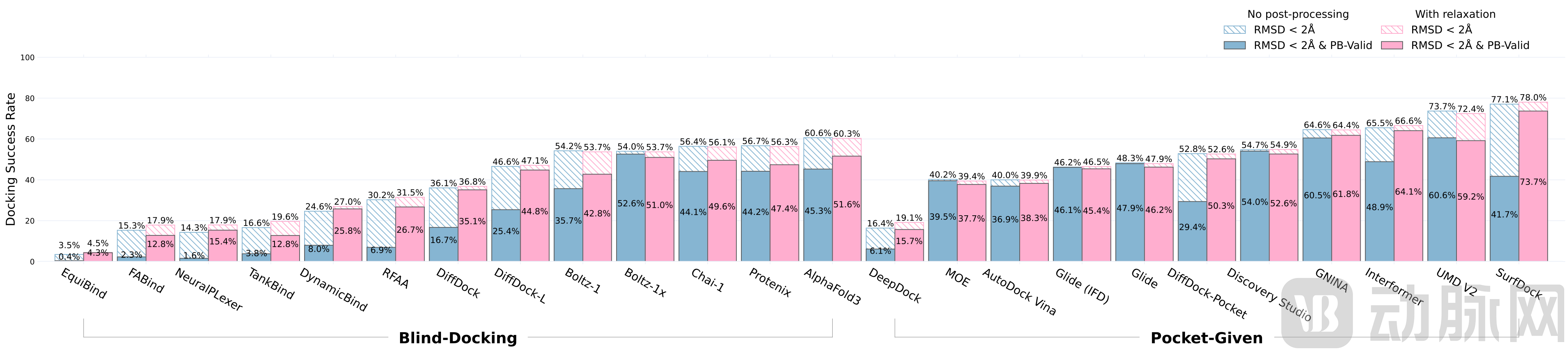 Designated Pocket/Non-designated Pocket Information in PoseX-CD Docking Evaluation Results
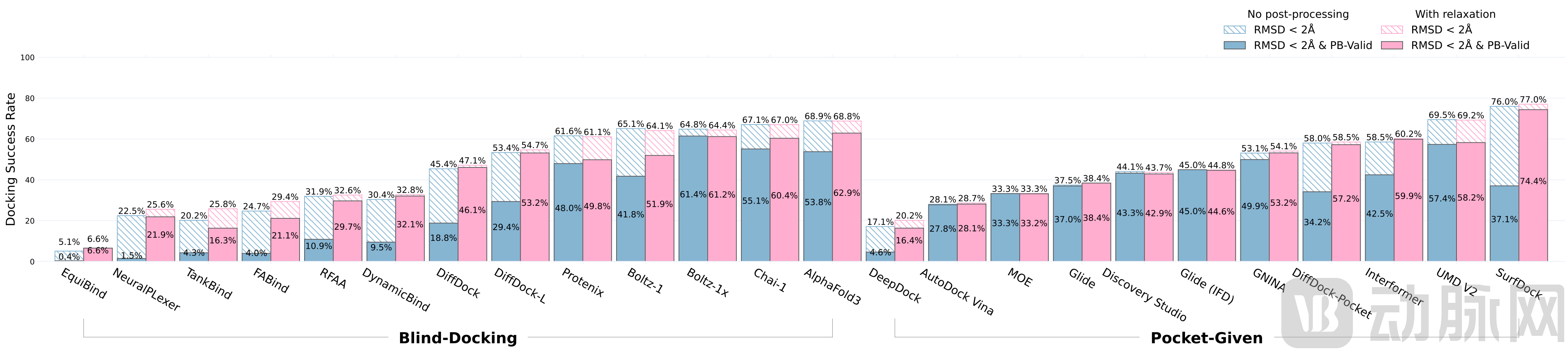 Designated Pocket/Non-designated Pocket Information in PoseX-CD Docking Evaluation Results
3.4 Benefits of Relaxation
In the field of protein-ligand docking, although AI methods demonstrate impressive speed and RMSD performance, the generated binding poses sometimes suffer from issues such as intramolecular or intermolecular clashes. To address this pain point in the field, the PoseX study proposes a high-quality relaxation post-processing module. Based on OpenMM, this module performs fully automated energy minimization and short-term molecular dynamics simulations to intelligently repair structural details of proteins and small molecules. After relaxation, SurfDock achieves a success rate of 78.0% on the PoseX self-docking (PoseX-SD) dataset and 77.0% on the more challenging cross-docking (PoseX-CD) dataset, setting new state-of-the-art (SOTA) benchmarks in both cases. Through relaxation, the physical validity of docking results is significantly improved, transforming AI predictions from "looks plausible" to "physically sound."
Application Prospects: Accelerating the "From 0 to 1" of Bio-based Products

The launch of the PoseX platform not only establishes a new standardized evaluation benchmark for the global protein-ligand docking field but is also rapidly transforming into a core competitive advantage for MicroCyto in the industrialization of synthetic biology.
Efficient Enzyme Evolution and "Super Catalyst" Design
In the field of enzyme engineering, accurately capturing the dynamic interactions between enzymes and substrates under different conformations is a core bottleneck. The high-precision AI algorithms screened by PoseX can accurately simulate protein conformational changes (cross-docking scenarios), helping us rapidly design "super enzymes" with high temperature resistance, high conversion rates, and high selectivity. The directed evolution process, which previously required multiple rounds of wet-lab iterations, can now achieve efficient screening and optimization in silico, significantly shortening the translation cycle from laboratory to industrial fermenter.
Metabolic Pathway Optimization and High-Value Bio-Based Product Development
For the production of various high-value-added products, PoseX can precisely locate key enzyme-substrate or enzyme-intermediate nodes within optimal metabolic networks. By integrating pocket information guidance and relaxation pose refinement, it enables metabolic reconstruction and bottleneck resolution. Whether in upstream pathway design or downstream product purification, PoseX seamlessly bridges "molecular-level optimization" with "industrial-scale amplification," driving breakthrough improvements in yield, purity, and cost metrics, and accelerating the otherwise lengthy product development cycle.
Significant Reduction in R&D Costs and Risks
Traditional wet-lab screening often takes months and incurs high costs, whereas PoseX-driven AI simulation combined with physics-based post-processing can compress this process to a few days or weeks. This not only significantly improves the return on investment (ROI) of biomanufacturing R&D but also substantially reduces failure risk, enabling more innovative ideas to move rapidly from "proof-of-concept" to "industrial application."