


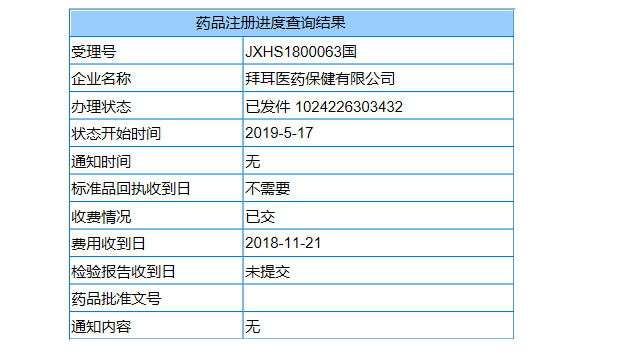
On May 17, the marketing authorization application (JXHS1800063) for Bayer’s new prostate cancer drug, Radium-223 Dichloride Injection, completed regulatory review and was dispatched, but failed to gain approval. The application was submitted on November 23, 2018, with the entire review process spanning 175 days.

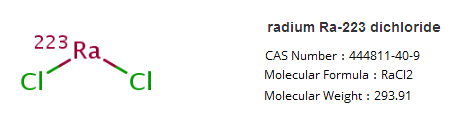
Radium-223 dichloride injection is an alpha-particle-emitting radiopharmaceutical therapeutic agent. Its active moiety mimics calcium ions and selectively targets bone by forming complexes with hydroxyapatite, thereby prolonging patient survival, reducing pain and discomfort associated with bone metastases, and improving quality of life. Radium-223 dichloride injection was first approved by the U.S. Food and Drug Administration (FDA) on May 15, 2013, under the brand name Xofigo, for the treatment of bone metastases in patients with castration-resistant prostate cancer.
In the phase 3 ALSYMPCA study, Xofigo combined with best supportive care (BSoC) prolonged overall survival by 3.6 months compared with placebo plus BSoC (14.9 vs. 11.3 months) and reduced the risk of death by 30%. Furthermore, compared with placebo, treatment with Xofigo delayed the time to first symptomatic skeletal event (15.6 vs. 9.8 months).
Xofigo’s peak sales were projected to reach $1.5 billion; however, global sales declined, amounting to €408 million in 2017 and €351 million in 2018.
Prostate cancer patients have a relatively longer survival period compared to those with other malignant tumors, but they are also prone to distant metastasis during long-term survival. The overall incidence of bone metastasis in castration-resistant prostate cancer is approximately 65%-75%, while in metastatic castration-resistant prostate cancer (mCRPC), the incidence of bone metastasis exceeds 90%. Patients with bone metastases often experience skeletal-related events, which increase the risk of death in prostate cancer patients by 28%.
Current pharmacological treatments for bone metastases in prostate cancer primarily include classic bisphosphonates, RANK inhibitors, and radiopharmaceuticals. Previously, radionuclide-based radiopharmaceuticals were associated with significant adverse effects, and radiotherapy was not routinely recommended for patients with prostate cancer. With a deepening understanding of radionuclides, radiopharmaceuticals have once again come into focus.
Radiopharmaceuticals were a major hotspot in 2018. Following Xofigo, the FDA approved Advanced Accelerator Applications’ 177Lu-oxodotreotide in January 2018 for the treatment of somatostatin receptor-positive gastroenteropancreatic neuroendocrine tumors; Novartis subsequently acquired Advanced Accelerator Applications for $3.9 billion in early October 2018. Having entered the radiopharmaceutical field through this acquisition, Novartis further strengthened its radiopharmaceutical pipeline by acquiring Endocyte on October 18, 2018, for $2.1 billion, thereby gaining access to Endocyte’s first-in-class asset, 177Lu-PSMA-617, which was then in Phase III clinical trials for the treatment of metastatic castration-resistant prostate cancer.