

Signing Overseas, Complementary Advantages: China-produced BNCT Treatment Enters Fast Lane of Development!

HBNCT Technology
Boron Neutron Capture Therapy (BNCT) Technology Developer
VCBeat learned that at the 2026 China Medical Equipment Exhibition, Huaboring Neutron, a leading company in China's Boron Neutron Capture Therapy (BNCT) industry chain, made a significant appearance with its self-developed accelerator boron neutron capture therapy full-process solution.
During the exhibition, Huaboron Neutron held a press conference themed "Exploring New Frontiers: A New Chapter in Clinical Applications," systematically presenting to the industry for the first time its complete solution pathway from high-end equipment manufacturing to clinical applications. Currently, the first BNCT device HyBorSys developed by Huaboron Neutron...®Completed registration inspection and entered the clinical trial phase. This marks the official entry of the fully autonomous, domestically produced, full-process BNCT precision treatment solution into the "fast track" of clinical verification.
BNCT is known as the "Fifth Therapy for Cancer," supported by complex technical principles. This therapy enriches tumor cells with boron drugs containing the stable isotope 10B, then irradiates them with an epithermal neutron beam to induce the 10B(n,α)⁷Li nuclear fission reaction. This releases high-linear energy α particles and lithium nuclei within the tumor cells, achieving "point-to-point" strong destruction while causing very limited damage to surrounding normal tissues.
From the perspective of technical implementation, the clinical application of BNCT faces three core challenges: the miniaturization and beam stability of accelerator neutron sources; the safety and efficacy of boron carriers; and the multi-physics coupling computational capability of treatment planning systems (TPS).
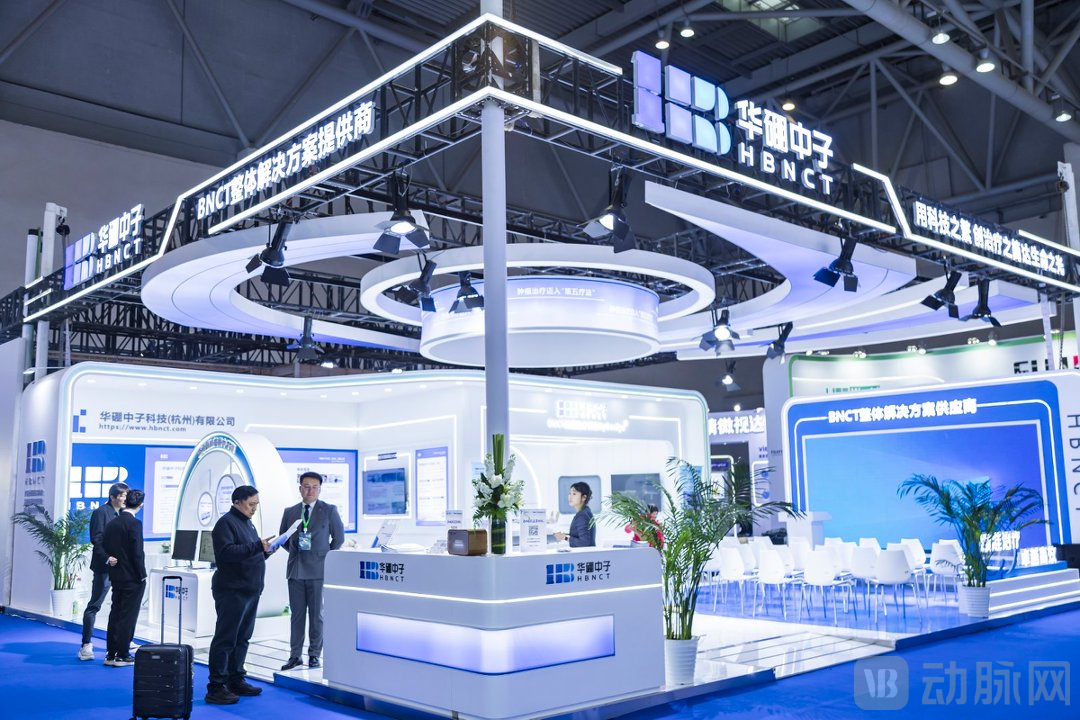
Huaborn NeutronThe team has built a full-chain independent R&D system of "equipment-drugs-software":
· The equipment adopts the high-intensity proton RFQ accelerator technology, with a proton power of 35kW, enabling rapid delivery of the therapeutic dose;
· In terms of drugs, its self-developed second-generation boron drug has completed the injectable Borofalan (BPA), which is currently undergoing Phase I clinical trials of a drug-device combination, making progress in the utilization rate of 10B and cost control.
· On the software side, an independent Monte Carlo physics engine is adopted to build a full-process solution covering multi-modal image processing, intelligent target area delineation, etc., with internationally leading computing accuracy and efficiency.
Globally, BNCT is experiencing a critical leap from single-point technological breakthroughs to clinical validation.
Clinical experts Professor Qiu Jie and Professor Wei Qichun pointed out that the unique value of BNCT lies in its combination of targeting capability and cellular-level lethality. This "drug-device synergy" treatment model poses new requirements for the traditional radiotherapy system while also bringing new opportunities. They emphasized that as domestically produced equipment enters the clinical trial stage, it is now urgent to establish clinical pathways, dosimetry protocols, and efficacy evaluation systems tailored to the characteristics of BNCT, widely expand the boundaries of indications, and transform this cutting-edge technology into clinically accessible solutions for patients.
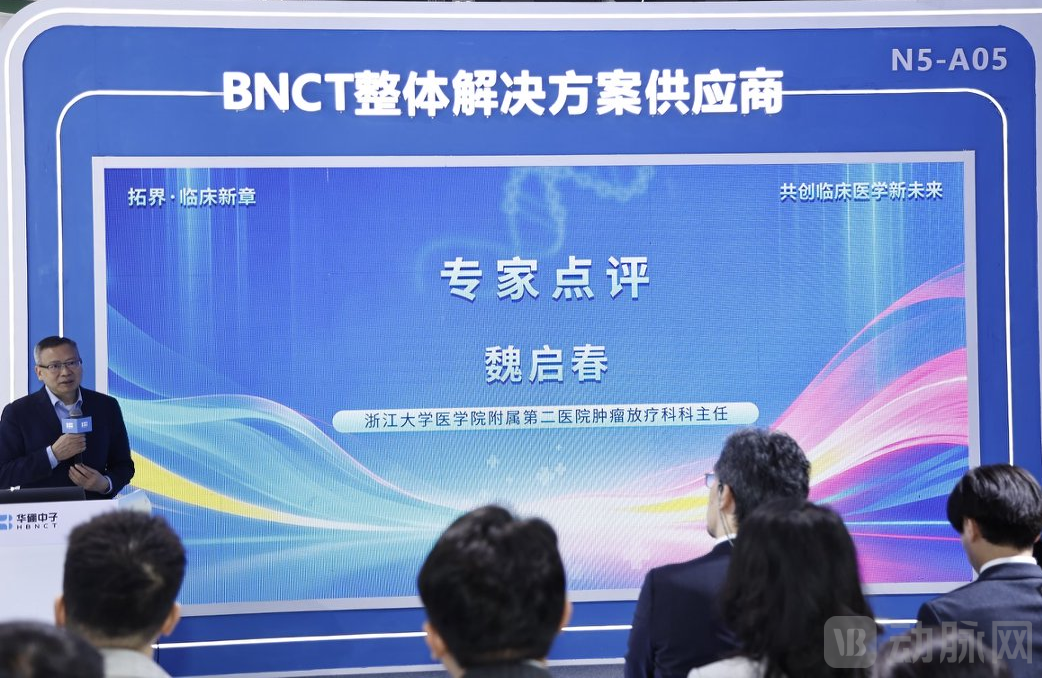
"From the laboratory to the bedside, the 'last mile' of BNCT is being accelerated." Professor Wang Sheng, founder of Hua Peng Neutron, stated, "We not only focus on the advancement of equipment but are also committed to exploring the potential of BNCT in the treatment of more solid tumors. In the future, relying on our open platform, we will collaborate with top global clinical centers to expand the indications of BNCT in areas such as glioma, melanoma, breast cancer, and lung cancer, truly achieving 'Expanding Boundaries: A New Chapter in Clinical Applications'."
From the perspective of clinical value, the differentiated advantages of BNCT are mainly reflected in its potential efficacy for refractory, recurrent, and infiltrative tumors. International clinical research literature has shown that BNCT has accumulated preliminary clinical evidence in areas such as glioblastoma and head and neck tumors. Taking the real-world research results of BNCT used in Japan for treating head and neck tumors as an example, among the 69 patients included (aged 40-89 years, median age 71; 43 males, 26 females), a total of 72 BNCT treatments were completed, with a median observation period of 15 months. The results showed 32 cases of complete response (CR), 26 cases of partial response (PR), and 10 cases of stable disease (SD). The objective response rate (ORR) was as high as 80.5%, fully demonstrating its therapeutic potential in complex cases.
Currently, for BNCT to truly integrate into the mainstream cancer treatment system, more high-quality randomized controlled clinical trial data are needed to provide evidence-based medical support. Huaborn Neutron has officially entered the registered clinical trial phase for its clinical research in areas such as recurrent head and neck tumors. This means that after achieving leading equipment technology, Huaborn Neutron is now committed to using solid clinical data to verify and demonstrate the actual efficacy of BNCT.
As China-produced BNCT equipment gradually enters the registration clinical trial phase, China's BNCT is transitioning from equipment self-sufficiency to a new stage of clinical data validation. On December 26, 2025, the National Medical Products Administration officially released the "Priority Review List for High-End Medical Devices (2025 Edition)," with the Boron Neutron Capture Therapy (BNCT) system being formally included in this priority review list. Prior to this, the National Medical Products Administration had specifically convened a BNCT system advancement meeting, calling for enhanced collaboration between drug and device evaluation processes, and urging full efforts to accelerate the implementation of high-end medical equipment like BNCT while ensuring safety.
At a critical juncture in the rapid development of the industry, standardization has become a core issue determining whether BNCT can achieve long-term stability and success. Yang Yu, Director of the Shanghai Medical Device Inspection and Research Institute, pointed out that as BNCT equipment gradually moves from prototype development to registered products, there is an urgent need to establish a comprehensive standards system covering neutron source performance metrics, radiation safety, treatment planning system validation, and boron drug quality control. Through standardization leadership, it is expected to shorten the review cycle, reduce R&D costs, and lay a systemic foundation for multi-center clinical research and large-scale application of BNCT.
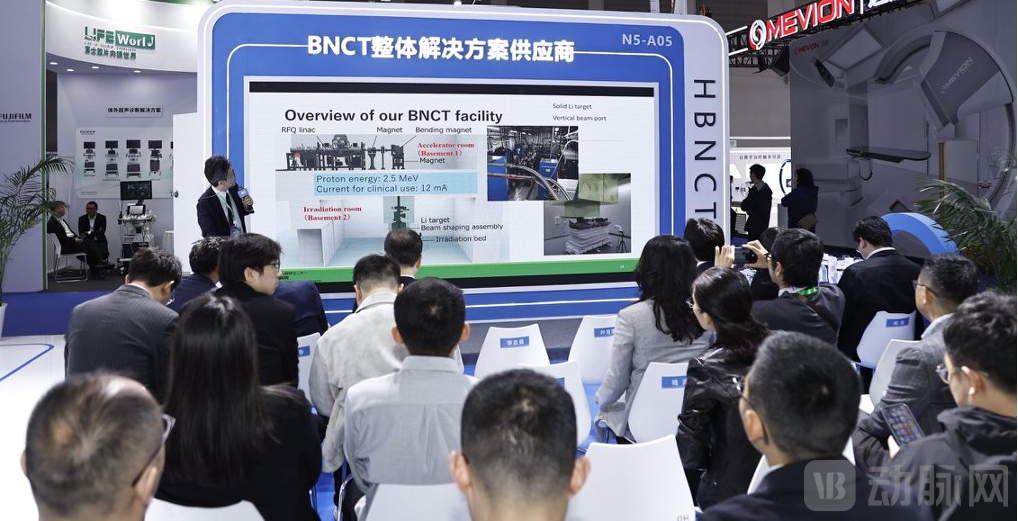
At the level of globalization layout, during this event, Professor Koji Igaki, former president of the Japan Boron Neutron Capture Therapy (BNCT) Association and director of the Radiation Oncology Department at the National Cancer Center (NCC) Japan, delivered a report on the international expansion of indications for boron neutron capture therapy. The NCC is the research institution with the most extensive studies on indication expansion worldwide. During this event, Professor Koji Igaki shared the immense potential of BNCT technology in treating melanoma, angiosarcoma, and thoracic-abdominal tumors. The equipment provider that NCC relies on, CICS Corporation, owns the only clinically used vertical treatment room BNCT system internationally, making it the equipment manufacturer with the broadest clinical indications for BNCT globally. As a subsidiary of ResortTrust, Japan's top medical care and wellness group, CICS has focused on BNCT R&D and clinical translation for nearly 20 years. With the mission "No loved ones will die from cancer," it has driven breakthroughs in multiple indications, becoming a benchmark force in the global BNCT industrialization.
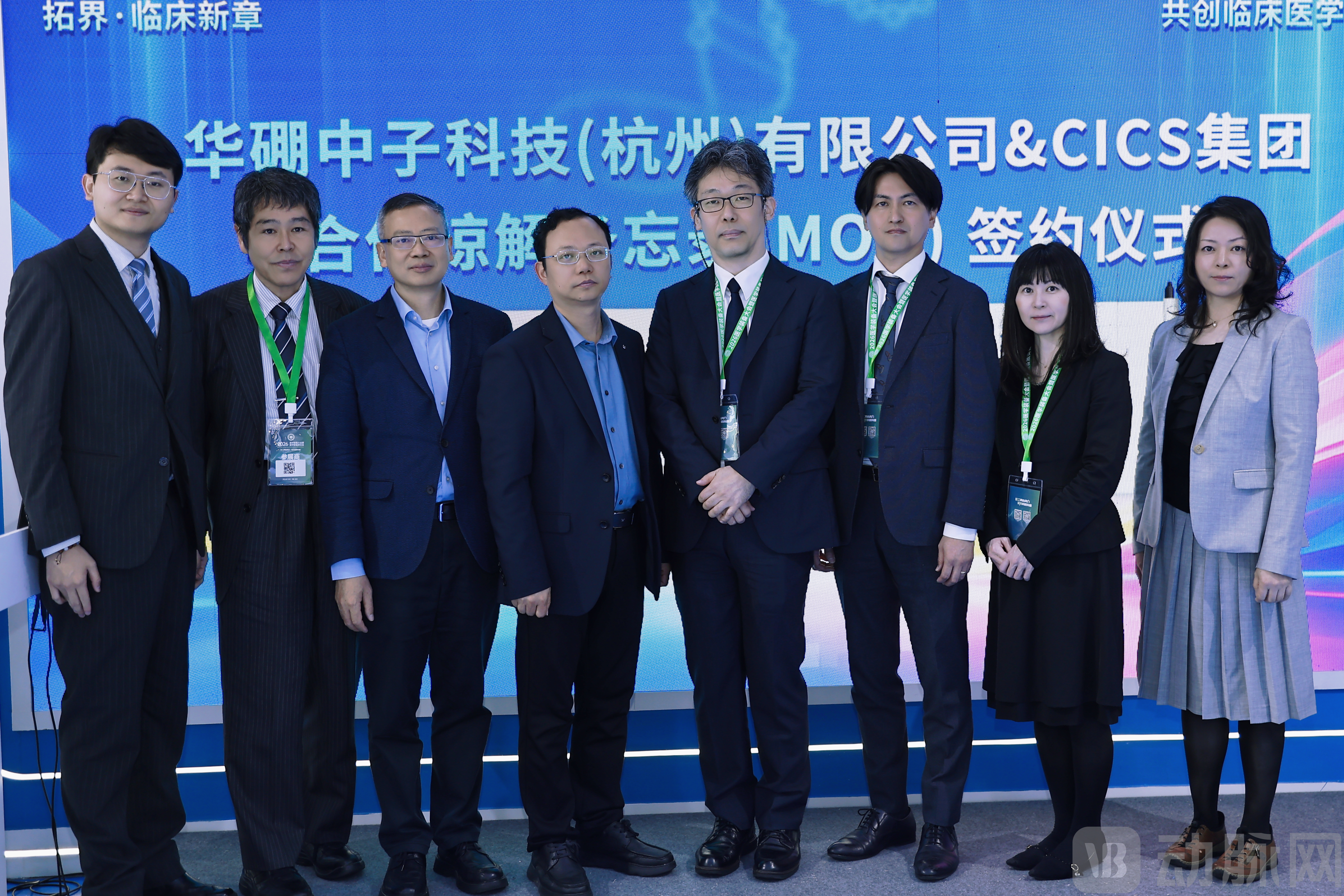
This time, Huaborn Neutron and CICS company representatives officially signed a Memorandum of Understanding (MOU) at the exhibition site.The two parties will engage in in-depth cooperation on the overseas market expansion of BNCT equipment, international multicenter clinical research, and industrial chain resource integration, promoting the global expansion of indications for BNCT and facilitating the globalization of China's independently intellectual property-owned BNCT technology. This collaboration marks a new phase where China’s BNCT industry moves from domestic autonomous development to international collaborative progress, paving the way for high-end medical equipment under "Made in China" to explore overseas markets.
Looking ahead, the development of BNCT in China will depend not only on technological breakthroughs by individual enterprises but also on an innovative ecosystem that fosters collaboration among the government, industry, academia, research, and medical sectors. With more clinical trial data being released, continuous expansion of indications, and expedited approval pathways, BNCT is expected to shift from the "fast lane" to the "ultra lane," bringing new hope for truly precise treatment to patients with refractory tumors in China and even globally.