

Imfinzi Demonstrates Consistent and Durable Efficacy with 3-Year Overall Survival Benefit in Unresectable Stage III NSCLC
Jun 05, 2019 09:12
CST Updated
09:12

AstraZeneca
Biopharmaceutical Manufacturer
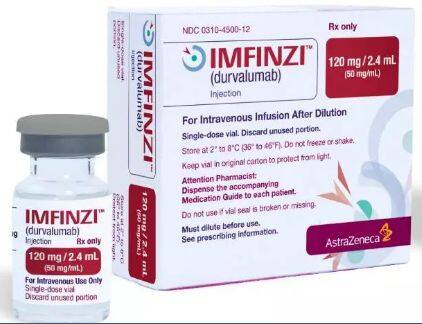
June 05, 2019 /BioValleyBIOON/ -- UK pharmaceutical giantAstraZeneca(AstraZeneca) recently announced PD-L1 at the 2019 American Society of Clinical Oncology (ASCO) Annual Meeting held in ChicagoTumorThree-Year Overall Survival (OS) Results from the Phase III PACIFIC Clinical Trial of Imfinzi (durvalumab) Immunotherapy for Unresectable Stage III Non-Small Cell Lung Cancer (NSCLC). Based on these results, Imfinzi became the first immunotherapy demonstrated to provide a three-year survival benefit in patients with unresectable Stage III NSCLC. Previously, based on data from the PACIFIC trial, Imfinzi had already been approved in multiple countries and regions, including the United States, the European Union, and Japan, for the treatment of patients with locally advanced (Stage III), unresectable NSCLC whose disease had not progressed following concurrent platinum-based chemotherapy and radiotherapy.
The latest results presented at the conference demonstrated durable and sustained overall survival (OS) benefits in patients with unresectable stage III non-small cell lung cancer (NSCLC) who did not experience disease progression following concurrent chemoradiotherapy (CRT): the three-year OS rate was 57% in the Imfinzi group, with median OS not yet reached, compared to 43.5% and 29.1 months, respectively, in the placebo group.
These results build upon the two-year overall survival (OS) analysis published in The New England Journal of Medicine in September 2018, demonstrating that patients treated with Imfinzi after chemoradiotherapy (CRT) achieved a significant OS benefit compared to those in the placebo group, regardless of PD-L1 expression status. The previous two-year OS analysis showed that Imfinzi reduced the risk of death by 32% (HR=0.68 [99.73% CI: 0.47–0.997], p=0.0025).
With an additional year of follow-up, the latest results for Imfinzi demonstrated consistent and durable efficacy, reducing the risk of death after CRT by 31% compared with placebo (HR=0.69, [95% CI: 0.55–0.86]).
In this study, the safety and tolerability profile of Imfinzi was consistent with the results reported in the previous overall survival (OS) analysis. Among patients treated with Imfinzi, the most common adverse events (occurring in ≥20% of patients), compared with placebo, were cough (35.2% vs 25.2%), fatigue (24.0% vs 20.5%), dyspnea (22.3% vs 23.9%), and radiation pneumonitis (20.2% vs 15.8%). Grade 3 or 4 adverse reactions occurred in 30.5% of patients in the Imfinzi treatment group, compared with 26.1% in the placebo group. In the Imfinzi treatment group, 15.4% of patients discontinued treatment due toAdverse ReactionsTreatment discontinuation was 9.8% in the placebo group.
PACIFIC Study Investigator, Thoracic Oncology, Moffitt Cancer Center, Tampa, Florida, USATumorDr. Jhanelle Gray, Director of Clinical Research, stated: “In the past, the 5-year survival rate for patients with stage III NSCLC was only 15%–30%. Notably, more than half of the patients treated with the Imfinzi regimen in the PACIFIC study were still alive after 3 years, representing a significant milestone that raises the standard of care in this curative-intent setting.”
AstraZenecaTumorDave Fredrickson, Executive Vice President of the Business Unit, stated, “The three-year overall survival results further establish the PACIFIC regimen as the standard of care for this patient population. We are optimistic that this survival trend will continue as we approach the five-year milestone set for this treatment goal.”
Stage III (locally advanced) NSCLC is typically divided into three subcategories (IIIA, IIIB, and IIIC), defined by the extent of local tumor spread and resectability. Stage III differs from Stage IV, in which cancer has metastasized to distant organs; currently, the treatment goal for Stage III disease is curative. It is estimated that Stage III NSCLC accounts for approximately one-third of all NSCLC cases. The majority of patients with Stage III NSCLC are diagnosed with unresectable disease.Tumor, the previous standard of care was chemoradiotherapy (CRT), followed by active surveillance to monitor disease progression. However, the prognosis for this disease remains unfavorable, with low long-term survival rates.
Imfinzi (durvalumab) is a PD-L1 immunotherapy that targets and binds to programmed death-ligand 1 (PD-L1), blocking its interaction with PD-1 and CD80, thereby counteracting tumor immune evasion strategies and relieving the suppression of immune responses. Currently, AstraZeneca is conducting a large-scale clinical program, part of which is evaluating Imfinzi as monotherapy and in combination with tremelimumab for non-small cell lung cancer (NSCLC), small cell lung cancer, locally advanced or metastatic urothelial carcinoma, head and neck cancer, and other solid tumors.Tumorfirst-line treatment. (Bioon.com)