

Roche/AbbVie’s Chemotherapy-Free Venclexta + Gazyva Combination Significantly Extends Survival in First-Line CLL Treatment
Jun 06, 2019 15:09
CST Updated
15:09

Roche
Oncology Drug Research, Development, and Manufacturing

AbbVie
Innovative Drug Developer
June 06, 2019 News /BioonBIOON/ -- Roche and AbbVie recently announced the first-line treatment of chronic lymphocytic leukemia with Venclexta®/Venclyxto® (venetoclax) in combination with Gazyva®/Gazyvaro® (obinutuzumab)LeukemiaData from the pivotal Phase III CLL14 study in chronic lymphocytic leukemia (CLL). The results showed that, in previously untreated CLl patients with comorbidities, the 12-month fixed-duration, chemotherapy-free venetoclax plus obinutuzumab combination regimen (abbreviated as VO) significantly prolonged progression-free survival (PFS) compared with the standard of care regimen (venetoclax plus chlorambucil, abbreviated as VC), thereby meeting the primary endpoint. Detailed data were presented at the 2019 American Society of Clinical OncologyTumorpresented at the American Society of Clinical Oncology (ASCO) Annual Meeting and simultaneously published in The New England Journal of Medicine (NEJM).
On May 15 this year, based onCLL14 Study Data,United StatesFDAVia real-timeTumorThe Real-Time Oncology Review (RTOR) pilot program approved the venetoclax plus obinutuzumab combination regimen for previously untreated patients with chronic lymphocytic leukemia (CLL) or small lymphocytic lymphoma (SLL). Notably, this is the second Roche drug regimen approved through the RTOR pilot program.
CLL14 is a prospective, multicenter, open-label, randomized study conducted in collaboration with the German Chronic Lymphocytic Leukemia Study Group (DCLLSG), designed to evaluate the efficacy and safety of the VO regimen versus the standard-of-care VC regimen as first-line treatment for patients with chronic lymphocytic leukemia (CLL) who are treatment-naïve and have comorbidities. A total of 445 patients were enrolled in the study; all were previously untreated according to the International Workshop on Chronic Lymphocytic Leukemia (iwCLL) criteria. Patients received fixed-duration treatment for 12 months. The primary endpoint was progression-free survival (PFS) assessed by investigators per iwCLL criteria. Secondary endpoints included PFS assessed by an independent review committee (IRC), minimal residual disease (MRD) status, overall response rate (ORR), complete response rate (CR), overall survival, duration of response, event-free survival, time to next CLL treatment, and safety.
With a median follow-up of 28 months, the results showed: (1) Compared with the VC regimen group, the VO regimen group demonstrated significantly prolonged progression-free survival (PFS) and a significant 65% reduction in the risk of disease progression or death (investigator-assessed PFS: HR=0.35, 95% CI: 0.23–0.53, p<0.001; IRC-assessed PFS: HR=0.33, 95% CI: 0.22–0.51, p<0.001). At 2 years (i.e., 1 year after treatment cessation), a higher proportion of patients in the VO regimen group remained progression-free (88.2% vs. 64.1%), and the median investigator-assessed PFS had not been reached. (2) Compared with the VC regimen group, the VO regimen group showed consistent clinical benefits across all secondary endpoints, including overall response rate (ORR) (84.7% vs. 71.3%, p<0.001) and complete response with at least partial hematologic recovery (CRh) (49.5% vs. 23.1%, p<0.001). (3) Three months after treatment initiation, a higher proportion of patients in the VO regimen group achieved bone marrow MRD negativity (56.9% vs. 17.1%, p<0.001) and peripheral blood MRD negativity (75.5% vs. 35.2%, p<0.001) compared with the VC regimen group. MRD negativity was defined as fewer than one CLL cell per 10,000 white blood cells. (4) The safety profile of the VO regimen was consistent with the known safety profiles of the individual drugs, with no new safety signals identified for the combination. The common grade 3/4 adverse events in the VO and VC regimen groups were low white blood cell count (52.8% vs. 48.1%) and infection (17.5% vs. 15.0%), which were comparable between the two groups.
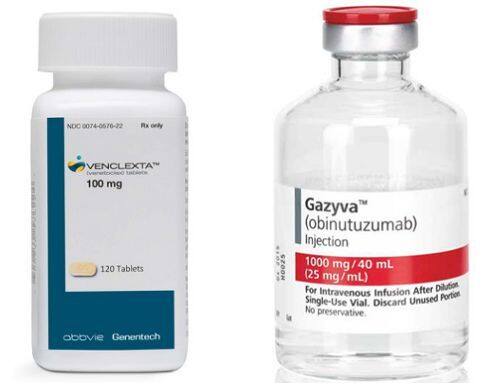
Chronic lymphocytic leukemia (CLL) is a slow-growing type of leukemia characterized by the presence of large numbers of immature lymphocytes in the blood and bone marrow. CLL accounts for approximately one-third of newly diagnosed leukemia cases.The active pharmaceutical ingredient of Venclexta/Venclyxto is venetoclax, an oral B-cell lymphoma-2 (BCL-2) inhibitor. BCL-2 plays a role inApoptosis(programmed cell death) and plays a crucial role in inhibiting the apoptosis of certain cells, including lymphocytes. It is overexpressed in certain types of cancer and is associated with the development of drug resistance. Venetoclax is designed to selectively inhibit the function of BCL-2, restore cellular communication pathways, and induce cancer cell self-destruction, thereby achieving therapeutic efficacy.Tumorthe purpose of.
Venclexta/VenclyxtoCo-developed by AbbVie and Roche, the two companies are jointly responsible for the commercialization of this drug in the U.S. market, while AbbVie is responsible for commercialization in markets outside the United States. The parties are currently conducting a large-scale clinical program to investigate venetoclax as monotherapy and in combination regimens for the treatment of various types of hematologic cancers.
Gazyva/GazyvaroThe active pharmaceutical ingredient is obinutuzumab, the first glycosylated type II anti-CD20 monoclonal antibody. It targets CD20 molecules on the surface of B cells and can directly induce B-cell death. The drug is designed to enhance antibody-dependent cellular cytotoxicity (ADCC) and direct induction of cell death. (Bioon.com)
Original Source:Roche Official Website