

Exploded in a Week! Nearly 10,000 Doctors "Spreading by Word of Mouth" – What’s Behind the Success of This China-Made Medical AI?
After one week of internal product testing, nearly 10,000 doctors eagerly tried it out through word-of-mouth, contributing close to 2,000 handwritten-level high-quality feedbacks. This is the real start of a medical AI product.
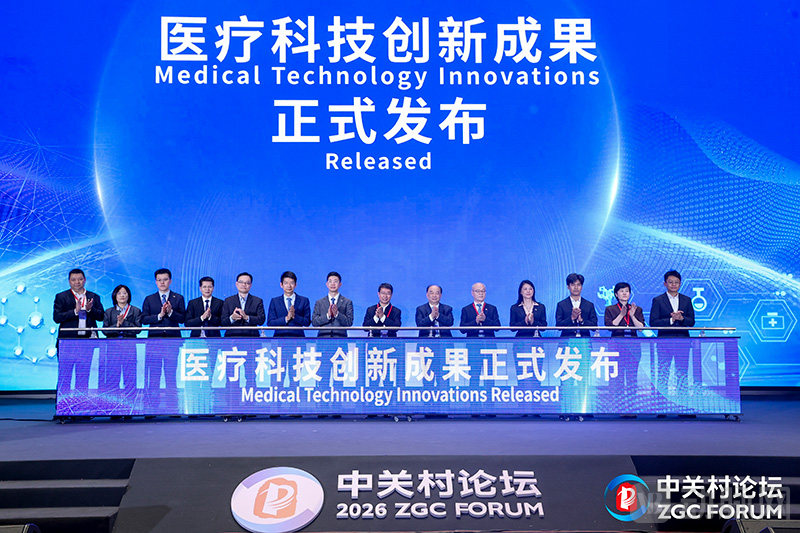
More exciting is that, at the Zhongguan Village Forum on March 26, it was jointly initiated by Beijing Tsinghua Changgung Hospital affiliated with Tsinghua University and several other top medical institutions in China."China Clinical Evidence-Based Intelligence Capacity Building Plan" Released. The aforementioned Yidu ZhiXun App, which has exploded in popularity among doctors, was simultaneously launched as the core platform of this initiative., opened to the doctor community. It is curious how this medical AI managed to spark a "person-to-person" style of spontaneous spread within just a week during its beta testing period among the typically rational circle of doctors.
Yidu Zhixun can quickly explode in the doctor's circle, obviously because its appearance solves the pain points of doctors. So, what are the pain points of front-line clinical doctors in the information explosion era? From the feedback of doctors, we found that,Clinicians need to frequently refer to evidence-based medical evidence during the diagnosis and treatment process, but this process is often not efficient.。
Dr. Wang from the ophthalmology department of a top-tier hospital in Beijing mentioned the difficulties of adhering to evidence-based medicine in clinical practice: "The first challenge is the lack of tools that allow for quick access to evidence-based information. In fact, clinicians often obtain these treatment guidelines through training sessions or articles seen on official accounts. But when you finally have time to study, you forget where you saved the information. Moreover, these large-scale classic studies often address only one issue and rarely provide detailed grading or traceability, making it difficult to support decision-making. As doctors, we focus more on using evidence-based medical evidence to guide clinical diagnosis and treatment, and we really hope to get answers quickly."
A Dr. Li from the Heart Center of a tertiary hospital in Guangzhou stated that, aside from the limited access to evidence-based resources, doctors are also troubled by conflicting information: "When doctors finally have time to search specifically for clinical issues, they end up with a flood of results. Among these, guidelines from different countries or periods, as well as various expert consensuses, may not be consistent, making it hard for doctors to determine which is more reliable. Moreover, the databases they search might not include the latest literature or research findings. All these factors make it difficult for doctors to extract the information they need during their searches."
"Using AI to help doctors quickly find reliable evidence-based references," Yidu ZhiXun was born in this context, hoping to solve long-standing pain points in doctors' daily work, such as time-consuming literature searches, lagging guideline updates, complicated evidence verification, and weak clinical decision-making support.
March 10,Yidu Zhixun was launched for the first internal testing in the form of a mini-program. Within a week, over 6,000 doctors flooded in to participate in the actual testing under the influence of word-of-mouth reputation, leaving nearly 2,000 detailed usage experiences and professional suggestions.。
Dr. Li was impressed by the traceability of Yidu Smart Circulation: "The traceability of Yidu Smart Circulation is relatively convenient, and its credibility is also higher. After we found the answer we wanted, we could immediately click on the attached link to the referenced literature and see the details of the study. This way, I can make a judgment at once whether the conclusion can be applied to my patients. In addition, the answers provided by Yidu Smart Circulation are very precise, answering exactly what is asked without any unnecessary content."
"If I have any questions during ward rounds, I can simply take out my mobile phone to look them up. There's no need to go back to the office or wait until after work to check materials, which is more convenient and efficient. At the same time, for some treatment plans or techniques that we haven't used before, Yidu Zhixun can also provide better support for communicating with patients or offer stronger evidence for MDT consultations," she added.
Dr. Wang has been using Yidu ZhiXun for over a month, with a current usage frequency of two to three times per week: "We used to search through literature as well, but it might take sifting through many papers to slowly piece together certain viewpoints. Yidu ZhiXun can help you organize your thoughts more quickly and efficiently, allowing you to rapidly identify key clinical research points worth exploring. On one hand, these tools can assist in finding optimized clinical decision-making options, while on the other hand, they also help us quickly summarize and analyze literature related to clinical issues, lowering the difficulty and threshold for doctors conducting research. Tasks that previously required several weeks of spare clinical time can now be sorted out within hours, significantly improving efficiency."
The willingness of time-pressed clinicians to spend time providing detailed feedback has significantly boosted the confidence of the development team, laying a solid foundation for subsequent large-scale implementation. On March 26, Yidu Tech officially launched the Yidu ZhiXun App and simultaneously released a hospital-exclusive customized version, further refining the product’s form and functionality.
The biggest trust barrier in the medical AI field is AI "hallucination." For the medical community, a wrong piece of evidence-based advice may affect clinical decision-making; therefore, "reliability" should be the lifeline of AI products.
First, Yidu Zhixun has built a high-quality medical knowledge repository, and by eliminating ineffective and low-quality information, it aims to ensure the professionalism, authority, and practicality of the knowledge content from the source.
In terms of clinical guidelines, Yidu Tech...More than 30,000 authoritative contents selected from over 40,000 clinical guidelines. In terms of medical literature resources, Yidu TechOver 5 million high-quality research achievements精选超500万份高质量科研成果 from 30 million医学文献中, and tryReal-time tracking of the frontier dynamics of global top medical journals. In addition, it alsoCollaborated with institutions such as People's Health Publishing House to build a disease and drug knowledge base.。
However, for an AI tool aimed at clinical decision-making, the more critical question lies in how to ensure the effectiveness of the screening? Yidu Tech has accumulated extensive experience in medical data processing through its previous operations, laying a foundation for this selection. According to publicly available information, itsProcessed nearly 7 billion medical records, with a network of over 10,000 partner hospitals.。
Secondly, every diagnosis and treatment suggestion or scientific research reference provided by Yidu ZhiXun can withstand clinical scrutiny and professional verification, greatly reducing the "AI hallucination," which is the most criticized issue of AI in the medical field.
Li Linfeng, Vice President of Technology Innovation at Yidu Tech, stated that in order to address the issues of AI's "misattribution" in responses and references, as well as evidence reliability,Yidu ZhiXun has adopted a hallucination rate control mechanism based on RAG, including three layers of mechanisms: refined processing in the retrieval phase, dual safeguards in the generation phase, and bottom-up design at the product level.。
"In the retrieval process, the system screens a vast amount of literature for authority and timeliness before retrieval, retaining only high-quality guidelines and consensus documents; during analysis, it attaches full-text contextual information such as target populations and treatment stages to knowledge fragments, improving semantic matching accuracy."
"In the generation process, we select models with good instruction-following capabilities to summarize and introduce the role of 'AI Validator' to perform a second verification of the output. If evidence cannot be found in the original text to support it, the generated result is removed."
"Finally, we have also introduced a fallback design at the product level to support fine-grained traceability. Each conclusion at the period level can highlight the original source and applicable population, facilitating rapid verification by doctors and enhancing trust."
These designs makeEach response from Yidu ZhiXun can be precisely annotated with corresponding guidelines and literature sources, allowing doctors to verify the original materials with a single click.。
Yidu ZhiXun also automatically evaluates the authority, timeliness, and applicability of evidence based on international evidence grading systems such as GRADE, and intelligently ranks answers according to the level of evidence weighting., thereby enabling doctors to significantly reduce the time spent on distinguishing the quality of information.
"Relying on Yidu Tech's years of accumulation in the field of data governance, we can conduct more granular quality stratification even for evidence of the same level, such as the differences between clinical guidelines from different academic societies," Li Linfeng told VCBeat.
In terms of data security,Yidu Zhixun not only strictly adheres to national medical data security management regulations, but the hospital-exclusive version can also achieve localized deployment, eliminating the risks of data leakage and outflow.。
How to evolve from "providing conclusions" to "providing well-supported conclusions," thereby making doctors "dare to use" them, will become the watershed for medical AI to truly enter clinical workflows.
It is worth mentioning that Yidu Zhixun is not only a commercial product but also entrusted with the mission of being an industry infrastructure.
At the Zhongguan Village Forum on March 26, Beijing Tsinghua Changgung Hospital, affiliated with Tsinghua University, led a collaboration with multiple top domestic medical institutions to launch the "China Clinical Evidence-Based AI Capability Development Initiative," released as a "Medical Technology Innovation Achievement." This is the first industry-level co-construction initiative in China that focuses on the deep integration of evidence-based medicine and artificial intelligence. The initiative will address the core needs of efficient clinical knowledge acquisition and upgrading evidence-based decision-making capabilities in the AI era, relying on a multi-center clinical expert collaboration mechanism while integrating real-world medical evidence, authoritative clinical guidelines, and cutting-edge disease research findings.
Xu Jiming, co-founder and CEO of Yidu Tech, said that as a technology company,Yidu Tech will provide underlying AI capabilities support, combining top-level design with cooperative hospitals such as Tsinghua Changgung Hospital, to promote the plan's implementation in China.。
He further introduced the positioning of Yidu Zhixun: "We hopeYidu Zhixun can become the doctor's first assistant, second brain, and multidisciplinary think tank..Not every doctor can have an assistant team to handle pre- and post-consultation tasks and assist in scientific research like top experts do, but Yidu Zhixun can become the primary assistant for these doctors. Meanwhile, Yidu Zhixun can also help doctors obtain evidence-based medical evidence more efficiently, assist in decision-making, and act as the doctor’s second brain. Moreover, through years of collaboration with hospitals, we have built specialized disease databases and high-quality datasets, and trained various specialized intelligent agents, which can further serve as a multi-disciplinary MDT advisory group for doctors."
"In the future, Yidu Zhixun is expected to assist doctors in diagnostic decision-making, achieve high-quality development in the medical field, and play the role of AI as a new productive force in healthcare."
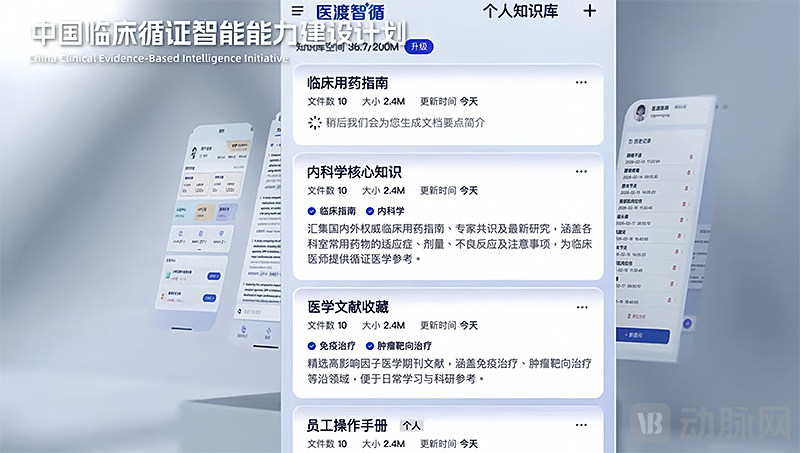
Yidu Zhixun is the core technology carrier and implementation product of this plan, which also reduces the usage concerns of clinical doctors.
It is worth mentioning that,Yidu Zhixun has completed in-depth verification in several top-tier tertiary hospitals, such as the Sun Yat-sen University Cancer Center, and has shown exceptional performance, particularly in the field of oncology. It covers 15 core cancer types, including lung cancer, breast cancer, liver cancer, and colorectal cancer, with a high consistency rate between its treatment recommendations and clinical decision-making by doctors., has reached a clinically usable level.
Trust is the bottom line, but to truly enable doctors to continuously use an AI tool in their daily work, product experience and scenario adaptation are equally crucial.
Clinical problems are inherently cross-disciplinary and diverse. Previously, the most common criticism doctors had of large models was their generalized responses — when faced with a cardiology question, the AI might provide a lengthy, irrelevant科普.
Yidu Zhixun's "Multi-Specialty Intelligent Agent Distribution Engine" has the characteristics of specialty-specific responses and precise matching, which is expected to solve this pain point.The system attempts to identify the specialist attributes of the problem and automatically redirects it to the corresponding specialist agent for handling, theoretically avoiding the awkward situation of providing generalized responses.
This is equivalent to equipping each department with an AI assistant specializing in that field.
To meet the needs of doctors for personalized work, lifelong learning, and scientific research advancement, Yidu Zhixun has also introduced personalized design.
For example,Yidu Zhixun adopts a hierarchical recommendation model of "specialized cards + extended recommendations" for evidence-based evidence presentation, prioritizing the display of top-tier guideline conclusions; if the demand is not met, the search scope is then expanded to secondary evidence to fulfill information needs across different scenarios.。
The personal knowledge base is also quite noteworthy. ThisA cloud-based evidence database exclusively for doctors supports functions such as one-click bookmarking of commonly used guidelines or literature, custom classification, tag organization, and quick search.. This design solves the pain points of difficulty in searching for scattered information and even more difficulty in retaining it.
Li Linfeng stated that doctors can save specific guidelines to their personal knowledge base, and the system will inquire based on this library, avoiding cross-domain searches and better aligning with doctors' habits: "For example, the system defaults to a higher level of evidence for guidelines from globally authoritative societies. However, doctors at grassroots hospitals may be more accustomed to using guidelines from the National Health Commission as the gold standard, so they can save the Commission’s guidelines along with those from associations into their personal knowledge base. When questions arise later, the system will make recommendations within the scope of the personal knowledge base, which is more in line with personal usage habits. Additionally, our hospital version also communicates with experts in each field within the hospital and adjusts the weighting of evidence based on the preferences of that hospital."
Moreover,Yidu Zhixun has different product forms, and its lightweight mini-programs and apps can fully adapt to the fragmented and diverse work scenarios of doctors., allowing doctors to look up information anytime during their commute, meetings, or between outpatient visits.The hospital-exclusive customized version supports in-depth integration with the HIS system., combined with individual patient data to output personalized recommendations, serving as a clinical decision support tool.。
From knowledge inquiry to assisted decision-making, the complete chain is basically fully covered by Yidu ZhiXun, which has become an intelligent partner for the entire clinical workflow. It's no surprise that doctors find it "easy to use and love using."
In the past two years, the medical AI track has been extremely bustling, but there are very few tools that can actually integrate into doctors' daily workflows. The fundamental reason lies in the fact that very few products consider what doctors truly need from their perspective.
Yidu Zhixun's answer consists of two points: making doctors "dare to use" and making doctors "love to use." The fact of "one-week explosion" also proves the correctness of this answer.
Of course, for an AI product targeting medical scenarios, user-driven dissemination is certainly a positive signal, but the real test does not lie in the first week of its launch, but in every ordinary working day thereafter. If Yidu Zhixun can deliver a satisfactory performance, it may also signify the arrival of an era where medical AI genuinely assists doctors.