June 07, 2019 /
BioValleyBIOON/ -- UK pharmaceutical giant
GlaxoSmithKline(GSK) recently announced that the Committee for Medicinal Products for Human Use (CHMP) of the European Medicines Agency (EMA) has issued a positive opinion, recommending approval of two new administration methods for Nucala (mepolizumab) for severe eosinophilic
AsthmaThe patient's treatment options include a pre-filled pen and a pre-filled safety syringe, both administered via injection once every four weeks.
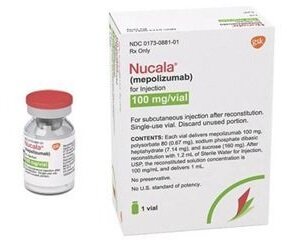
The CHMP’s assessment opinion will now be submitted to the European Commission, which is expected to issue a final review decision within the next 2–3 months. If approved, these two new Nucala formulations will enable healthcare professionals to prescribe home-administration options for appropriate patients, while the original lyophilized powder formulation will remain available for clinical use by healthcare professionals.
The CHMP’s positive opinion is based on supportive data from two open-label, single-arm, Phase IIIa clinical studies (NCT03099096, NCT03021304) that evaluated severe eosinophilic
AsthmaReal-World Use of Nucala by Patients or Their Caregivers in Clinical and Home Settings Using the New Regimen. Both studies demonstrated that, after appropriate training, patients were able to successfully self-administer treatment using the pre-filled pen and pre-filled safety syringe (89–95% and 100%, respectively). Furthermore, compared with administration in clinical settings, most patients preferred administering the medication at home.
Another open-label, parallel-group, single-dose pharmacokinetic and pharmacodynamic study (NCT0314674) confirmed that the profile of Nucala administered via a prefilled safety syringe or a prefilled pen is comparable to that of the initially approved lyophilized formulation.
The active ingredient in Nucala is mepolizumab, a fully humanized monoclonal antibody that specifically targets interleukin-5 (IL-5). IL-5 is a cytokine that regulates the growth, activation, and survival of eosinophils (a type of white blood cell) and provides critical signals for the migration of eosinophils from the bone marrow to the lungs and other organs. Nucala binds to human IL-5, thereby blocking its interaction with receptors on the surface of eosinophils. By inhibiting this receptor binding, Nucala reduces eosinophil levels in the blood, tissues, and sputum, which in turn decreases eosinophil-mediated inflammation.
Nucala has been developed to treat diseases caused by inflammation driven by eosinophils. The drug has been approved in 16
Clinical Trial, evaluated in more than 3,000 patients across multiple eosinophilic indications.
Nucala was first approved in late 2015, becoming the world’s first biologic therapy targeting IL-5 to be marketed globally. To date, Nucala has been approved in the United States, Europe, and more than 20 other markets as an add-on maintenance treatment for patients with severe eosinophilic asthma. In Europe, it is the only medicine approved for use in children and adolescents aged 6–17 years with severe eosinophilic asthma.
AsthmaAnti-IL-5 biologic therapy in pediatric patients. Furthermore, Nucala has also been approved in the United States, Japan, Canada, and Argentina as an add-on maintenance treatment for eosinophilic granulomatosis with polyangiitis (EGPA). Currently,
GlaxoSmithKlineThe treatment of Nucala for severe eosinophilic syndrome, nasal polyps, and chronic obstructive pulmonary disease (COPD) is also being evaluated.
In Europe, Nucala is indicated as an add-on therapy for severe refractory eosinophilic
AsthmaTreatment for adult, adolescent, and pediatric patients aged 6 years and older. Regarding administration, the Nucala 100 mg pre-filled pen and pre-filled syringe are indicated only for adults and adolescents aged 12 years and older, and are not suitable for children aged 6–11 years; for this pediatric population, treatment should be administered using the lyophilized powder for injection. (Bioon.com)