

AstraZeneca's Calquence Achieves Second Positive Phase III Trial in First-Line CLL, Projected Peak Sales of $5 Billion
Jun 07, 2019 10:10
CST Updated
10:10

AstraZeneca
Biopharmaceutical Manufacturer
June 07, 2019 /BioValleyBIOON/ -- UK pharmaceutical giantAstraZeneca(AstraZeneca) recently announced the evaluation of the targeted anticancer drug Calquence (acalabrutinib) as first-line treatment for chronic lymphocyticLeukemiaThe Phase III ELEVATE-TN study in chronic lymphocytic leukemia (CLL) met its primary endpoint at the interim analysis. This marks the second pivotal study of Calquence in CLL to achieve its primary endpoint ahead of schedule, following the ASCEND study results announced in May this year.
ELEVATE-TN (ACE-CL-007) is a randomized, multicenter, open-label Phase III study conducted in previously untreated (treatment-naïve) patients with chronic lymphocytic leukemia (CLL), designed to evaluate the efficacy and safety of Calquence monotherapy and Calquence plus obinutuzumab combination therapy relative to chlorambucil plus obinutuzumab combination therapy. In this study, 535 patients were randomized in a 1:1:1 ratio into three groups: the first group received chlorambucil plus obinutuzumab; the second group received Calquence (100 mg twice daily until disease progression) plus obinutuzumab; and the third group received Calquence monotherapy (100 mg twice daily until disease progression). The primary endpoint was progression-free survival (PFS) assessed by an Independent Review Committee (IRC) in the Calquence plus obinutuzumab combination arm compared with the chlorambucil plus obinutuzumab combination arm. The key secondary endpoint was PFS assessed by the IRC in the Calquence monotherapy arm compared with the chlorambucil plus obinutuzumab combination arm. Other secondary endpoints included objective response rate (ORR), time to next treatment, and overall survival (OS).
The results demonstrated that the study met its primary endpoint: compared with chlorambucil plus obinutuzumab, a chemotherapy-based combination regimen, the Calquence plus obinutuzumab combination therapy resulted in a statistically significant and clinically meaningful improvement in progression-free survival (PFS). The study also met its key secondary endpoint: compared with chlorambucil plus obinutuzumab, Calquence monotherapy also yielded a statistically significant and clinically meaningful improvement in PFS. In this study, the safety and tolerability profile of Calquence was consistent with its established profile.
AstraZenecaTumorJosé Baselga, Executive Vice President of Research and Development, stated, “These findings confirm the superiority of Calquence, both as a monotherapy and in combination regimens, over standard-of-care therapies for CLL. The ELEVATE-TN and ASCEND studies will serve as the basis for regulatory submissions later this year.”
AstraZeneca Plans to Hold a MedicalConferenceThe results of the ELEVATE-TN study are detailed above. Furthermore, the company will present the full results of the Phase III ASCEND study evaluating Calquence for the treatment of relapsed or refractory CLL (Abstract LB2606) at the upcoming European Hematology Association (EHA) Annual Congress to be held on June 16, 2019.
Calquence: A BTK Inhibitor with Annual Sales Expected to Exceed $5 Billion
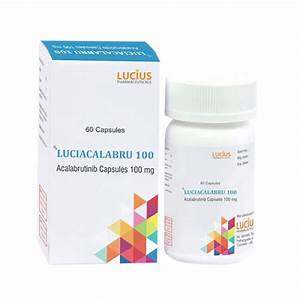
Calquence was approved in the United States in October 2017FDAAccelerated approval for adult patients with relapsed or refractory mantle cell lymphoma (MCL) who have previously received at least one therapy. Currently, the drug is being developed for the treatment of CLL and other hematologic malignancies.Tumor。
The active pharmaceutical ingredient of Calquence is acalabrutinib, a highly selective, potent, covalent Bruton’s tyrosine kinase (BTK) inhibitor that acts by irreversibly binding to and inhibiting BTK. BTK is a key regulator of the B-cell receptor (BCR) signaling pathway and is widely expressed in various types of hematologic malignancies, where it plays a role in B-cell proliferation, trafficking, chemotaxis, and adhesion, making it a therapeutic target for hematologic malignancies.Tumorimportant target. In preclinical studies, acalabrutinib demonstrated minimal off-target effects.
Currently, Calquence is being developed for multiple B-cell hematologic cancers, including chronic lymphocytic leukemia (CLL), mantle cell lymphoma (MCL), diffuse large B-cell lymphoma, Waldenström macroglobulinemia (WM), follicular lymphoma (FL), multiple myeloma, and other hematologic malignancies.Tumor. AstraZeneca has extremely high commercial expectations for Calquence, anticipating that the drug’s peak sales could reach $5 billion!
Calquence shares the same mechanism of action as AbbVie/J&J’s blockbuster hematologic malignancy drug Imbruvica (ibrutinib), the first BTK inhibitor approved globally. Since its initial approval in November 2013, Imbruvica has received approval for up to 10 therapeutic indications across six disease areas, with global sales showing a steady upward trajectory. Recently, the pharmaceutical market research firm EvaluatePharma released a report forecasting that Imbruvica’s global sales will reach $9.5 billion in 2024, making it the fifth best-selling drug worldwide. (Bioon.com)