


According to a Reuters report on June 7, anonymous insiders revealed that Paul Hudson, CEO of Novartis Pharmaceuticals, is set to become the new CEO of French pharmaceutical giant Sanofi, with his term effective from September 1 this year. Sanofi’s current CEO, Olivier Brandicourt, will retire at that time.
An anonymous insider stated that Paul Hudson was chosen due to his strong reputation in the industry and extensive experience in the digital operation of pharmaceutical businesses.
A Sanofi spokesperson declined to comment on the Reuters report. However, Reuters had reported on March 18 this year that the company was seeking a successor to Olivier Brandicourt.
Hudson, born in 1967, is currently a member of the Executive Committee of Novartis. On July 1, 2016, Novartis implemented an organizational restructuring, splitting its entire pharmaceutical business into two units: Novartis Pharmaceuticals and Novartis Oncology. Paul Hudson, formerly Executive Vice President responsible for AstraZeneca’s Japan and US operations, was appointed CEO of Novartis Pharmaceuticals. Bruno Strigini, previously head of Novartis Oncology’s product portfolio, was appointed CEO of Novartis Oncology. Both report directly to the Group CEO of Novartis.

Paul Hudson (Image source: Novartis official website)
Olivier Brandicourt has served as CEO of Sanofi since 2015 and will turn 65 in February 2021. As Sanofi imposes an age limit of 65 for its CEO, the company’s management team officially initiated the search for a new CEO in March this year.
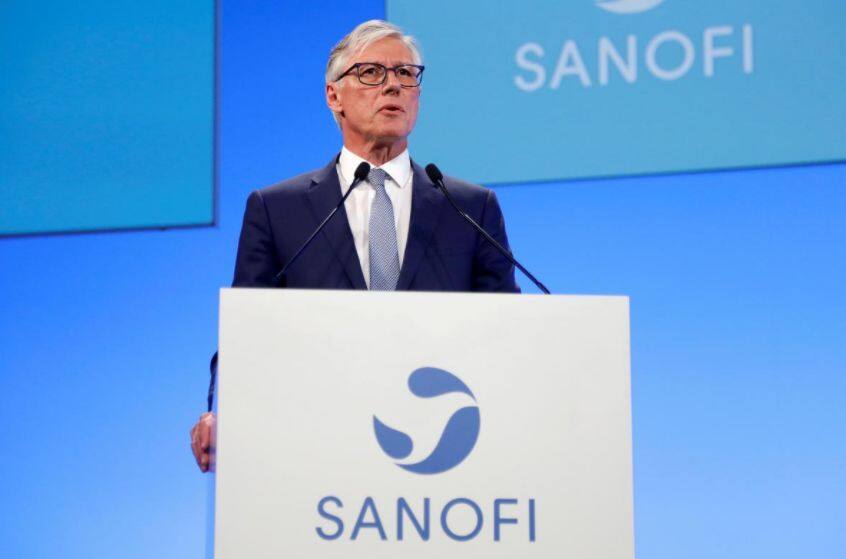
Olivier Brandicourt
After assuming the role of CEO, Brandicourt actively restructured Sanofi’s business portfolio, including an asset swap of its animal health division for Boehringer Ingelheim’s consumer healthcare business, culminating in a transaction valued at nearly $20 billion. Meanwhile, Sanofi sold its generic drug business to Advent International, a private equity firm, for $2.14 billion (€1.9 billion).
During his tenure, Brandicourt further intensified investment in research and development (R&D), including cutting costs and prioritizing R&D expenditures. This move also reversed the adverse impact of the patent expiration of the insulin product Lantus. Leveraging the blockbuster dermatitis drug Dupixent, Sanofi’s profitability is expected to resume growth in the second half of 2019.
Nevertheless, the management team led by Brandicourt also experienced setbacks. In 2016, Sanofi aggressively pursued Medivation, a star oncology company, but its $9.3 billion bid was ultimately outmatched by the deeper-pocketed Pfizer, which acquired Medivation for $14 billion. In 2017, Sanofi again lost out in its bid for Actelion, a major rare-disease pharmaceutical company, to Johnson & Johnson, which secured the deal with a $30 billion offer.
Brandicourt has not come away empty-handed in acquiring high-quality external companies. In January 2018, Sanofi acquired Bioverativ, a hemophilia drug company spun off from Biogen, for $11.6 billion, and Ablynx, a Belgian nanobody company, for €3.9 billion. On February 6 this year, the FDA approved Cablivi (caplacizumab-yhdp), an injection developed by Ablynx, for use in combination with plasma exchange and immunosuppressive therapy for adult patients with acquired thrombotic thrombocytopenic purpura. These two transactions can help Sanofi establish a leadership position in the field of rare blood disorders.