June 09, 2019 News /
Bio ValleyBIOON/ --
DiabetesNovo Nordisk, the pharmaceutical giant, recently in the United States
DiabetesAmerican Diabetes Association (ADA) 79th Scientific Sessions
Conferencepublished the oral formulation of semaglutide for the treatment of type 2
Diabetesdata from the Phase IIIa PIONEER 4 clinical study. Currently, oral semaglutide for the treatment of type 2
DiabetesRegulatory applications in the United States and the European Union have entered review.
This study was a 52-week, randomized, double-blind, double-dummy, active-controlled and placebo-controlled, parallel-group, multicenter, multinational, three-arm clinical trial conducted in 711 patients with type 2 diabetes whose glycemic levels were inadequately controlled with metformin (with or without an SGLT-2 inhibitor). The study investigated the efficacy and safety of oral semaglutide at a 14 mg dose compared with Victoza (liraglutide) and placebo. Patients were randomized in a 2:2:1 ratio to receive oral semaglutide 14 mg, Victoza (1.8 mg), or placebo. The primary endpoint was the change in glycated hemoglobin (HbA1c) from baseline to week 26 of treatment. Key secondary endpoints included changes in HbA1c and body weight from baseline to week 52.
In the study, two different statistical methods were employed to evaluate the efficacy of oral semaglutide. The primary statistical method, termed the Treatment Policy (TPol) estimand approach, assessed outcomes regardless of whether treatment with the investigational product was discontinued and/or rescue medication was used. The secondary statistical method, termed the Trial Product estimand approach, assumed that all patients remained on treatment with the investigational product and did not use rescue medication.
The results showed that, using the primary statistical method, oral semaglutide 14 mg demonstrated non-inferiority to Victoza (1.2% vs. 1.1%) and superiority to placebo (1.2% vs. 0.2%) in reducing HbA1c at the primary endpoint at Week 26. At the secondary endpoint of HbA1c reduction at Week 52, oral semaglutide showed statistically significant greater reductions compared with both Victoza (1.2% vs. 0.9%) and placebo (1.2% vs. 0.2%). In terms of body weight, oral semaglutide was superior to both Victoza and placebo at Week 26 (mean reductions: 4.4 kg, 3.1 kg, and 0.5 kg, respectively), and demonstrated statistically significant greater reductions compared with Victoza and placebo at Week 52 (mean reductions: 4.3 kg, 3.0 kg, and 1.0 kg, respectively).
When applying secondary statistical methods, at Weeks 26 and 52, the 14 mg oral semaglutide group demonstrated significant reductions in HbA1c compared with both the Victoza group and the placebo group (Week 26: reductions of 1.3%, respectively;Reduce1.1%, 0.1%; Week 52: decreased by 1.2%, 0.9%, and increased by 0.2%, respectively). Furthermore, at Weeks 26 and 52, the 14 mg oral semaglutide group demonstrated significant weight reduction compared with the Victoza and placebo groups (Week 26: reductions of 4.7 kg, 3.2 kg, and 0.7 kg, respectively; Week 52: reductions of 5.0 kg, 3.1 kg, and 1.2 kg, respectively).
In the study, the most common adverse event was nausea, with its incidence gradually decreasing over time. The incidence of nausea was 20% in the oral semaglutide group, 18% in the Victoza group, and 4% in the placebo group. The proportion of patients who discontinued treatment due to adverse events was 11% in the oral semaglutide group, 9% in the Victoza group, and 4% in the placebo group.
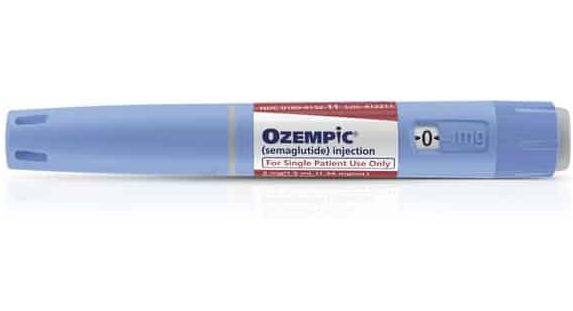
Semaglutide is a novel long-acting glucagon-like peptide-1 (GLP-1) receptor agonist that promotes insulin secretion and suppresses glucagon secretion in a glucose concentration-dependent manner, thereby significantly improving glycemic control in patients with type 2 diabetes while carrying a low risk of hypoglycemia. The drug also induces weight loss by reducing appetite and food intake, and significantly lowers the risk of major adverse cardiovascular events (MACE) in patients with type 2 diabetes.
In early December 2017, the once-weekly subcutaneous injection formulation of semaglutide received approval from the U.S. FDA and was launched under the brand name Ozempic. Hailed as the world’s premier GLP-1 agonist, its global sales in 2024 are projected to reach $4.25 billion, second only to Eli Lilly’s GLP-1 agonist Trulicity. Currently, Novo Nordisk is also developing an oral formulation of semaglutide. According to forecasts by the pharmaceutical market research firm EvaluatePharma, as the first oral GLP-1 receptor agonist globally, oral semaglutide holds strong commercial prospects, with expected sales reaching $2.23 billion in 2024.
Victoza (liraglutide) is a once-daily subcutaneously administered GLP-1 receptor agonist developed by Novo Nordisk and launched in 2010. It is currently the best-selling GLP-1 receptor agonist globally, with worldwide sales reaching $3.856 billion in 2018. (Bioon.com)