

FDA Approves Two New Indications for Merck’s KEYTRUDA® (pembrolizumab) as First-Line Treatment for Metastatic or Unresectable Recurrent Head and Neck Squamous Cell Carcinoma
Jun 11, 2019 22:08
CST Updated
Jun 12, 13:14

Merck Group
Pharmaceutical R&D Developer

FDA
U.S. Food and Drug Administration

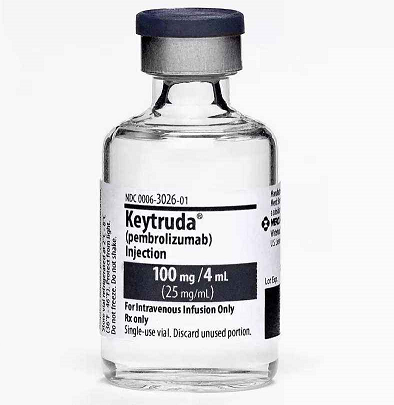
June 12, 2019 /Bio ValleyBIOON/ -- Merck & Co., a giant in tumor immunotherapy, has recently received good news from U.S. regulators! The United StatesFDATwo new indications for Keytruda (Keytruda, generic name: pembrolizumab) have been approved for the first-line treatment of patients with metastatic or unresectable recurrent head and neck squamous cell carcinoma (HNSCC), specifically: (1) as a monotherapy for patients whose tumors express PD-L1 (Combined Positive Score [CPS] ≥1); (2) in combination with a common chemotherapy regimen (platinum + fluorouracil [FU]), regardless of patientTumorWhat is the PD-L1 expression status?
This approval makes Keytruda the first anti-PD-1 therapy approved for the first-line treatment of patients with metastatic or unresectable recurrent head and neck squamous cell carcinoma (HNSCC), as well as the first anti-PD-1 therapy to demonstrate a statistically significant improvement in overall survival (OS) in this patient population.
This new indication approval is based on data from the pivotal Phase III clinical study KEYNOTE-048 (NCT02358031): compared with the standard of care EXTREME regimen, Keytruda as monotherapy significantly prolonged overall survival (OS) in patients with CPS ≥1, and Keytruda combined with chemotherapy significantly prolonged OS in the overall study population.
KEYNOTE-048 also served as a confirmatory study for the Phase Ib study KEYNOTE-012, whose overall response rate data supported the FDA’s accelerated approval in 2016 of Keytruda as monotherapy for patients with recurrent or metastatic HNSCC who experienced disease progression during or after platinum-containing chemotherapy. Under the accelerated approval pathway, full approval was contingent upon verification and characterization of clinical benefit, which has now been confirmed in the KEYNOTE-048 study, leading toFDAConvert Accelerated Approval to Full Approval.
Dr. Barbara Burtness, Professor of Medicine at Yale School of Medicine and Director of the Developmental Therapeutics Research Program at Yale Cancer Center, stated, “This approval represents a highly exciting milestone in the clinical treatment of head and neck cancer, with the potential to transform how clinicians manage patients with this debilitating disease by providing an important new therapeutic option. Metastatic or recurrent head and neck cancer has long been an area of significant unmet need, making the availability of immunotherapy as a first-line treatment particularly encouraging.””
KEYNOTE-048 is a randomized, open-label study designed to evaluate the efficacy and safety of Keytruda as monotherapy or in combination with platinum (cisplatin or carboplatin) and 5-fluorouracil chemotherapy, compared to the current standard of care for first-line treatment of HNSCC, the EXTREME regimen (Erbitux [cetuximab] + platinum [cisplatin or carboplatin] + 5-fluorouracil combination therapy). The co-primary endpoints of the study were overall survival (OS) and progression-free survival (PFS). Secondary endpoints included PFS rate at Month 6 or Month 12, objective response rate (ORR), and time to deterioration in overall health status/quality of life as measured by the European Organisation for Research and Treatment of Cancer (EORTC) Quality of Life Questionnaire. In the study, 825 patients were randomized to receive: (1) Keytruda monotherapy (200 mg, administered via intravenous infusion on Day 1 of each 3-week cycle, for up to 24 months); (2) Keytruda in combination with platinum and 5-fluorouracil; or (3) EXTREME regimen (Erbitux + platinum + 5-fluorouracil combination therapy).
As of the data cutoff, the median follow-up times for the Keytruda monotherapy group, the Keytruda plus chemotherapy group, and the EXTREME regimen group were 11.7 months, 13.0 months, and 10.7 months, respectively. The data showed:
(1) In the patient population with CPS ≥ 20:Compared with the EXTREME regimen, Keytruda monotherapy significantly prolonged OS (14.9 months vs. 10.7 months; HR=0.61 [95% CI: 0.45–0.83], p=0.0015); there was no difference in PFS (HR=0.99 [95% CI: 0.75–1.29]); the ORR for Keytruda monotherapy and the EXTREME regimen was 23.3% and 36.1%, respectively, and the median DOR was 20.9 months and 4.2 months, respectively.
(2) In patients with CPS ≥ 1:Compared with the EXTREME regimen, Keytruda monotherapy significantly prolonged OS (12.3 months vs. 10.3 months; HR=0.78 [95% CI: 0.64–0.96], p=0.0171); there was no difference in PFS (HR=1.15 [95% CI: 0.96–1.38]); the ORR for Keytruda monotherapy and the EXTREME regimen was 19.1% and 34.9%, respectively, and the median DOR was 20.9 months and 4.5 months, respectively.
(3) In the entire patient population:Compared with the EXTREME regimen, the Keytruda plus chemotherapy combination significantly prolonged OS (13.0 months vs. 10.7 months; HR=0.77 [95% CI: 0.63–0.93], p=0.0067); there was no difference in PFS (HR=0.92 [95% CI: 0.77–1.10]); the ORR for the Keytruda plus chemotherapy combination and the EXTREME regimen was 35.6% and 36.3%, respectively, and the median DOR was 6.7 months and 4.3 months, respectively.
In this study, the safety profile of Keytruda was consistent with that reported in previous studies involving patients with HNSCC. (Bioon.com)